Power wheelchair travel hotel airline tips for luxury trips
Traveling with a power wheelchair through premium cabins and luxury hotels demands forensic planning. For wheelchair users booking five star stays, the most valuable power wheelchair travel hotel airline tips are the ones that prevent damage before it happens, because U.S. Department of Transportation Air Travel Consumer Reports show that U.S. airlines mishandle hundreds of mobility devices every month. When you plan accessible travel at this level, every airport transfer, aircraft layout, and hotel corridor must work together as smoothly as a concierge check in.
Start with the air carrier, not the hotel, because airline policies shape everything that follows. Airlines with clear lithium battery rules for each power wheelchair model, transparent cargo hold procedures, and trained airline personnel will usually handle mobility devices more carefully, while vague policies often translate into last minute stress at the gate for every wheelchair user. When making a reservation, send the airline your chair dimensions, exact weight, battery type, and whether the chair can tilt or fold, then request written confirmation that the aircraft cargo hold door is tall enough for your specific power chair and complies with current U.S. DOT Part 382 rules or EU Regulation 1107/2006 guidance.
At the same time, treat the hotel as a technical partner rather than just a stylish backdrop. Luxury properties that genuinely understand wheelchair travel will connect you with an accessibility specialist who can talk about roll shower dimensions, elevator door widths, and where your chair will charge overnight, instead of simply saying that the room is accessible. Ask whether the accessible room is near the lifts, how wide the corridor is in centimetres and inches, and whether the room’s electrical circuit can safely support your power wheelchair charger plus other medical equipment, then note these measurements in a simple checklist for future trips.
Airline policies, aircraft holds, and keeping your chair out of trouble
Airline by airline, the rules for transporting a power wheelchair vary more than most passengers realise. Some airlines publish detailed air travel guidance that lists maximum mobility device weight for each aircraft type, while others simply state that the wheelchair will go in the cargo hold and leave airline personnel at the airport to improvise. For luxury travelers who value control, the most effective power wheelchair travel hotel airline tips always begin with reading the actual carrier access rules on the airline website, then calling the dedicated assistance desk to verify every line and clarify any differences with FAA or EASA safety requirements.
When you arrive at the airport, insist that your chair stays with you as long as possible. A wheelchair user should only transfer to the aisle chair at the aircraft door, not at check in, because every extra handoff increases the risk of damage before the flight even boards, and many passengers with disabilities report that early surrender leads to lost cushions or detached controls. Tell the team exactly how to switch off the power, where to lift the chair frame, and which parts must never be used as handles, then attach printed instructions in a clear plastic wallet for the cargo crew, following any template your airline suggests.
On board, think strategically about seats and cabin layout. Bulkhead seats can help some passengers who transfer easily, but they are not always ideal for wheelchair users who need nearby toilets or who prefer to stay close to the galley where assistance is faster, so ask the air carrier to explain the exact distance in metres and feet from your seat to the nearest lavatory. For long haul traveling, request pre boarding so you can brief airline personnel calmly, check that your wheelchair will be loaded upright in the aircraft cargo hold when possible, and confirm that any detachable medical equipment is carried in the cabin instead of with general cargo in line with airline dangerous goods policies.
For more seasonal strategy on choosing airlines and routes that wheelchair users trust in peak periods, study this guide to accessible travel booking strategies in high season. It explains how to balance direct flights, hub airports, and cabin classes so that passengers with disabilities minimise risky transfers, while still enjoying premium service and refined lounges. Use those insights alongside your own airline specific notes to build a repeatable template for every future trip.
Cabin seating, aisle chairs, and protecting your mobility in the air
Inside the airplane, the focus shifts from cargo logistics to personal comfort and dignity. Every passenger who uses a power wheelchair has to navigate the same narrow aisle, the same aisle chair transfer, and the same limited lavatory access, yet airlines still treat these as edge cases rather than standard passenger journeys. The most practical power wheelchair travel hotel airline tips recognise that the aircraft cabin is designed around non disabled bodies, so you must design your own micro strategy for each flight and document what works.
Seat selection is the first lever. Some wheelchair users prefer bulkhead seats because there is no one reclining into them and the legroom can make assisted transfers easier, while others avoid the bulkhead because fixed armrests can complicate lateral moves from aisle chair to seat. Ask the air carrier for a cabin map that shows which seats have movable armrests, then choose a row that balances transfer space, proximity to toilets, and the likelihood that airline personnel can reach you quickly when you press the call bell for assistance, especially on overnight sectors.
Transfers themselves deserve rehearsal level detail. Before you travel, practise the sequence of moving from your own chair to the aisle chair and then to the aircraft seat with your usual support person, so that on the day the process feels choreographed rather than improvised chaos. Tell the crew exactly how many staff you need, where to place their hands, and whether any medical equipment must stay attached during the move, because clear instructions from the wheelchair user reduce the risk of injury for everyone involved and align with many airlines’ safety briefings.
Once seated, protect your mobility assets. Cushions, joystick modules, detachable headrests, and any fragile power chair components should travel in the cabin, labelled with your name and seat number, rather than being left on the frame in the cargo hold where shifting cargo can crush them during turbulence. For a structured approach to verifying that both airline and hotel promises match reality, follow this step by step process on how to book an accessible room without relying on luck, then adapt the same verification mindset to every stage of air travel.
Hotel charging logistics, room layouts, and the quiet power problem
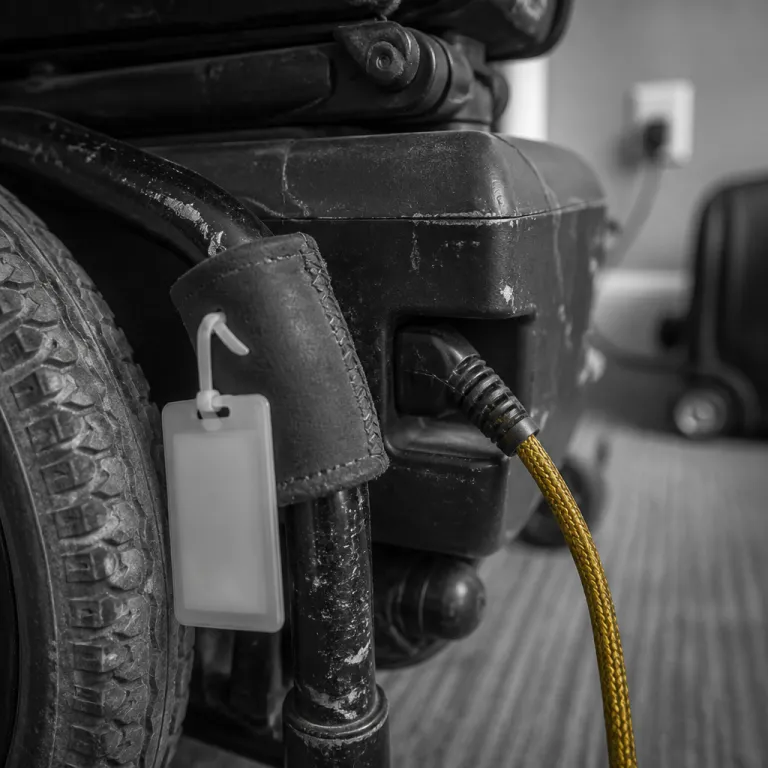
Once the aircraft doors open and the power wheelchair rolls off the aircraft, the next challenge begins in the hotel room. Luxury properties excel at thread counts and cocktail menus, yet many still fail the basic test of providing safe, convenient charging for a heavy power chair that must be ready by morning. The smartest power wheelchair travel hotel airline tips treat electricity as seriously as spa reservations, because without overnight charging, tomorrow’s accessible travel plans collapse before breakfast and may breach medical advice.
When making a reservation, ask the hotel to send photos or a simple sketch of the accessible room layout. You want to see where the sockets sit relative to the bed, the desk, and the clear floor space where your chair will park, since some wheelchair users need at least one hundred and twenty centimetres (about forty seven inches) of turning radius to manoeuvre safely without scraping walls. Ask whether the room’s circuit can handle your charger’s wattage plus air conditioning, a medical device, and perhaps a laptop, because tripped breakers at two in the morning are more than an inconvenience when your mobility depends on a full battery and a reliable charger.
Bathrooms deserve the same forensic attention. A roll shower should have level entry, a stable bench, and grab bars placed so that a wheelchair user can transfer without contortion, rather than a token shower seat bolted in the wrong corner. Confirm that the door opening is at least ninety centimetres (around thirty five inches) wide, that there is space to park the chair beside the toilet, and that the floor drains properly so your power wheelchair does not have to cross standing water on the way back to the bedroom or risk slipping tyres.
Think beyond the room itself to the hotel’s vertical circulation. Elevators should comfortably fit your chair plus at least one companion, with doors that open wide enough for a smooth entry rather than a three point turn, and corridors should allow you to pass housekeeping carts without scraping paint. If the property offers valet parking or private transfers, ask whether the vehicles can load your power wheelchair safely without forcing it into a position that would never be allowed in an aircraft cargo hold or under standard vehicle safety rules.
Corridors, elevators, ground transfers, and weight based room strategy
Power wheelchairs are heavy, wide, and unforgiving of tight corners, which means that the most elegant hotel lobby can still be a practical obstacle course. Before you confirm a booking, ask the reservations équipe for exact corridor widths, elevator dimensions, and ramp gradients in centimetres and inches, not just a vague assurance that everything is accessible. The most reliable power wheelchair travel hotel airline tips always translate those numbers into real world manoeuvres, such as whether you can turn from the lift into the corridor without reversing or whether the ramp to the spa is too steep for safe descending.
Weight matters in more subtle ways too. Some heritage properties restrict heavy mobility devices on upper floors because of structural limits, while others quietly prefer that wheelchair users stay on lower levels to simplify emergency evacuations, so ask direct questions about any such policies before you travel. If your power chair exceeds one hundred kilograms (about two hundred and twenty pounds), request a ground floor or low floor room near an evacuation refuge, and confirm that staff are trained to assist passengers with disabilities during alarms without insisting that the wheelchair will be left behind or stored elsewhere.
Ground transfers between airport, hotel, and excursions require the same precision as aircraft loading. Not every vehicle can take a large power wheelchair without tipping it dangerously or forcing it into a space designed for light luggage, so book accessible vans with certified lifts and proper tie down systems rather than improvising with standard taxis. When you arrive at the airport, inspect the vehicle ramp angle, check that the restraints match your chair frame, and insist that the driver secures every strap before departure, because a loose power wheelchair can become lethal in a sudden stop or minor collision.
For inspiration on pairing refined experiences with robust accessibility, study this itinerary for a refined accessible horse trip in Québec. It shows how corridor widths, lift access, and vehicle logistics can coexist with gourmet dining and countryside elegance, giving wheelchair travel a sense of ease rather than constant negotiation. Apply the same mindset when you choose urban hotels, beach resorts, or mountain retreats, and you will gradually build a personal map of properties where your mobility feels as secure as your reservation.
Documentation, insurance, and the quiet art of damage control
Even with meticulous planning, air travel with a power wheelchair carries real risk, which is why documentation is your most powerful silent ally. Before every trip, photograph your chair from all angles, record serial numbers, and film a short video showing that all functions work, then store these files in cloud storage so you can access them from any airport lounge or hotel lobby. These simple power wheelchair travel hotel airline tips turn a stressful argument about responsibility into a clear, time stamped record that supports your claim with the air carrier or hotel and aligns with many consumer protection guidelines.
Insurance deserves the same level of attention as seat selection. Standard travel policies rarely cover the full replacement value of a complex power chair or specialised medical equipment, so speak with your insurer about specific mobility coverage and obtain written confirmation of limits before you travel. If your wheelchair is damaged in transit, remember the guidance that experts repeat again and again: "What should I do if my wheelchair is damaged during travel?" and the answer is equally consistent: "Report immediately to airline or hotel staff and document the damage."
At the airport, insist on a written damage report before you leave the arrivals hall. Ask the airline to provide a suitable loaner chair that matches your mobility needs as closely as possible, not just any manual chair, and keep receipts for taxis, hotel changes, or extra assistance that you pay for because your own chair is unusable. When you reach the hotel, inform the front desk so they can adjust room placement, provide extra assistance, or help you rearrange furniture to accommodate a temporary replacement chair or different turning circle.
Long term, treat every incident as data for future strategy. Note which airlines handled the situation with respect, which hotels went beyond policy to restore your independence, and which partners treated your mobility device as just another piece of cargo. Over time, this personal database of real world performance will guide your choices more effectively than any glossy brochure, ensuring that your next journey as a wheelchair user feels less like a gamble and more like the refined, reliable experience you deserve.
FAQ
Can I bring my power wheelchair on a plane ?
Yes, you can usually bring a power wheelchair on an airplane as checked mobility equipment, provided it meets the airline’s size, weight, and battery regulations. Notify the airline at least forty eight hours before your flight, give them full details of your chair, and ask them to confirm that the aircraft cargo hold door is large enough for your model. At the airport, stay in your own chair until the gate, then brief airline personnel carefully on how to switch off the power and secure the frame in line with the carrier’s accessibility policy.
How do I charge my power wheelchair at a hotel ?
When booking, ask the hotel about socket locations, voltage, and whether the accessible room has enough outlets near clear floor space for your chair. Bring your own adapters, a surge protected extension cord if permitted, and consider a small travel power strip so you can charge the chair, phone, and medical equipment without unplugging lamps. On arrival, test the outlet with your charger early in the evening so you have time to request a room change if the circuit cannot support overnight charging or repeatedly trips.
What should I do if my wheelchair is damaged during travel ?
If your wheelchair is damaged, report it immediately before leaving the airport or hotel, and insist on a written incident report with photos. Ask the airline or property to provide a suitable temporary chair, keep all receipts for related expenses, and contact your insurer as soon as possible with your pre trip documentation. Do not attempt major repairs yourself at the airport, because improvised fixes can complicate later assessments by technicians and insurers and may affect your claim.
How early should I arrive at the airport when traveling with a power chair ?
Arrive at the airport at least three hours before an international flight and two hours before a domestic one, then add extra time if you need complex assistance or have multiple pieces of medical equipment. Early arrival gives you space to brief staff, complete mobility forms, and supervise the handover of your power wheelchair to the cargo team without rushing. It also increases the chance that airline personnel can resolve any last minute issues with seats, aisle chair transfers, or aircraft changes before boarding begins.
Which hotel features matter most for accessible travel with a power wheelchair ?
The most critical hotel features include step free access from street to room, wide corridors and elevator doors, and an accessible bathroom with a true roll shower and space to park your chair beside the toilet. Reliable in room charging, reachable sockets, and staff who understand how to assist passengers with disabilities respectfully are equally important for a safe stay. When in doubt, ask for photos, measurements in centimetres and inches, and written confirmation of any promises before you finalise your reservation so you can compare them with your own checklist.
Printable pre travel checklist
Use this compact list to turn planning into a repeatable routine you can print or save on your phone:
| Item | Details to record |
|---|---|
| Wheelchair dimensions | Height, length, width in cm and inches |
| Weight | Total chair weight in kg and pounds |
| Battery type | Lithium, gel, or sealed lead acid; watt hour rating |
| Charger details | Voltage range, wattage, plug type, adapter needed |
| Key contacts | Airline assistance desk, hotel front desk, insurer, repair shop |