Understanding accessible hotel room features beyond the wheelchair icon
Accessible hotel room features start with law, but real comfort goes far beyond minimum rules. In the United States, the Americans with Disabilities Act (ADA) sets baseline requirements for every accessible hotel and for each accessible room that is marketed to guests with disabilities. When you book, you are not just choosing a hotel room; you are choosing how predictable, safe and independent your stay will feel.
Under ADA standards, a mobility accessible hotel room must offer a doorway at least 81 cm (32 inches) wide, low thresholds and enough clear floor space for a wheelchair to turn.1 These accessibility features also include lever handles, reachable switches, and bathrooms where roll-in showers or tubs with strong grab bars allow guests to transfer without improvisation. For people with hearing disabilities, a hearing accessible room must provide visual alarms, door knock alerts and accessible hearing systems that make emergency signals impossible to miss.2
Across luxury hotels worldwide, accessibility is shaped by a mix of ADA rules, UK Equality Act guidance and EU accessibility directives. In practice, that means accessible rooms include step-free routes from lobby to room, lifts with visual and audio cues, and hotel rooms where service animals are welcomed as working partners, not pets. The most refined properties treat accessibility as a core part of guest experience, not a side note for a single room hidden at the back of the building.
What ADA and global standards actually guarantee
ADA rules for hotel rooms focus on function, not aesthetics, and they define the minimum that every accessible hotel must provide. In a mobility accessible room, you should expect a bed with space for a wheelchair on at least one side, a roll-in shower or tub with grab bars, and controls placed between 38 and 122 cm (15–48 inches) from the floor.1 For guests with disabilities who rely on visual cues, hearing accessible rooms must combine flashing alarms, text-based communication tools and clear signage that works even when hearing is limited.
In the UK and across the EU, accessibility features are guided by national building codes and equality legislation, which often mirror ADA principles but differ in detail. In the UK, for example, BS 8300 and Approved Document M inform hotel design, while in the EU, standards such as EN 17210 and national regulations shape accessible layouts.3,4 You may find excellent roll-in showers and wheelchair accessible corridors, yet bed heights or sink clearances that feel less standardized than in the United States. This is why experienced guests always check local rules before they stay, then confirm how each hotel interprets those rules in its accessible rooms.
Globally, hotel management teams work with accessibility consultants and design firms to translate regulations into real rooms. Their shared objective is straightforward: they want to ensure compliance while enhancing comfort and safety for every guest, not only people with visible mobility disabilities. For you as a traveler, the key is to treat the law as a baseline and then evaluate whether a specific hotel room truly matches your own mobility, hearing or visual needs.
Reading between the lines of accessible room descriptions when booking
Online booking pages for accessible hotels often sound reassuring, yet the language can hide how limited some accessibility features really are. When a hotel lists “accessible room available” without detail, assume only basic ADA compliance until you verify the specifics that matter to your mobility or hearing. Luxury properties that take accessibility seriously will describe accessible rooms in clear, concrete terms, not vague marketing phrases.
Look for descriptions that specify whether the hotel room has a roll-in shower or only a tub with grab bars, and whether the toilet has side transfer space and stable support rails. A strong listing will explain if the room’s accessible route is step-free from the lobby, if doors are at least 81 cm wide, and if controls are lowered for wheelchair accessible use. For guests with disabilities that involve hearing or visual needs, the best hotels spell out which rooms include visual alarms, accessible hearing systems and contrasting décor that supports low vision navigation.
Certain red flags should prompt a direct call before you stay. Phrases like “partially accessible rooms” or “easy access room” often mean the shower still has a step, or the roll-in shower is missing a seat, or mobility and hearing features are absent. When you see no photos of accessible rooms at all, treat that as a sign to check carefully, then use a premium accessible booking guide such as how to book premium accessible hotels online for a seamless travel experience to benchmark what good practice looks like. This type of resource is promotional content from a specialist platform rather than an independent standard.
Questions to ask reservations before you commit
Because only a minority of hotels post photos of their actual accessible rooms online, a short, precise email or call to reservations is essential. To keep the process efficient, use a simple checklist of measurements and features that matter most to you:
- Shower design: Is there a true roll-in shower with no lip higher than 1.5 cm, or a standard tub with grab bars?
- Toilet and transfers: Is there side transfer space and are grab bars positioned on at least one side and behind the toilet?
- Bed and equipment: What is the bed height, and is there space for a hoist or other mobility equipment beside or under the bed?
- Doorways and routes: Are all doors at least 81 cm wide, and is the route from drop-off and lobby to the room completely step-free?
- Hearing features: Does the room have visual door knock alerts, text-capable phones and alarm clocks with bed shakers?
- Visual access: What are the lighting levels, floor patterns and contrast like, and are room numbers tactile and high contrast?
- Service animals: Are staff trained, are relief areas close to accessible rooms, and is there a written policy confirming no extra cleaning fee?
When reservations teams answer quickly and in detail, it signals a hotel where accessibility is integrated into daily operations, not just design documents. Some luxury hotels now keep consultant reports and accessible design software layouts on file, allowing staff to check exact measurements while you are on the phone. Use that willingness to share specifics as a deciding feature when you compare hotels that otherwise look similar on price and style.
Inside the room: mobility, hearing and visual details that change everything
Once you open the door to an accessible room, the difference between basic compliance and thoughtful design becomes obvious within seconds. A well-planned mobility accessible room offers clear turning circles, no surprise steps and furniture that does not block wheelchair routes from bed to bathroom. In luxury hotels, these accessible hotel room features are integrated so discreetly that guests without disabilities barely notice them, while guests with disabilities feel the space was built for them.
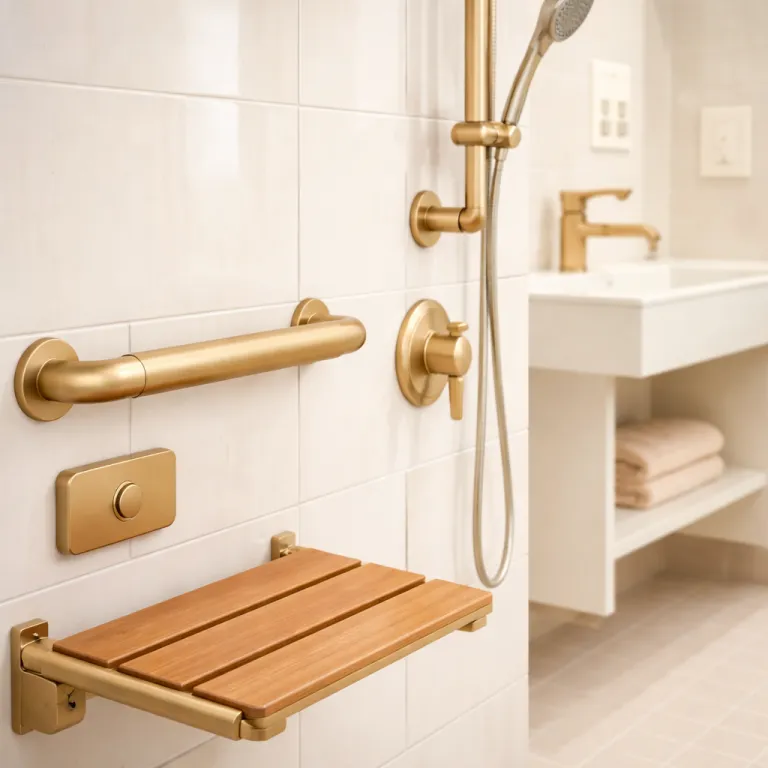
Bathroom design is often the make-or-break point for a comfortable stay. The best accessible rooms include roll-in showers with stable fold-down seats, handheld shower heads on sliding bars and grab bars placed exactly where transfers happen, not where a designer thought they might look neat. When a roll-in shower is poorly executed, with a high lip or badly positioned drains, wheelchair accessible use becomes stressful and dangerous instead of liberating.
For guests with hearing or visual needs, sensory accessibility features are as critical as physical ones. A hearing accessible hotel room should combine visual alarms, doorbell flashers and accessible hearing options such as induction loops in public areas, so mobility, hearing and accessible communication needs are all respected. Visual accessibility improves when hotel rooms use high contrast edges, non-glare lighting and intuitive layouts that help a guest roll from bed to shower without second-guessing every step.
Personalized services that elevate accessible luxury
Luxury accessible hotels increasingly pair physical accessibility with tailored service that anticipates individual routines. Before arrival, some properties invite guests to share detailed accessibility needs, then assign a trained team member from hotel management to coordinate everything from roll-in showers to airport transfers. This level of preparation turns a standard accessible room into a personalized base where a guest with disabilities can focus on the city, not the logistics.
During your stay, attentive staff can adjust bed risers, move furniture to improve accessible mobility, or arrange shower chairs that match your preferred height and support. Guests who use wheelchairs often appreciate when housekeeping respects equipment placement, keeps grab bars dry and ensures that emergency pull cords remain reachable after cleaning. For people with hearing or visual disabilities, small gestures such as printed restaurant menus in large type or staff who naturally face you while speaking can matter as much as any ADA specification.
Sensory comfort also plays a role in premium accessible experiences. Some hotels curate signature scents and soundscapes that remain subtle enough for guests with sensory sensitivities, while still creating a sense of place; you can explore how this works in practice through guides such as how the Aria hotel scent elevates accessible luxury stays. This is promotional material from a commercial platform, but it illustrates how sensory design and accessibility can coexist. When service animals are part of your travel, the most thoughtful hotels provide water bowls, quiet relief areas and staff who understand that these animals are working partners, not optional companions.
The photo gap problem and how to verify real accessibility
One of the most persistent frustrations for travelers booking accessible rooms is the lack of honest photography. Many hotels showcase their best suites in high resolution, yet omit images of the accessible rooms where guests with disabilities will actually stay. This photo gap makes it hard to judge whether a roll-in shower is truly step-free, whether grab bars are correctly placed, or whether a wheelchair accessible route exists from bed to balcony.
To protect your stay, treat photos as evidence, not decoration. Ask the hotel to email current images of the exact accessible room type you are booking, including the entrance, bed area, wardrobe, bathroom and roll-in showers or tubs. When a hotel refuses or claims no photos exist, that is a strong signal to check other hotels where accessibility features are documented with the same care as any other premium room category.
Specialist platforms focused on accessible hotels help bridge this gap by curating verified images and measurements. At accessible-stay.com, for example, the stated mission is to act as a guide to high-standard hotel experiences, curating properties where the pool hoist works, the staff are trained and guests are treated consistently. Articles such as planning a refined horse trip in Québec for accessible luxury stays are promotional content from that platform, but they show how detailed photography and narrative reviews can give solo explorers the confidence to book new destinations.
Using expert partners and data to choose better hotels
Behind the scenes, many hotel management teams now collaborate with accessibility consultants, design firms and accessibility organizations to refine their accessible rooms. These partners use accessible design software, on-site audits and guest feedback to identify where ADA compliance exists on paper but fails in practice. Their innovation focus increasingly includes smart technology, from app-controlled lighting to voice-activated blinds that support both mobility and visual accessibility.
Industry data suggests that around three quarters of hotels now offer at least some accessible rooms, yet the quality of those rooms varies widely between brands and regions.5 For a solo guest, that means the label “accessible hotel” is only the starting point; the real question is whether the specific hotel room you book will match your mobility accessible, accessible hearing or visual requirements. When you find hotels that publish measurements, photos and clear descriptions, reward them with your business and share that information with other travelers.
As one widely cited piece of accessibility guidance puts it, “Verify accessibility features before booking” and “Communicate specific needs to hotel staff.” Those two sentences capture the essence of successful accessible travel, especially in the luxury segment where expectations are high and details matter.
Regional differences: ADA, UK and EU standards compared
Accessible hotel room features are not identical worldwide, even among luxury brands that operate across continents. In the United States, ADA rules under Title III define precise measurements for door widths, turning circles, roll-in showers and the number of accessible rooms required in each hotel.2 When you book an accessible room in a major US city, you can usually expect consistent basics such as lever handles, visual alarms and grab bars placed at standardized heights.
Traveling in the UK, you will encounter a different framework shaped by the Equality Act 2010, BS 8300 and related building regulations.3 Many hotels provide excellent wheelchair accessible rooms with step-free routes, yet bed heights, shower layouts and accessible hearing systems can vary more than in ADA-regulated properties. Guests with disabilities who rely on roll-in showers should always check whether the shower is truly level with the bathroom floor or whether a small step remains.
Across the EU, national building codes and accessibility directives create another layer of variation. Some countries, such as Germany and the Netherlands, have strong traditions of universal design, resulting in hotel rooms where accessibility features feel seamlessly integrated into the architecture. Others may meet only basic requirements, leaving guests to navigate narrow doors, awkwardly placed grab bars or hotel rooms where service animals are accepted in theory but not always welcomed in practice.
How to adapt your booking strategy by region
Because standards differ, your booking strategy should shift slightly between regions while keeping the same core questions. In the United States, focus on confirming whether your reserved category is a mobility accessible room, a hearing accessible room or a combined mobility and hearing room, and ask for photos to verify the roll-in shower or tub configuration. In the UK and EU, spend more time clarifying bed heights, step-free access to public areas and whether accessible rooms include both visual and audio alarms.
For long stays or complex accessibility needs, consider working with specialist travel advisors or platforms that audit accessible hotels on site. These experts understand how ADA, UK and EU rules translate into real hotel rooms, and they can flag properties where the accessible room is located far from lifts or where the roll-in shower drains poorly. Solo explorers who value independence often find that one or two well-chosen questions about accessibility features reveal more than any glossy brochure.
Wherever you travel, remember that accessible hotels are not doing you a favour; they are meeting both legal obligations and a growing expectation for inclusive hospitality. When you encounter a hotel room accessible in name only, share constructive feedback with hotel management and, if necessary, with accessibility organizations that advise the industry. Your experience helps push the sector from minimal compliance toward genuinely equal stays for every guest.
Planning a seamless luxury stay: from pre arrival to check out
A refined accessible stay begins long before you roll through the lobby doors. Start by listing your non-negotiable accessibility features, such as a roll-in shower, space for a wheelchair beside the bed, or a hearing accessible alarm system, then match each hotel against that list. This approach keeps you focused on function rather than décor, even when browsing glamorous photos of hotel rooms and public spaces.
Once you have shortlisted a few accessible hotels, contact each property directly to confirm details that matter to your disabilities and travel style. Ask whether accessible rooms include step-free routes from the drop-off point, whether service animals are welcomed in all areas, and whether staff receive regular training on assisting guests with mobility, hearing or visual needs. For complex requirements, request to speak with a duty manager or accessibility liaison who can check consultant reports or floor plans while you are on the call.
During your stay, small routines help maintain independence and comfort. On arrival, do a quick safety check of your accessible room, testing the roll-in shower, grab bars, alarms and door peephole height before you unpack. If anything feels unsafe or unusable, ask to change rooms immediately rather than hoping to adapt, because a luxury accessible experience should never rely on improvisation or risk.
Using technology and feedback to improve future stays
Smart technology is quietly reshaping accessible hotel room features in premium properties. Voice-controlled lighting, app-based room service and digital door keys can support accessible mobility for wheelchair users and reduce the need to reach awkward switches or handles. For guests with visual or hearing disabilities, smartphone integration with hotel systems can provide text alerts, screen-reader-friendly menus and maps that make navigation easier.
After check-out, your feedback becomes part of the industry’s continuous improvement cycle. Many hotels now review guest comments alongside consultant audits to refine accessible rooms, adjust roll-in showers, reposition grab bars or upgrade accessible hearing systems. When you highlight both strengths and gaps, you help hotel management and accessibility consultants align design with real-world use.
For solo explorers who value honest, unsponsored guidance, curated platforms such as accessible-stay.com filter this evolving landscape into practical recommendations. Their promise is promotional, but clear: every article aims to deliver curated, insider-level advice so that your next accessible room, whether in a city centre icon or a countryside retreat, feels like a natural extension of how you live at home.
Key statistics on accessible hotel room features
- A recent hospitality industry report indicates that approximately 75% of hotels worldwide now offer at least some accessible rooms, yet the depth of accessibility features within those rooms varies significantly between brands and regions.5
- ADA guidelines require a minimum clear doorway width of 81 cm for mobility accessible hotel rooms, which allows most standard wheelchairs to pass comfortably while still fitting typical hotel corridors.1
- In many large US properties, at least 5% of total hotel rooms must be designed as mobility accessible, with an additional 2% equipped with hearing accessible features such as visual alarms and door knock indicators.1
- Only a minority of hotels publish photos of their actual accessible rooms online, which forces guests with disabilities to request images directly or rely on specialist platforms that verify accessibility features in person.
- Global demand for accessible hotels is rising as populations age and more people travel with mobility, hearing or visual disabilities, pushing luxury brands to integrate universal design and smart technology into new hotel room projects.5
FAQ about accessible hotel room features
What features are standard in accessible hotel rooms?
Standard accessible hotel room features typically include wider doorways, step-free routes, lever handles, reachable controls and bathrooms with either roll-in showers or tubs equipped with secure grab bars. Many hotel rooms also provide visual alarms, lowered peepholes and space beside the bed for wheelchair transfers. In the United States, these elements are defined by ADA guidelines, while other regions follow their own accessibility standards.
How can I ensure a hotel room meets my accessibility needs?
The most reliable approach is to combine online research with direct communication. Start by reviewing the hotel website for detailed descriptions of accessible rooms, then contact the property to ask specific questions about door widths, shower design, bed height, alarms and service animals. Whenever possible, request current photos or diagrams of the exact accessible room type you plan to book.
What is the difference between a mobility accessible room and a hearing accessible room?
A mobility accessible room is designed for guests who use wheelchairs or have limited mobility, so it focuses on step-free access, wider doors, turning space and bathrooms with roll-in showers or tubs with grab bars. A hearing accessible room, by contrast, prioritizes visual alarms, door knock indicators, text-capable phones and other accessible hearing features. Some hotel rooms combine both sets of features, so always check how your specific room is classified.
Are service animals allowed in all accessible hotel rooms?
In many countries, including the United States and the UK, hotels are legally required to accept trained service animals in guest rooms and public areas, including accessible rooms.2 Luxury properties that understand accessibility will provide water bowls, relief areas and staff training to ensure service animals are treated as working partners, not pets. If you travel with a service animal, confirm the policy in writing before arrival and keep documentation handy in case staff are unfamiliar with the rules.
Why do so few hotels show photos of their accessible rooms online?
Many hotels still prioritize marketing images of their most visually dramatic suites and public spaces, overlooking the importance of transparent photography for accessible rooms. In some cases, accessible rooms were added later or renovated in stages, so high quality images were never produced. Until this changes, guests with disabilities often need to request photos directly or rely on specialist platforms that verify and publish images of accessible hotel room features.
References
- 2010 ADA Standards for Accessible Design, U.S. Department of Justice, Title III regulations (28 CFR Part 36).
- Americans with Disabilities Act of 1990 (ADA), Title III – Public Accommodations and Commercial Facilities.
- BS 8300-1:2018 and BS 8300-2:2018, Design of an accessible and inclusive built environment, British Standards Institution; Equality Act 2010 (UK).
- EN 17210:2021, Accessibility and usability of the built environment, European Standard; related EU accessibility directives.
- UNWTO and industry accessibility reports on accessible tourism demand and hotel provision (various years).