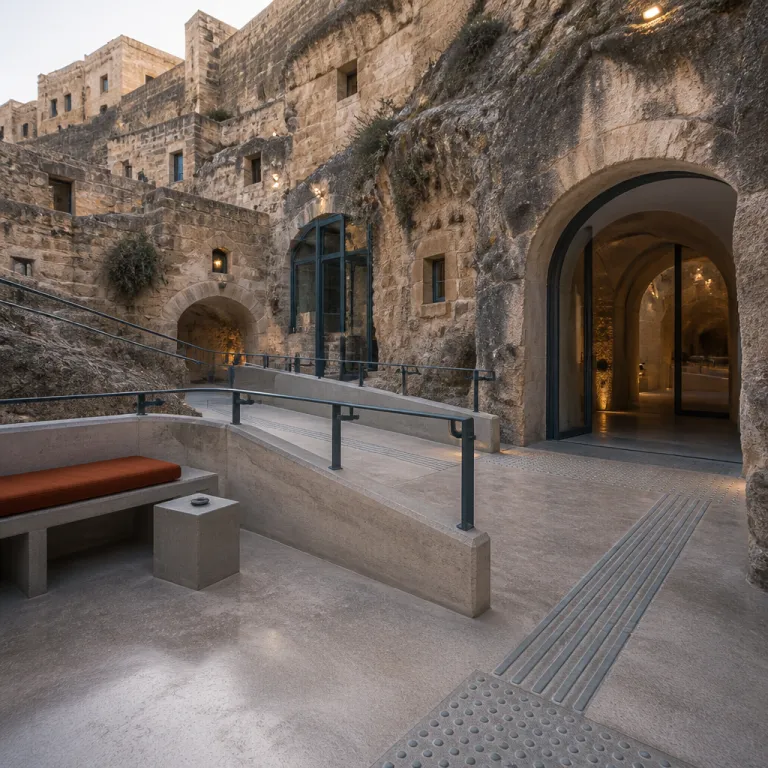
Why Matera’s cave hotels redefine accessible luxury in Italy
Matera, in southern Italy, offers an extraordinary blend of ancient caves and refined comfort. In this hilltop city, staying in a cave hotel in Matera means sleeping inside stone while enjoying the amenities of a contemporary luxury hotel. The result feels intimate yet grand, especially when the first light touches the Sassi and the Murgia cliffs.
The historic Sassi districts, Sasso Barisano and Sasso Caveoso, are carved directly into the rock and filled with grottoes that once housed entire families. Today many of these spaces have become elegant hotels travellers choose for a unique stay that respects heritage and accessibility. Local authorities, cultural heritage organisations, and hoteliers work together so each renovation preserves original cave walls while integrating lifts, ramps, and adapted room layouts that comply with Italian accessibility standards where the structure allows.
A cave hotel in Matera is generally understood as a property built within natural or excavated rock chambers, offering distinctive, cave-style rooms. These hotels balance authenticity and comfort, so guests with reduced mobility can enjoy level access, roll-in showers, and clear wayfinding. For travellers comparing destinations, Matera’s cave properties now stand alongside accessible coastal resorts and mountain retreats as some of the most memorable historic hotels in Italy.
Choosing the right cave hotel in Matera for an accessible stay
Not every property carved into the rock offers the same level of accessibility, so careful selection matters. When you compare hotels across Matera, focus on how each luxury hotel describes its accessible rooms and public spaces rather than relying on star ratings alone. Ask for floor plans of the room options, especially if you use a wheelchair or mobility scooter, and check whether the hotel can confirm measurements in writing.
Palazzo degli Abati, set high in the Sassi district, combines palazzo elegance with carefully restored caves that offer panoramic terraces. Sant’Angelo Cave Hotel, often simply called Sant Angelo by returning guests, spreads across several historic buildings and grottoes near the church of San Pietro Caveoso. Both hotels that Matera regulars recommend provide different types of layouts, so you can choose between vaulted stone suites, more conventional rooms, or hybrid spaces that mix caves and masonry; accessibility information is usually outlined on their official websites or in downloadable room fact sheets.
When comparing destinations for accessible historic stays, it helps to look at other benchmark guides such as this detailed resource on where to stay in Santorini with accessible luxury suites. Use the same checklist in Matera: step-free access from drop-off to reception, adapted bathrooms, and clear information about any uneven Sassi paths. A well-prepared traveller will email each hotel directly, request recent photos of accessible rooms taken in the last 12–18 months, and confirm whether staff can assist with luggage across cobbled lanes or arrange a porter service from the nearest accessible parking.
Iconic properties: from Sextantio Grotte to Aquatio Cave and beyond
Among the best-known cave hotels in Matera, Sextantio Grotte della Civita stands out for its monastic atmosphere and meticulous restoration. Guests enter the palazzo-like reception before descending into candlelit caves where each room preserves original stone troughs and arches. Sextantio’s suites vary in size, so travellers needing more turning space should request the largest categories when booking and ask for approximate room dimensions, door widths, and whether the bathroom is fully step-free.
Another landmark luxury hotel is Aquatio Cave Luxury Hotel and Spa, often shortened to Aquatio Cave by regular visitors. This spa hotel integrates wellness facilities into the rock, creating thermal pools and treatment rooms that feel carved from the Murgia landscape itself. For guests with reduced mobility, Aquatio Cave offers some of the most thoughtfully designed accessible rooms, with smooth transitions between bedroom, bathroom, and spa corridors; some categories are explicitly labelled as “accessible” or “barrier-free” in booking systems, and the hotel can usually confirm details such as shower-seat availability and grab-bar placement via email or PDF.
Palazzo degli Abati, Sant Angelo, Sextantio Grotte della Civita, and Aquatio Cave Luxury Hotel together illustrate how Matera’s hospitality scene can serve different needs and budgets. Some travellers prioritise a dramatic view over the ravine, while others want direct access to the cathedral area of Civita or the quieter lanes near San Pietro Caveoso. When comparing these hotels, use the same critical eye you might apply to a coastal property, such as those highlighted in this guide to Mallorca hotels with superior accessible rooms, and always match the layout to your personal mobility requirements.
Inside the cave rooms: what accessibility really looks like
Stepping into a well-designed Matera cave room feels like entering a private sanctuary. The thick stone walls keep temperatures stable, while soft lighting highlights the curves of the rock without creating glare. For accessibility, the best hotels use wide doorways, non-slip flooring, and subtle ramps that blend into the existing architecture, often aiming for at least 80–90 cm of clear door width and a level threshold between bedroom and bathroom.
In Sextantio Grotte della Civita, some rooms feature freestanding bathtubs set within the cave, which can be challenging for guests who need grab bars or roll-in showers. By contrast, Aquatio Cave Luxury Hotel and Spa offers several fully adapted rooms where the bathroom is flush with the bedroom floor and the shower has fold-down seating; some accessible bathrooms provide turning circles of around 140–150 cm, according to hotel floor plans shared with guests on request. Sant Angelo and Palazzo degli Abati each provide a mix of traditional cave rooms and more conventional spaces, so travellers can choose the level of immersion that still feels practical for their needs and ask specifically for rooms with walk-in showers and handrails.
When evaluating any option, ask specific questions about bed height, clearance under the bed for hoists, and space beside the bed for transfers. Check whether the property can provide portable ramps for small thresholds between caves and terraces. For travellers planning multi-destination itineraries that combine Matera with other accessible cities, resources such as this guide to barrier free hotels in Tokyo can help you build a consistent standard for what an accessible luxury hotel should offer.
Navigating the Sassi, Civita, and Murgia Park with reduced mobility
The Sassi districts and the Civita plateau are inherently challenging landscapes, with steep staircases and uneven stone lanes. Yet with planning, travellers using wheelchairs or walking aids can still enjoy key viewpoints and accessible sections of the city. Many hotels now provide detailed arrival instructions that highlight step-free routes from parking areas to the entrance, including the nearest drop-off point reachable by taxi or adapted vehicle.
The historic core around the cathedral and the della Civita area offers some of the best panoramic terraces with relatively gentle gradients. From certain rooftops, you can gaze across the ravine towards the Murgia and its scattered caves, once used as hermitages. Some guided tours use adapted vehicles to link these viewpoints, allowing guests to experience the drama of Matera’s cave landscapes without tackling every staircase; reputable operators will usually confirm in advance whether their vehicles have ramps or lifts.
Near the church of San Pietro Caveoso, several hotels have created accessible terraces where guests can enjoy the view without navigating steep steps. Ask your chosen luxury hotel whether staff can arrange taxis that are comfortable for travellers with limited mobility, as standard vehicles may struggle with the narrow lanes. A thoughtful team will also advise on the best times of day to explore, when crowds thin and the stone paths are easier to negotiate, and may indicate which nearby streets offer the flattest approach for wheelchairs or mobility scooters.
Booking strategies on luxury and premium accessible platforms
Specialised luxury and premium booking websites for accessible hotels have transformed how travellers approach Matera. Instead of guessing whether a cave hotel is suitable, you can now filter listings by features such as step-free access, adapted bathrooms, and proximity to accessible parking. These platforms often include verified photos of each room and bathroom, which is crucial when dealing with irregular historic spaces, and some allow you to download accessibility summaries in PDF format.
When searching for a cave stay in Matera, start by shortlisting properties like Sextantio Grotte della Civita, Aquatio Cave Luxury Hotel and Spa, Sant Angelo, and Palazzo degli Abati. Then cross-check each listing with direct information from the hotel website or reservations team, confirming that the specific rooms you want are accessible. Remember that in historic Sassi buildings, not every room category will offer the same level of accessibility, even within the same hotel, so always verify the exact room number or category you will be assigned.
For travellers who value both heritage and comfort, cave luxury experiences in Matera can rival those in coastal resorts or alpine retreats. Use booking platforms that allow you to note personal requirements, such as needing a room close to reception or preferring a quieter wing away from busy streets. Finally, book early during peak seasons, because the number of fully accessible rooms in cave hotels remains limited compared with standard city properties, and accessible suites with views over the ravine are often the first to sell out.
Design, sustainability, and heritage: how Matera’s cave hotels balance it all
Transforming ancient caves into accessible hotels requires a delicate balance between preservation and innovation. Architects and hoteliers in Matera rely on traditional building techniques, sustainable materials, and close collaboration with local artisans to stabilise caves while adding modern comforts. This approach ensures that each property feels authentic, not theme-park-like, even when it offers high-end amenities such as spas, fine-dining restaurants, and panoramic lifts where permitted.
Properties such as Sextantio Grotte della Civita and Aquatio Cave Luxury Hotel and Spa illustrate how a luxury hotel can respect the original rock while integrating discreet lifts, underfloor heating, and efficient ventilation. In the della Civita area, some palazzo-style buildings combine masonry facades with internal caves, creating layered spaces where accessible rooms can be placed closer to street level. Across the Sassi districts, hoteliers work with cultural heritage authorities to ensure that every new room or spa facility protects the structural integrity of the caves and the wider Murgia landscape, while still allowing for ramps, handrails, and wider corridors where feasible.
This commitment to sustainability benefits travellers directly, because well-ventilated caves reduce humidity and improve comfort for longer stays. It also supports the local economy, as hotels in Matera employ artisans skilled in stonework, ironwork, and traditional plastering. When you choose a carefully restored cave hotel stay that invests in responsible restoration, you help ensure that future guests with diverse access needs can still enjoy the same unique view over San Pietro Caveoso, the Sassi, and the timeless caves beyond.
Key figures on Matera’s cave hotels and accessibility
- Travel guides and tourism portals list roughly a dozen dedicated cave-style hotels operating in Matera, making the city one of the densest concentrations of such properties in Europe; exact numbers vary by definition and season.
- Many of these hotels are located within the Sassi districts, an area of compact lanes and terraces where step-free routes and accessible transfers are essential for guests with reduced mobility.
- Most luxury conversions in Matera involve multiple caves per property, meaning that a single hotel can include dozens of individual rooms with varying layouts and accessibility levels, from partially adapted spaces to fully barrier-free suites.
- The Sassi and Murgia area attracts hundreds of thousands of visitors each year, and the growing interest in experiential travel has increased demand for accessible cave luxury stays that combine heritage and comfort.
- Local tourism strategies emphasise cultural tourism and heritage preservation, so new hotel projects must meet strict guidelines that protect the caves while allowing for modern accessibility adaptations.
FAQ about accessible cave hotels in Matera
What is a cave hotel in Matera ?
A cave hotel in Matera is a hotel built within natural or excavated caves in the Sassi districts, where original stone walls and ceilings are preserved. These hotels combine historic architecture with modern comforts such as heating, air conditioning, and contemporary bathrooms. They range from simple guesthouses to full-service luxury properties with spas and panoramic terraces, and many now publish basic accessibility details on their official sites.
Why stay in a cave hotel in Matera if you have reduced mobility ?
Staying in a cave hotel in Matera allows you to experience the city’s heritage from the inside while still enjoying adapted facilities. Many hotels now offer accessible rooms with step-free access, roll-in showers, and wider doorways. Choosing a well-designed property means you can enjoy the atmosphere of the Sassi districts without sacrificing safety or comfort, especially if you confirm in advance how you will reach reception from the nearest taxi drop-off.
Are cave hotels in Matera expensive compared with regular hotels ?
Prices for cave hotels in Matera vary, and some offer luxury while others are more affordable. High-end properties such as Sextantio Grotte della Civita or Aquatio Cave Luxury Hotel and Spa usually cost more than standard city hotels, especially for rooms with the best view. However, travellers can still find mid-range cave hotels and guesthouses in the Sassi that provide characterful rooms at more moderate rates, particularly outside peak summer and holiday periods.
How accessible are the Sassi and Civita areas around the cave hotels ?
The Sassi and Civita areas feature steep slopes, steps, and uneven stone, which can be challenging for some travellers. That said, several streets, piazzas, and terraces near major churches such as San Pietro Caveoso are reachable via gentler routes or vehicle drop-offs. Many hotels will provide maps showing the most accessible paths and can arrange taxis or assistance for guests with limited mobility, sometimes indicating approximate gradients or sections where a wheelchair user may need support.
What should I ask a Matera cave hotel before booking an accessible room ?
Before confirming a stay, ask the team for exact details about the room you will receive, including door widths, bathroom layout, and any internal steps. Request recent photos or videos of the specific bedroom and bathroom, not just general marketing images. Finally, confirm how you will reach the hotel entrance from the nearest parking or drop-off point, especially if the property is deep within the Sassi lanes, and ask whether staff can help with luggage or provide guidance on the smoothest route.