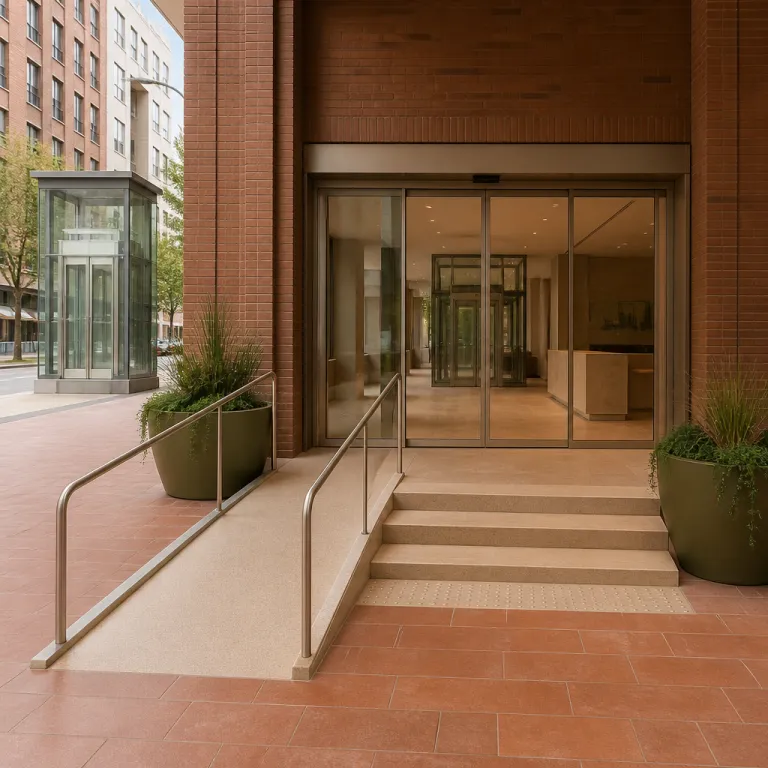
Why location is everything for accessible hotels in NYC Manhattan
For wheelchair users, the smartest way to enjoy New York City is to treat the right hotel location as your primary form of transport. When you choose an accessible hotel in Manhattan where you can roll from the lobby to meetings, restaurants, and theatres, the subway’s missing elevators and platform gaps stop dictating your day. In a city where only around 25 % of subway stations have elevators (MTA Accessibility Dashboard, data accessed March 2024), staying in a barrier free hotel within a compact, walkable area matters more than shaving a few minutes off a train ride.
Think of Manhattan as a series of self contained islands, each with its own character, transit options, and density of wheelchair friendly hotels. Midtown Manhattan gives you the classic skyline, major hubs, and a dense grid that makes rolling between a square, a park, and a theater surprisingly efficient for a wheelchair user. Downtown, neighborhoods like Tribeca and the Financial District offer calmer streets, shorter blocks, and accessible places to stay located close to riverfront paths that feel almost like a private park in the middle of the city.
When you evaluate any accessible hotel, look beyond the glossy hotel website and study the exact location on a map. Check how far it is from an accessible subway station, but also count the number of cafés, restaurants, and cultural venues within a 500 to 800 m radius. The more the city comes to you, the less you need to wrestle with inaccessible stations, steep curb cuts, or unreliable lifts that can turn a simple trip into a stressful detour.
Midtown Manhattan: accessible hotels where you can roll between icons
Midtown Manhattan is where many wheelchair travelers start, because the area compresses business, leisure, and culture into a tight, rollable grid. Around Times Square and Bryant Park you will find a cluster of accessible hotels located within a few blocks of Broadway theatres, major office towers, and shopping streets, which means a guest can move between work and play without ever needing the subway. This is the part of New York City where the right hotel offers a near continuous step free route from lobby to landmark.
Intercontinental New York Times Square is a strong example of an accessible hotel with a premium feel and a strategic location. The property sits a short roll from Times Square itself, close to accessible entrances at Port Authority and nearby stations, and it offers adapted rooms that have been vetted by specialist platforms for features such as roll in showers and grab bars. Based on recent accessibility listings reviewed in early 2024, a practical checklist for this and similar midtown hotels includes: door width of at least 32 inches (81 cm), 36 inches (91 cm) of clear transfer space beside at least one side of the bed, a shower with a fixed or folding seat plus a handheld shower within reach, and grab bars positioned on adjacent walls. Yotel New York at Times Square and Hampton Inn Manhattan Grand Central are other hotels in this midtown corridor where accessible rooms, clear wayfinding, and reliable lifts combine with a central location that keeps most of your itinerary within a 1 km radius; always confirm these specifications directly with the property before booking.
For business leisure travelers, this midtown band between Bryant Park, Times Square, and Columbus Circle is particularly efficient. You can choose hotels in New York City that offer a fitness center, free WiFi, and quiet executive floors, then step outside to find restaurants with level entries and theatres that have wheelchair seating on the orchestra level. If you are planning an accessible romantic weekend that mixes meetings with shows, the same logic applies: prioritize a neighborhood where your hotel, dining, and cultural plans all sit within a compact, step free zone so that your wheelchair accessible stay in Manhattan feels seamless from morning to late night.
Central Park, Columbus Circle and the uptown edge of midtown
North of Times Square, the city softens as you approach Central Park, Columbus Circle, and the upper edge of Midtown Manhattan. This is where wheelchair users often choose hotels when they want greenery, museums, and quieter evenings without losing the convenience of a central location. From an accessibility perspective, the combination of wide sidewalks, long traffic light cycles, and multiple accessible entrances to Central Park makes this area particularly appealing.
Staying near Columbus Circle or the southern edge of Central Park places you within rolling distance of cultural heavyweights, from Lincoln Center to the Museum of Modern Art, while still keeping you close to accessible subway stations on the A, B, C, D, and 1 lines. Many hotels in this zone offer a fitness center, generous public spaces, and higher service levels that suit executive travelers extending a work trip into leisure. When you evaluate any hotel here, look for a hotel website that clearly details accessible rooms, roll in showers, and step free routes from the street to the lobby and onward to restaurants or bars.
Travelers who appreciate curated city mapping will find it useful to think of this area as a set of overlapping, walkable pockets. In New York City, these pockets include the Central Park south strip, the Columbus Circle cluster, and the quieter streets that lead toward the Upper West Side, each with its own mix of accessible hotels and restaurants with level entries. Choosing a hotel located here means you can roll to the park in minutes, enjoy free WiFi and room service when you return, and avoid the stress of long transfers after a late night performance.
Downtown and Tribeca: accessible urban escapes with a calmer rhythm
For travelers who prefer cobbled charm and river views to neon, downtown Manhattan offers a different kind of accessible escape. Neighborhoods like Tribeca and the Financial District have seen a quiet rise in wheelchair friendly hotels that guests can enjoy, with Smyth Tribeca standing out for its ADA compliant public entrance, elevators, and accessible rooms. The streets here are narrower than midtown, but traffic is often calmer, and the grid gives way to more characterful blocks that reward slow exploration.
Smyth Tribeca’s location places guests within rolling distance of accessible subway stations at Chambers Street and the World Trade Center complex, which is one of the better connected accessible hubs in New York City. From an accessibility perspective, this means you can reach uptown museums or Brooklyn waterfronts with fewer transfers and more reliable lifts. The hotel’s design leans toward understated luxury, and for wheelchair users the key advantage is not only the compliant entrance but the coherent accessible route from street to room, restaurant, and lounge without awkward detours or heavy doors.
Edge Hotel in Washington Heights, while not downtown, is another example of a property that has invested in accessible rooms with roll in showers and grab bars, serving guests who want to explore a different slice of the city. Publicly available accessibility statements and booking engine notes, last checked in early 2024, indicate features such as step free access, adapted bathrooms, and visual alerts, but you should still verify current details with the hotel. When you compare these hotels, focus less on star rating and more on how each location interacts with your personal map of New York City, from meetings to dinners. A well chosen accessible hotel downtown can turn what might have been a stressful commute into a short, scenic roll along the riverfront before you retreat to a quiet room with free WiFi and thoughtful amenities.
Reading between the lines of hotel websites and accessibility claims
Luxury and premium travelers booking accessible hotels in Manhattan quickly learn that not all accessibility icons mean the same thing. A hotel website might list an accessible room, but omit crucial details such as bed height, transfer space, or whether the roll in shower actually has a seat and handheld shower within reach. To book with confidence, you need to interrogate both the hotel’s own information and independent accessibility reviews with the same rigor you would apply to a financial report.
Start by checking whether the hotel website provides a dedicated accessibility page with specific measurements, photos of accessible bathrooms, and clear descriptions of routes from parking or drop off to the lobby and rooms. Properties like Edge Hotel, Hampton Inn Manhattan Grand Central, Mayfair Hotel NYC, Smyth Tribeca, Intercontinental New York Times Square, Sonesta Hotels of New York, and Yotel New York at Times Square have all published accessibility information that goes beyond a single icon, which is a positive signal. When in doubt, email the hotel directly with a short list of non negotiables, such as a true roll in shower, step free access to all restaurants, and confirmation that accessible rooms are located on floors served by every lift; note the date of the hotel’s reply so you know when those details were last verified.
Specialist platforms that focus on accessible hotels in New York City often verify features on site, which adds another layer of trust. As one such resource notes in its guidance, “Confirm accessibility features directly with the hotel.” and “Check subway station accessibility in advance.” and “Plan routes considering accessible stations.”. Using this kind of checklist approach, you can compare hotels in New York not only on rating or design, but on how reliably they will support your specific mobility, sensory, or hearing needs throughout the stay.
Beyond Manhattan: transfers, taxis and building an accessible city strategy
Even when you focus on accessible hotels in NYC Manhattan, wheelchair users still need to think about the journey from airport to lobby. Accessible transfers from JFK, LaGuardia, or Newark can be arranged through wheelchair accessible car services, which often provide more predictable ramps and tie downs than hailing a street taxi. The trade off is cost versus spontaneity, so many frequent travelers build a personal playbook that mixes pre booked cars for late arrivals with accessible yellow cabs when time and energy allow.
Once you are in the city, the limited percentage of subway stations with elevators means your hotel location becomes the anchor of your daily strategy. Choosing a hotel located near an accessible hub such as Times Square, Columbus Circle, or the World Trade Center complex allows you to reach multiple lines without repeated street crossings or lift hunts. In parallel, you can treat the immediate neighborhood as your primary playground, selecting accessible restaurants, theatres, and parks within rolling distance so that even if a lift is out of service, your evening plans remain intact.
Many of the lessons from other accessible urban escapes apply directly to New York City, whether you are comparing refined accessible stays in coastal resorts or studying how another metropolis organizes its accessible luxury hotel map. Resources that profile what is there for older adults seeking refined accessible stays consistently show how aligning hotel choice with walkable, amenity rich districts reduces friction for every guest. Apply the same lens here, and Manhattan becomes less about battling the subway and more about curating a compact, high quality slice of the city that fits your mobility, your schedule, and your standards.
Key figures that shape accessible hotel choices in Manhattan
- Around 25 % of New York City subway stations currently have elevators, according to the Metropolitan Transportation Authority’s accessibility data (MTA Accessibility Dashboard, figures reviewed March 2024), which means three quarters of stations remain effectively off limits for many wheelchair users.
- Recent counts from accessibility booking platforms indicate roughly 50 hotels in Manhattan advertise wheelchair accessible rooms, but only a subset provide detailed information on roll in showers, grab bars, and step free public areas; always verify the publication date of any list you use and cross check with the hotel’s own accessibility statement.
- Properties such as Park Lane Hotel and The Ned NoMad illustrate a growing trend where luxury hotels integrate accessibility into overall design, offering features like wide doorways, visual alert systems, and low level beds without compromising aesthetics; confirm the latest specifications with the property, as layouts and room types can change.
- Hard Rock Hotel New York’s partnership with the KultureCity sensory accessibility program signals a broader shift from purely mobility focused adaptations toward multi sensory accessibility for guests with autism or sensory processing differences, including sensory kits and trained staff.
FAQ: accessible hotels in New York City and Manhattan
Which hotels in Manhattan are wheelchair accessible ?
Hotels like Edge Hotel, Hampton Inn Manhattan Grand Central, Mayfair Hotel NYC, Smyth Tribeca, Intercontinental New York Times Square, Sonesta properties in New York, and Yotel New York at Times Square all offer wheelchair accessible accommodations with varying levels of detail and amenities. For each property, ask for room door widths, bed height from floor to top of mattress, and whether there is at least 36 inches (91 cm) of clear space beside the bed for transfers. Independent accessibility platforms and recent hotel accessibility statements can help verify whether the accessible route from street to room is genuinely step free.
Are there accessible subway stations near these hotels ?
Many of these hotels are located near subway stations that have elevators, particularly around Times Square, Grand Central, and the World Trade Center area. However, elevator outages and complex station layouts can still pose challenges, so it is wise to cross check the Metropolitan Transportation Authority accessibility map before each journey. The dataset guidance is clear on this point and states, “Yes, many of these hotels are near accessible subway stations; confirm specific stations in advance.”
Do these hotels offer roll in showers ?
Some hotels, such as Edge Hotel, explicitly list rooms with roll in showers and grab bars, while others provide accessible tubs or partial adaptations. When you book, request written confirmation of the exact bathroom type, including whether the shower has a fixed or folding seat, grab bars on at least two walls, and a handheld shower that can be reached from the seat. As one reference notes, “Some hotels, like Edge Hotel, offer rooms with roll-in showers; verify with the hotel directly.”
How should I choose between midtown and downtown for an accessible stay ?
Midtown Manhattan suits travelers who want dense amenities, theatres, and corporate offices within a short roll, especially around Times Square, Bryant Park, and Columbus Circle. Downtown areas like Tribeca offer a calmer atmosphere, riverfront paths, and easier access to Brooklyn via accessible hubs at the World Trade Center. To decide, map your key meetings, attractions, and restaurants, then choose the neighborhood that keeps most of them within a comfortable rolling distance on city sidewalks each day.
What is the best way to get from the airport to an accessible hotel in Manhattan ?
From JFK, LaGuardia, or Newark, pre booked wheelchair accessible car services provide the most predictable ramps and securement, though they cost more than standard taxis. New York City also operates accessible yellow cabs, but availability can vary by time of day and weather. Many experienced travelers mix both options, using pre arranged cars for late night or long haul arrivals and accessible taxis when schedules are flexible.