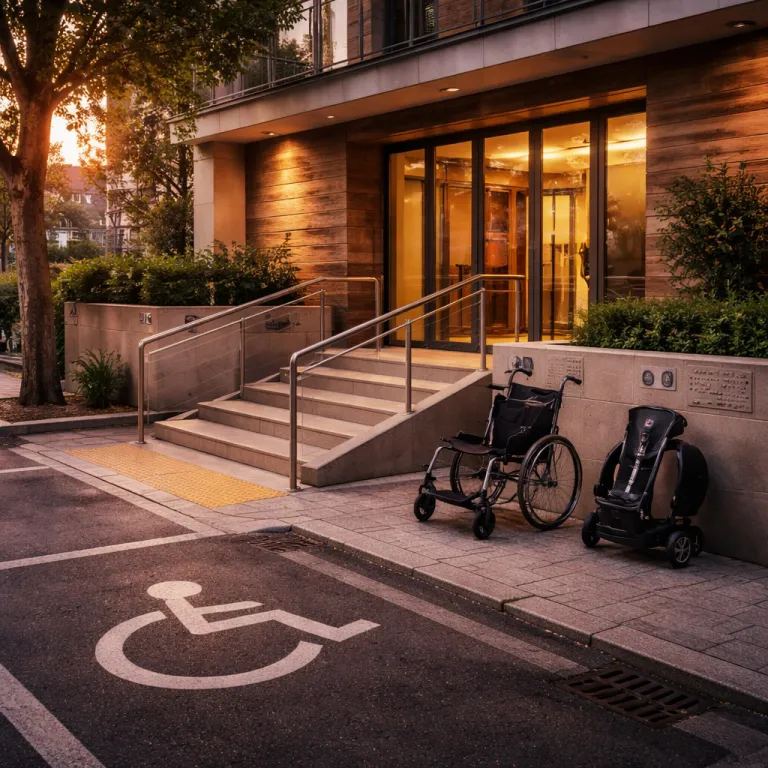
France’s new accessible hotel law and what it changes for luxury guests
France has moved ahead of other major tourism markets by enforcing a nationwide accessible hotel framework that goes beyond minimum European directives. Under the Loi n° 2005‑102 du 11 février 2005 on equal rights and opportunities for people with disabilities, and its hotel‑specific decrees (including Décret n° 2014‑1326 du 5 novembre 2014 on accessibility agendas), the French Government now requires every hotel, from palace properties in Paris to coastal resorts in Provence, to meet measurable accessibility standards for guests with disabilities and reduced mobility. This shift affects how you choose a hotel room, how you book room categories, and what level of accessibility you can reasonably expect during your stay.
The rules apply to all hotels open to the public, with no blanket exemptions for small properties or historic addresses, and they are enforced through official audits and certifications supported by accessibility consultants and construction firms. In its 2023 progress update on the national accessibility agenda, the Ministry of Economy and Finance indicated a target of around 85% of tourist accommodation being compliant or in the process of compliance by 2026, and it paired this ambition with penalties that include fines up to €45,000 and, in serious cases, temporary closure for non‑compliant hotel owners (as set out in Articles L.152‑4 and L.152‑5 of the French Construction and Housing Code). For luxury travelers, this means that an accessible hotel in France is no longer defined only by a wheelchair symbol on a website, but by verifiable features such as step‑free access, wheelchair‑friendly circulation routes, and rooms accessible on every main floor.
Compared with existing EU accessibility directives, the French framework is more prescriptive about hotel rooms, staff training, and communication tools for disabled guests and people with sensory disabilities. Properties must offer a defined percentage of accessible rooms, with at least one adapted room in each main category, and those accessible rooms must mirror the design and comfort of standard hotel rooms rather than feeling like medical spaces. Requirements extend to grab bars in every adapted shower, level‑entry or roll‑in showers in designated rooms, visual and vibrating alerts for guests with hearing impairments, and clear information on accessibility features at the booking stage for all guests. A senior official from the Ministry of Economy recently summarised the approach as “moving from symbolic gestures to measurable, everyday accessibility in every hotel stay.”
Inside the compliance roadmaps of Accor and other premium hotel groups
France’s largest hotel groups, led by Accor, have responded to the accessible hotel law with detailed compliance roadmaps that directly affect business and leisure travelers planning a stay. Accor has publicly committed to upgrading accessible rooms and hotel facilities across its French portfolio, aligning with universal design principles and the national accessibility guidelines derived from the 2005 disability law and subsequent decrees. For wheelchair users and other disabled guests, this means that a room in a Sofitel or Pullman in France should increasingly offer the same level of access as a comparable property in the United States that already follows revised ADA Title III regulations for lodging.
The French Government expects hotel owners to implement accessible facilities, conduct regular compliance audits, and maintain staff training programmes that address practical support for people with disabilities. Training now covers how to assist wheelchair users safely, how to communicate with guests who are deaf or hard of hearing or visually impaired, and how to manage emergency evacuations for people with disabilities who may rely on mobility devices. When you book room categories at higher service levels, you should see clearer descriptions of accessible room layouts, including bed heights, turning circles for wheelchairs, and whether the adapted shower has a fixed seat, handheld shower head, and correctly positioned grab bars on both sides. Accor executives have described this as “bringing accessibility up to the same brand standard as bedding, lighting, and technology.”
For executives extending a business trip into leisure, the law changes how you evaluate hotels suitable for meetings and longer stays. You can now ask whether the accessible entrance is the same as the main entrance, whether adapted rooms are close to elevators, and whether hearing‑accessibility equipment is available in meeting spaces as well as in the hotel room. A frequent traveler to Paris, for example, might prioritise a five‑star property where the step‑free route from taxi drop‑off to the executive lounge is continuous, where accessible suites connect to a second bedroom for family members, and where staff can demonstrate evacuation chairs during check‑in. When choosing an accessible executive property near your office or client site, use detailed comparison guides such as this analysis of how to choose an accessible executive inn for a refined stay to align the new French requirements with your personal travel standards.
What the law means for your next accessible booking in France and beyond
The France accessible hotel law 2026 roadmap reshapes how you plan accessible travel, from Paris boardrooms to Riviera weekends, and it raises expectations for luxury service. When you search for accessible hotels in France now, you should find more transparent information about adapted rooms, rooms accessible on multiple floors, and specific accessibility features such as roll‑in showers, pool hoists, and adult changing facilities. Before you book room options, verify accessibility details directly with the property, ask for photos of the accessible room and shower, and confirm whether grab bars, lowered counters, and wheelchair‑friendly routes are already in place or still scheduled under the compliance roadmap.
For disabled travelers comparing France with the United States or other European destinations, the French model signals a potential regulatory trend. Germany, Italy, and Spain are watching how France links accessibility, tourism growth, and enforcement, and similar laws would likely focus on measurable access in hotel rooms, consistent staff training, and better communication for disabled guests and people with disabilities who rely on accurate pre‑arrival information. As more hotels open to international travelers upgrade, you can expect accessible hotel experiences where the adapted room is available in both singular and connecting formats, where hearing‑accessibility technology is standard rather than optional, and where wheelchair users are not limited to one floor or one outdated room at the back of the property.
For families and executives seeking premium accessible hotels, the most reliable strategy is to combine legal expectations with lived‑experience reviews. Use specialist resources such as this guide to elevating comfort and dignity with adult changing stations and this curated overview of accessible luxury hotels for families to cross‑check whether a hotel that is accessible in theory actually delivers in practice. As a quick checklist before confirming your reservation, ask the hotel to clarify five points: whether the accessible entrance is step‑free and unlocked at all times, whether at least one adapted room exists in your preferred category, whether the bathroom has a level‑entry shower with a seat and grab bars, whether visual or vibrating alerts are installed for fire alarms, and whether accessible routes cover key amenities such as the restaurant, spa, and meeting rooms. When the France accessible hotel law 2026 objectives are fully embedded, guests should experience accessible hotels where adapted rooms and standard rooms share the same design language, where accessible bathrooms are maintained as carefully as marble bathtubs, and where every stay for disabled guests feels like a seamless part of mainstream tourism rather than a negotiated exception.
References
Travel And Tour World; French Ministry of Economy and Finance (2023 accessibility agenda updates and tourism accessibility targets); French Construction and Housing Code, Articles L.152‑4 and L.152‑5 (penalties for non‑compliance with accessibility obligations); U.S. Department of Justice (ADA Title III regulations for lodging); Loi n° 2005‑102 du 11 février 2005 (equal rights and opportunities for people with disabilities); Décret n° 2014‑1326 du 5 novembre 2014 (accessibility agendas for establishments open to the public).