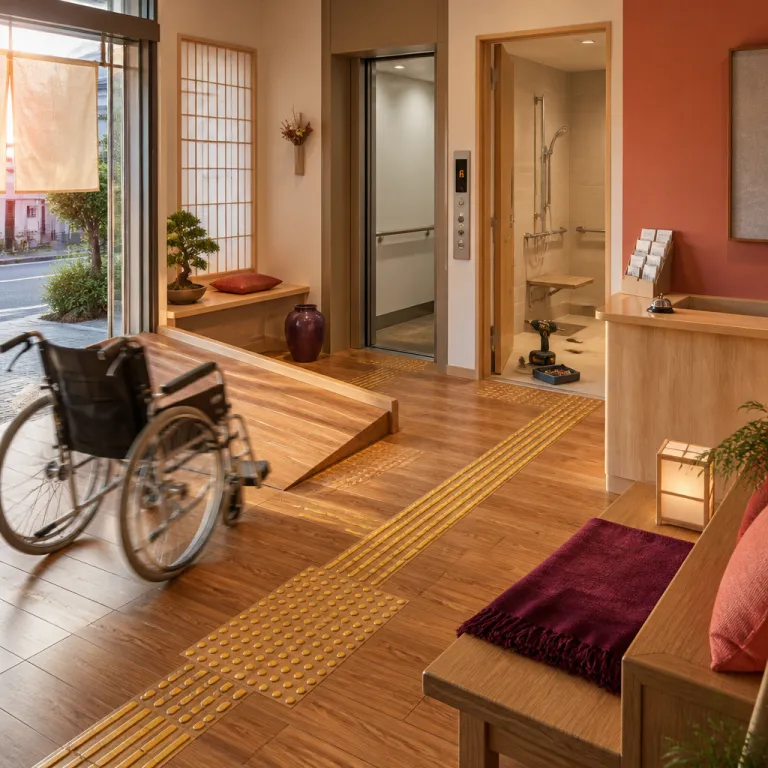
Accessible hotels in Tokyo for wheelchair users seeking true omotenashi
Tokyo rewards travellers who plan their accessible stay with precision and curiosity. The city now offers a strong selection of wheelchair-friendly hotels where a wheelchair user can expect a genuinely usable room rather than a symbolic ramp at the entrance. When you search for accessible accommodation in Tokyo, the key is matching your mobility needs with the right district, the right hotel, and the right style of stay.
In central Tokyo, luxury properties such as Imperial Hotel Tokyo, The Peninsula Tokyo, and Hotel Chinzanso Tokyo anchor the high end of accessible hotels. Each hotel Tokyo address interprets Japanese omotenashi through universal design, from wider doors to discreet grab bars and low level switches that work for wheelchair users and non disabled guests alike. These accessible hotels sit close to major station hubs, which matters when every minute walk with luggage or a mobility aid feels longer after a long haul flight.
Keio Plaza Hotel Tokyo in Shinjuku is a reference point for an accessible hotel connected to the city’s transport grid. The property offers accessible rooms and is connected to Shinjuku Station via step-free passage, which makes it one of the most practical hotels Tokyo travellers can book when they prioritise barrier free movement. For many guests, that direct link between accessible room and accessible station is more valuable than any headline hotel offers or spa package.
Midscale chains such as Toyoko Inn and Mimaru Tokyo properties broaden the accessible hotels Tokyo Japan wheelchair landscape. A Toyoko Inn near a JR or metro station often provides compact but well organised accessible rooms with a wet room style shower and basic shower chair on request. Mimaru and Mimaru Tokyo apartments, by contrast, give wheelchair users more floor space, a twin or double layout, and kitchen facilities that suit longer travel or family stays.
When you compare accessible hotels, look beyond the generic wheelchair accessible icon on booking sites. Ask for precise room measurements, such as a door width of at least 80–85 cm, a bed height you can transfer to safely, and photos of the shower area, especially if you need a roll in shower or space to position a portable shower chair. Before you check availability, email the hotel in clear English and request confirmation that the accessible room you are booking is guaranteed, not “on request” at check in.
Shinjuku, Shibuya, Ginza, Asakusa: which district works best for you ?
Choosing the right city district in Tokyo matters as much as choosing the right hotel. Shinjuku, Shibuya, Ginza, and Asakusa each offer a different rhythm, a different type of station, and a different mix of accessible hotels for wheelchair users. Your travel priorities will decide whether you stay beside neon, luxury flagships, or temple lined streets.
Shinjuku is the classic base for a first accessible hotel Tokyo stay. Keio Plaza Hotel Tokyo and its sister Plaza Hotel wing offer accessible rooms with thoughtful layouts, while Kimpton Shinjuku Tokyo and other hotel Shinjuku addresses add design forward accessible room options. Because Shinjuku Station is one of the most upgraded hubs for barrier free access, guests can roll from accessible room to multiple train lines with lifts, tactile paving, and clear signage.
Shibuya suits travellers who want nightlife and creative energy with their accessible hotels Tokyo Japan wheelchair search. Newer hotels Tokyo properties around Shibuya Station tend to be more accessible, but room sizes can be tight, so always check whether a wheelchair can turn beside the bed or in the bathroom. A good rule is to ask the hotel to measure the distance between the end of the bed and the wall, especially in twin rooms where two beds can reduce manoeuvring space.
Ginza offers a calmer, more polished city experience, with luxury hotel Tokyo addresses that understand international accessibility standards. The Peninsula Tokyo stands out with accessible suites that include roll in showers, grab bars, and intuitive controls that work for guests with limited reach or dexterity. Here, free WiFi, attentive staff, and barrier free access to nearby metro exits combine to create a smooth base for shopping, dining, and business travel.
Asakusa appeals to travellers who want a more traditional atmosphere without sacrificing an accessible room. Several midscale hotels near Asakusa Station offer accessible rooms with wet room bathrooms, a fixed shower chair, and step free access from street to lobby. When you check availability in this area, pay attention to the minute walk distance from station to hotel, because some streets still have uneven pavements that can slow wheelchair users.
For urban explorers who enjoy comparing accessible city breaks, it is worth reading about other barrier free urban escapes such as the cool hotels in Portland for an elevated and accessible urban stay described on Accessible Stay. That kind of cross city perspective helps you benchmark what a good accessible hotel in Tokyo should offer in terms of room size, shower design, and staff training. Once you have that mental checklist, you can filter hotels Tokyo options more confidently and avoid properties that rely on vague “universal design” language without specifics.
Inside the room: what luxury accessibility in Tokyo really looks like
Behind the door of an accessible room in Tokyo, details matter more than labels. A genuinely accessible hotel will have a door wide enough for a power wheelchair, a level threshold no higher than 1–2 cm, and enough clear floor space to turn without scraping knuckles on furniture. In luxury hotels, that often means a larger footprint than standard rooms, which is crucial in a city where average hotel rooms are famously compact.
At Imperial Hotel Tokyo, universal design rooms include adjustable beds, space for hoists, and bathrooms with grab bars that feel integrated rather than clinical. The Peninsula Tokyo offers accessible suites where the roll in shower, bench, and handheld shower head are positioned so a wheelchair user can transfer safely without contortion. Hotel Chinzanso Tokyo, set in a garden enclave, combines spacious rooms with wheelchair friendly entrances and bathrooms that balance aesthetics with barrier free practicality.
Apartment style brands such as Mimaru and Mimaru Tokyo bring a different kind of accessible room to the market. These hotels often feature twin beds or family layouts, giving guests more flexibility when travelling with a personal assistant or family member. For wheelchair users, the extra rooms and kitchen area can make daily routines easier, especially when you need space to store equipment or prepare specific food.
In midscale chains like Toyoko Inn, accessible rooms are smaller but usually well thought out. Expect a wet room style shower with a basic shower chair, grab bars beside the toilet, and reachable switches, though you should always check photos to confirm. Free WiFi is standard, but the real value lies in predictable layouts across multiple hotels, which helps frequent travellers with access needs build reliable habits.
When you book, ask whether the hotel offers both twin and double accessible rooms, because bed configuration can change how easily a wheelchair can approach. Some guests prefer a twin layout to create a transfer side, while others need a single large bed with space on both sides. Always request the exact room type number in writing before you check availability, and bring a printed confirmation to show at reception if there is any confusion at check in.
Tokyo’s approach to barrier free design sits within a wider Asian trend of accessible urban escapes, from Taipei to Seoul. For a sense of how another Asian capital handles accessible luxury, compare your Tokyo shortlist with the elegant places to stay in Taipei for an accessible urban escape featured on Accessible Stay. That comparison sharpens your eye for details such as bathroom gradients, balcony thresholds, and how staff describe accessibility during the booking accessible process.
Bathrooms, showers, and the reality of “barrier free” in Japan
Bathrooms are where accessible hotels Tokyo Japan wheelchair stays succeed or fail. A room can feel spacious, but if the shower is over a deep tub or the drain slopes badly, a wheelchair user’s independence disappears. In Japan, the term “barrier free” is widely used, yet it can describe anything from a single ramp to a fully roll in shower with a fixed bench and grab bars.
Luxury properties such as The Peninsula Tokyo and Keio Plaza Hotel Tokyo tend to offer the most reliable barrier free bathrooms. At Keio Plaza, accessible rooms include roll in showers with level entry, fold down benches, and grab bars placed where a guest actually transfers, not where a designer thought they might. The best hotels Tokyo wide also provide portable shower chair options, non slip flooring, and enough space for a wheelchair to turn inside the bathroom without reversing into the corridor.
In midscale hotels and business chains, you will often find a wet room style shower that is technically wheelchair accessible but tight. Toyoko Inn accessible rooms usually have a combined toilet and shower area with a curtain, a floor drain, and a basic stool that functions as a shower chair. Before you check availability, ask the hotel to confirm whether there is a step at the bathroom entrance, because even a three centimetre lip can be a serious obstacle for some wheelchair users.
Japanese accessible hotels sometimes excel in small but meaningful details. You may find emergency call buttons at low height, lever taps that are easy to operate with limited grip, and mirrors angled so a seated guest can see clearly. Free WiFi and good lighting help guests research routes and check train accessibility from the room, turning the bathroom and bedroom into a functional base for city exploration.
For travellers who use hoists or need assistance from two people, room size and bathroom layout in Tokyo can still be challenging. In those cases, consider booking accessible suites at larger properties such as Imperial Hotel Tokyo or The Peninsula Tokyo, where the extra rooms and wider doors make complex care routines more realistic. Always send a diagram of your wheelchair and any equipment to the hotel in advance, and ask them to confirm that the accessible room and bathroom can accommodate everything.
Comparing Tokyo’s barrier free bathrooms with those in other destinations, such as the exceptional and unusual accessible places to stay in Iceland highlighted by Accessible Stay, can recalibrate your expectations. Some cities offer vast wet rooms but weaker public transport, while Tokyo balances compact bathrooms with excellent station accessibility. Knowing that trade off helps you decide where to compromise and where to insist on a fully wheelchair accessible shower with a secure shower chair and transfer space.
Navigating Tokyo: stations, metro lines, and accessible day trips
Tokyo’s transport network is one of the most wheelchair accessible in Asia, but it still demands strategy. Major hubs such as Shinjuku, Tokyo, Ueno, and Shibuya Stations now offer lifts, tactile paving, and staff trained to deploy boarding ramps. When you choose an accessible hotel, always map the route from hotel lobby to nearest station entrance, not just the distance as the crow flies.
Keio Plaza Hotel Tokyo is a benchmark because it connects to Shinjuku Station via a step free passage that keeps guests indoors and out of the weather. That kind of direct link turns a five minute walk into a smooth roll, which matters when you are returning from a long day trip. Other hotel Shinjuku options may be technically close to the station, but a steep slope or narrow pavement can make the same minute walk feel much longer for wheelchair users.
For day trips, Hakone and Kamakura are realistic options from Tokyo for travellers who plan carefully. Many JR lines now offer level boarding with portable ramps, and staff will escort you on and off the train if you request assistance at least ten minutes before departure. When you travel to more rural stations, always check whether the return station has lifts and accessible toilets, because barrier free infrastructure thins out once you leave the city core.
Within Tokyo, metro lines such as the Toei and Tokyo Metro networks have invested heavily in lifts, tactile paving, and audio announcements. Most stations now have at least one wheelchair accessible route from street to platform, though it may not be the most obvious entrance. Before you check availability at any hotel, use online station maps to confirm that your nearest station has lifts on the lines you plan to use most.
Accessible taxis and wheelchair accessible buses add another layer of flexibility, especially at night when some lifts close earlier than train services. Many luxury hotels Tokyo wide can pre book accessible taxis if you email them in advance with your chair dimensions and preferred times. Free WiFi in your accessible room makes it easier to coordinate these bookings, translate addresses into Japanese, and show drivers the exact hotel entrance you need.
For travellers who enjoy comparing accessible urban escapes, Tokyo sits alongside cities such as Portland and Taipei as a reference point. Reading about cool accessible hotels in Portland or elegant accessible stays in Taipei helps you understand how different cities balance hotel accessibility with public transport design. That perspective reinforces why Tokyo’s combination of barrier free stations, tactile paving, and well trained staff is such a strong foundation for an accessible hotels Tokyo Japan wheelchair focused trip.
Communicating access needs and navigating the language barrier
Language can feel like the last barrier when you book an accessible hotel in Japan. Many front desk teams in luxury hotels speak good English, but written communication remains your most reliable tool. Clear emails sent before you check availability will often determine whether you receive the exact accessible room you need or a standard room with a portable ramp.
When you contact hotels Tokyo wide, use simple sentences and bullet points to describe your access requirements. Specify that you are a wheelchair user, whether you use a manual or power wheelchair, and whether you can transfer independently or need a shower chair and grab bars. Ask the hotel to confirm in writing that the room has step free access from street to lobby to room, and that the bathroom has a roll in shower rather than a bathtub.
Japanese hotels are familiar with the term “barrier free”, so include it alongside “wheelchair accessible” in your messages. For example, you might write that you need a barrier free accessible room with a roll in shower and space to turn a wheelchair beside the bed. If you prefer a twin layout, state that you require a twin accessible room, because some hotels only adapt double rooms and may not mention that unless you ask.
At check in, do not hesitate to ask to see the room before you unpack. If the accessible room does not match what you confirmed by email, show the written confirmation and request an alternative or an upgrade if available. Luxury properties such as Imperial Hotel Tokyo, The Peninsula Tokyo, and Keio Plaza Hotel Tokyo usually respond quickly and respectfully when guests raise legitimate accessibility concerns.
For travellers who feel anxious about language, carrying a short printed card in Japanese describing your needs can help. Include phrases that explain you are a wheelchair user, that you need a shower chair, and that you cannot step over a bathtub edge. Hotel staff in Japan generally take such requests seriously, and the culture of omotenashi means they will often propose creative solutions within the limits of the building.
Online communities and specialist platforms such as Wheelieguides and Accessible Japan provide up to date reports on specific hotels and stations. These resources complement official hotel offers and marketing language by sharing real guest experiences of accessible rooms, lifts, and station routes. One wheelchair user, for example, reported that staff at Keio Plaza Hotel Tokyo walked them through the step free route to Shinjuku Station on arrival, turning a potentially stressful first outing into a straightforward roll. When you combine that kind of peer insight with direct communication to the hotel, your booking accessible process becomes far more reliable and less stressful.
Ryokan, Kyoto side trips, and what Western hotels can learn from Japan
Many travellers dream of staying in a traditional ryokan during a trip to Japan. For wheelchair users, that dream is possible but requires careful selection, because tatami floors, narrow corridors, and step up bathrooms can undermine barrier free access. In most cases, it is wiser to base yourself in an accessible hotel in Tokyo and treat ryokan stays as carefully researched exceptions rather than the default.
Some modern ryokan near Tokyo and in Kyoto now offer partially accessible rooms with low beds, wider doors, and adapted bathrooms. However, the most consistently wheelchair accessible options remain international style hotels with dedicated accessible rooms and suites. When you plan a side trip to Kyoto, look for hotels near major stations such as Kyoto Station, where lifts, tactile paving, and accessible toilets are more common.
Tokyo itself makes an excellent base for exploring other cities by Shinkansen. Many travellers choose to stay in an accessible hotel Tokyo property such as Keio Plaza, Imperial Hotel Tokyo, or a well located Mimaru Tokyo apartment, then take day trips or overnight excursions to Kyoto and beyond. Because Shinkansen platforms are generally wheelchair accessible with staff assistance, the main challenge is ensuring that both departure and arrival stations have working lifts and clear signage.
Japanese accessibility offers several lessons that Western hotels could adopt. Tactile paving on pavements and in stations, audio signals at crossings, and clear visual signage benefit wheelchair users, blind travellers, and non disabled guests equally. Inside hotels, low placed emergency buttons, lever handles, and intuitive light controls show how barrier free design can feel luxurious rather than clinical.
At the same time, Western hotels often lead in providing larger accessible rooms and bathrooms, especially in North America and parts of Europe. Comparing those generous floor plans with compact but efficient Japanese rooms highlights the trade offs between city density and space. For wheelchair users, the ideal future blends Japanese attention to detail with Western room sizes, creating accessible rooms where both manoeuvrability and aesthetics are non negotiable.
As you refine your accessible hotels Tokyo Japan wheelchair itinerary, remember that no single property or city is perfect. The goal is to assemble a combination of accessible hotel, station, and neighbourhood that supports your personal way of travelling. With thoughtful planning, clear communication, and a willingness to ask precise questions, Tokyo can deliver a barrier free stay that feels as refined and welcoming as any luxury trip in the world.
Key figures on accessible hotels in Tokyo
- There are well over one hundred hotels with accessible rooms in Tokyo, according to recent aggregated booking data from specialist accessibility platforms, which indicates a broad but uneven distribution of accessibility across the city’s districts.
- Major hubs such as Shinjuku, Tokyo, and Ueno Stations concentrate a high proportion of these accessible hotels, giving wheelchair users better access to multiple train and metro lines from a single base.
- Tokyo’s investment in barrier free infrastructure accelerated in the run up to the Paralympic Games, leading to widespread installation of lifts, tactile paving, and accessible toilets in public buildings and stations.
- Luxury properties such as Imperial Hotel Tokyo, The Peninsula Tokyo, and Keio Plaza Hotel Tokyo represent a small but influential segment of the accessible hotel market, setting higher standards for room design and staff training.
Frequently asked questions about accessible hotels in Tokyo
Which hotels in Tokyo offer accessible rooms ?
Hotels like Imperial Hotel Tokyo, Keio Plaza Hotel Tokyo, and The Peninsula Tokyo offer accessible rooms. These properties provide features such as wider doors, roll in showers, and grab bars, and they are located near major stations with barrier free access. Many midscale chains, including Toyoko Inn and Mimaru Tokyo, also offer accessible rooms, though layouts and sizes vary.
How can I verify a hotel’s accessibility features ?
How can I verify a hotel's accessibility features? Contact the hotel directly and consult verified platforms like Wheelieguides. Ask for specific measurements, recent photos of the accessible room and bathroom, and written confirmation that the room you are booking is fully wheelchair accessible, including step free access from street to lobby.
Are there accessible hotels near Tokyo Disneyland ?
Are there accessible hotels near Tokyo Disneyland? Yes, hotels like Tokyo Disneyland Hotel and Hilton Tokyo Bay offer accessible accommodations. These properties provide adapted rooms and step free routes to the parks, and they are used to welcoming wheelchair users and families with diverse access needs.
Is public transport in Tokyo wheelchair accessible from most hotels ?
Public transport in Tokyo is widely wheelchair accessible, especially around major hubs such as Shinjuku, Tokyo, and Ueno Stations. Many accessible hotels are located within a short, step free route of these stations, and staff can help you plan the easiest entrance and lift combination. Always check station maps in advance, because the accessible route is not always the closest entrance to your hotel.
Can I stay in a traditional ryokan as a wheelchair user ?
Some modern ryokan offer partially accessible rooms, but many traditional properties still have steps, narrow corridors, and raised bathrooms that challenge wheelchair users. If a ryokan stay is important to you, research carefully and contact the property directly with detailed questions about room layout and bathroom access. For most travellers, basing themselves in an accessible hotel in Tokyo or Kyoto and treating a ryokan visit as a short, carefully planned experience works best.