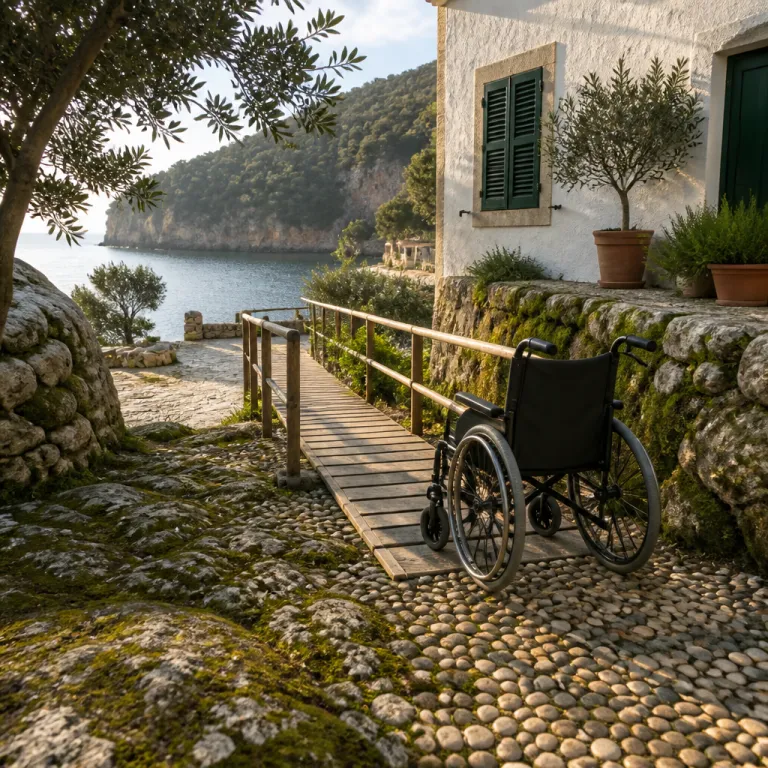
Why wheelchair travel Mediterranean accessible hotels matter for a summer beach escape
Wheelchair travel in the Mediterranean summer demands far more than a token ramp at the hotel door. Luxury travelers with limited mobility want continuous step-free routes to the sea, reliable pool hoists, and accessible rooms that match the elegance of the lobby. When you search for wheelchair travel Mediterranean accessible hotels, you are really asking whether the entire journey, from airport jet bridge to sunset cocktail, will feel seamless.
Across Europe, accessible tourism has matured unevenly, so each city and coastal region requires a different strategy. Spain’s leadership on accessible beaches contrasts with patchier accessibility in parts of the south of France and the Greek islands, which affects how wheelchair users plan every trip. For couples arriving from North America, South Africa, or even long haul from Costa Rica, the right accessible hotel can turn a complex itinerary into a relaxed Mediterranean ritual.
Luxury properties now understand that accessible travel is not a niche request but a core standard. The best wheelchair-friendly resorts in Crete, Mallorca, and the Côte d’Azur pair roll-in showers and grab rails with thoughtful details such as lowered wardrobe rails and tactile room controls. When you evaluate wheelchair travel Mediterranean accessible hotels and similar coastal properties, look for evidence that accessibility is integrated into design, not added as an afterthought.
Seasonal demand peaks in summer, so wheelchair users should pre-book accessible rooms and confirm details in writing. Ask whether accessible beaches are within 500 metres, whether beach wheelchairs are reserved, and how staff are trained to assist guests with limited mobility. One practical checklist item is to request written confirmation of door widths (at least 80 cm for room and bathroom doors) and maximum ramp gradients (ideally no steeper than 6–8 percent) before you pay a deposit. This level of precision may feel meticulous, yet it is exactly what separates a stressful scramble from a smooth, romantic trip.
Crete’s south coast and beyond: where accessibility reaches the waterline
Crete rewards patient planners, especially those focused on wheelchair travel Mediterranean accessible hotels along its south and north coasts. Public buses in Crete are often not reliably wheelchair accessible, so private transfers or adapted rental vehicles become essential for many trips. That reality makes the choice of accessible hotel even more critical, because you will rely heavily on the property’s location and on-site services.
Along the island’s more developed stretches of beaches, several resorts now offer wheelchair-accessible paths from adapted rooms to the pool terrace and then to the sand. Ask explicitly whether the route is step free, what the gradient is in percent, and whether a beach wheelchair is available for guests with limited mobility. Some coastal towns have invested in accessible beaches with ramps and floating chairs, yet the distance from the city centre or village square can still be challenging without adapted transport.
Couples who enjoy cultural detours can combine accessible travel on Crete with city breaks elsewhere in Europe, pairing a week by the sea with a few nights in Vienna, Rome, or Paris. When you compare wheelchair-friendly stays in these capitals with Cretan resorts, you will notice that urban accessibility often excels in public transport, while island properties win on direct access to the water. For a practical benchmark, review accessibility statements from high-end city hotels that publish detailed information on step-free routes, lift dimensions, and bathroom layouts, then apply the same checklist to Mediterranean properties.
Shore excursions from Mediterranean cruise itineraries sometimes include Cretan ports, yet not every excursion is designed for wheelchair users. Before booking any cruise segment, ask whether shore excursions use accessible coaches, whether the gangway is reliably wheelchair friendly, and how far the accessible buses park from key tourist attractions. This level of questioning mirrors the due diligence that specialist agencies such as Sage Traveling encourage for Europe wheelchair itineraries.
Mallorca’s accessible beaches and Palma’s city advantage
Mallorca has quietly become a benchmark for wheelchair travel Mediterranean accessible hotels, especially for couples who want both beaches and a sophisticated city. Palma’s flat waterfront promenade, relatively compact old town, and improving accessibility in public spaces give wheelchair users a practical base for a longer trip. When you choose an accessible hotel here, prioritise properties that offer step-free routes from adapted rooms to the street, then to the seafront within a short roll.
Several Mallorcan municipalities maintain accessible beaches with wooden walkways, amphibious chairs, and seasonal lifeguard support trained to assist guests with limited mobility. These accessible beaches are usually signposted from the main road, yet it is still wise to confirm exact facilities through accessibility maps or apps such as Wheelmap, which help identify wheelchair-friendly venues. Local tourism boards in the Balearic Islands publish beach accessibility information each season, including which stretches of sand provide amphibious chairs, reserved parking, and accessible toilets.
Palma’s role as a regional hub also simplifies multi-stop accessible travel across Europe, whether you are flying in from North America, connecting to Barcelona or Amsterdam, or continuing south towards Athens. Many couples pair Mallorca with a short city stay elsewhere, using the island for rest and the mainland for culture, which echoes how travelers combine refined accessible stays in other coastal destinations with major cities. When planning such combinations, align flight times with hotel check-in, and always reconfirm that airport transfers are wheelchair accessible, not just “step assisted”.
For those considering a cruise segment, Mallorca often appears as a port on western Mediterranean itineraries, yet not all shore excursions are suitable for wheelchair users. Look for operators that clearly label wheelchair-accessible buses, provide detailed accessibility information for tourist attractions, and specify whether beach stops include accessible beaches with proper ramps. Couples who value privacy may still prefer a land-based stay, using private adapted vehicles instead of cruise shore excursions to control pace and comfort.
Côte d’Azur reality check: Nice, the French Riviera, and hilltop challenges
The Côte d’Azur is where wheelchair travel Mediterranean accessible hotels meet the glamour of the French Riviera, and the contrast between seafront accessibility and hilltop drama is stark. Nice stands out with a long, mostly level promenade and a high proportion of accessible buses, supported by local transport data indicating extensive low-floor coverage. That same network includes hundreds of accessible stops, which makes spontaneous city exploration far easier for wheelchair users than in many coastal regions.
Along the Baie des Anges, several sections of shoreline operate as accessible beaches, including dedicated Handiplage zones with ramps, beach wheelchairs, and trained staff. These accessible beaches allow couples with limited mobility to move from accessible hotel terraces to the water with minimal assistance, especially when properties maintain step-free links to the promenade. Official Handiplage listings from French coastal municipalities specify which beaches offer reserved parking, adapted toilets, and supervised bathing areas with floating chairs.
When comparing wheelchair travel Mediterranean accessible hotels in Nice, Cannes, or Antibes, scrutinise bathroom layouts, balcony thresholds, and the route from reception to accessible rooms. Ask whether the pool has a hoist, whether spa facilities are wheelchair friendly, and how staff are trained to support wheelchair users without being intrusive. One traveler described their ideal stay as “a place where I can roll from my room to the pool, the spa, and the sea without ever needing to ask for a workaround,” which is a useful benchmark when you read hotel descriptions.
Some travelers extend their French Riviera itinerary with side trips to Barcelona, Paris, Venice, or even Lake Como, using high-speed trains and short flights to stitch together a broader Europe wheelchair journey. Others combine a Mediterranean summer with long haul adventures to Cape Town or accessible safaris in South Africa, or eco-focused accessible tourism in Costa Rica, proving that one season can host multiple chapters of accessible travel. Whatever the combination, the same principles apply; confirm every transfer is wheelchair accessible, verify hotel accessibility beyond the lobby, and use real-time accessibility data from apps and local tourism boards to refine plans.
Planning tools, seasonal tactics, and how to choose the right accessible hotel
Successful wheelchair travel Mediterranean accessible hotels itineraries start months before departure, with a clear hierarchy of needs. Decide whether your priority is daily access to accessible beaches, proximity to major tourist attractions, or the intimacy of a quieter coastal city with fewer crowds. Couples who articulate these preferences early will find it easier to choose between Crete’s south coast, Mallorca’s resort zones, and the urban energy of the Côte d’Azur.
Use accessibility maps, transportation guides, and detailed accommodation reviews to cross-check every accessible hotel on your shortlist. Look for consistent reports of truly wheelchair-accessible bathrooms, step-free circulation, and staff who understand the nuances of accessible tourism for guests with limited mobility. Specialist agencies such as Sage Traveling, along with local accessibility organisations in Europe and North America, can help validate whether marketing promises align with real-world wheelchair travel experiences.
Summer heat adds another layer of complexity, especially for wheelchair users who may be more sensitive to temperature and crowding. Aim for accessible rooms with efficient air conditioning, shaded terraces, and easy access to indoor lounges, so you can retreat during the hottest hours of the day. If you are inspired by adults-only micro-wedding style resorts in other regions, such as the best all inclusive resorts in Mexico for an adults only micro wedding, seek Mediterranean properties that offer similarly calm atmospheres while still being wheelchair friendly.
Finally, remember that accessible travel is a dynamic field, with new ramps, lifts, and policies appearing every season across Europe, North America, South Africa, and beyond. Reconfirm details with each hotel and transport provider a week before your trip, and keep a flexible mindset in case a promised wheelchair-accessible feature is temporarily out of service. The reward for this careful planning is simple; a Mediterranean summer where the wheelchair fades into the background, and the focus shifts to shared sunsets, sea breezes, and the quiet luxury of feeling fully included.
FAQ: wheelchair travel Mediterranean accessible hotels
Is public transportation in Crete wheelchair accessible?
Public buses in Crete are not consistently wheelchair accessible, which means wheelchair users should plan on private transfers, adapted rental vehicles, or pre-arranged transport through their accessible hotel. When booking, ask for vehicle dimensions, ramp specifications, and whether drivers are trained to assist guests with limited mobility. This extra step will significantly reduce stress on arrival and departure days.
Are beaches in Côte d’Azur accessible for wheelchair users?
Yes, some beaches like Handiplage Espace Claude Faivre in Cagnes sur Mer are designed for accessibility, offering ramps, beach wheelchairs, and staff support. Along the wider French Riviera, several municipalities operate similar accessible beaches, especially near Nice and Antibes. Municipal accessibility pages typically publish seasonal opening dates, available equipment, and any reservation requirements for beach wheelchairs during peak summer weeks.
How can I find accessible places in Mallorca during my trip?
Use apps like Wheelmap to locate wheelchair-friendly venues, including restaurants, tourist attractions, and accessible beaches across Mallorca. Combine this digital information with guidance from local tourism boards and your hotel’s concierge, who can often share up-to-date details on temporary works or new ramps. This blended approach will help you adapt plans quickly if a particular city area proves less accessible than expected.
Which Mediterranean destination is best for first time wheelchair users in Europe?
Mallorca and the Côte d’Azur generally offer a smoother experience for first time wheelchair travel in Europe than more rugged islands, thanks to better transport links and a higher density of accessible hotel options. Palma and Nice both provide relatively flat promenades, accessible beaches, and strong infrastructure for accessible tourism. Crete can still be rewarding, but it suits travelers who are comfortable arranging private transport and navigating more varied terrain.
Can I combine a Mediterranean accessible beach holiday with other international destinations?
Yes, many wheelchair users pair Mediterranean accessible travel with longer itineraries that include cities such as Vienna, Rome, Barcelona, Paris, Amsterdam, or even long haul stops in Cape Town, Costa Rica, or South Africa. The key is to maintain the same verification process for every accessible hotel, transfer, and excursion, regardless of continent. By applying one consistent accessibility checklist, you can build complex, multi-country trips without compromising comfort or safety.