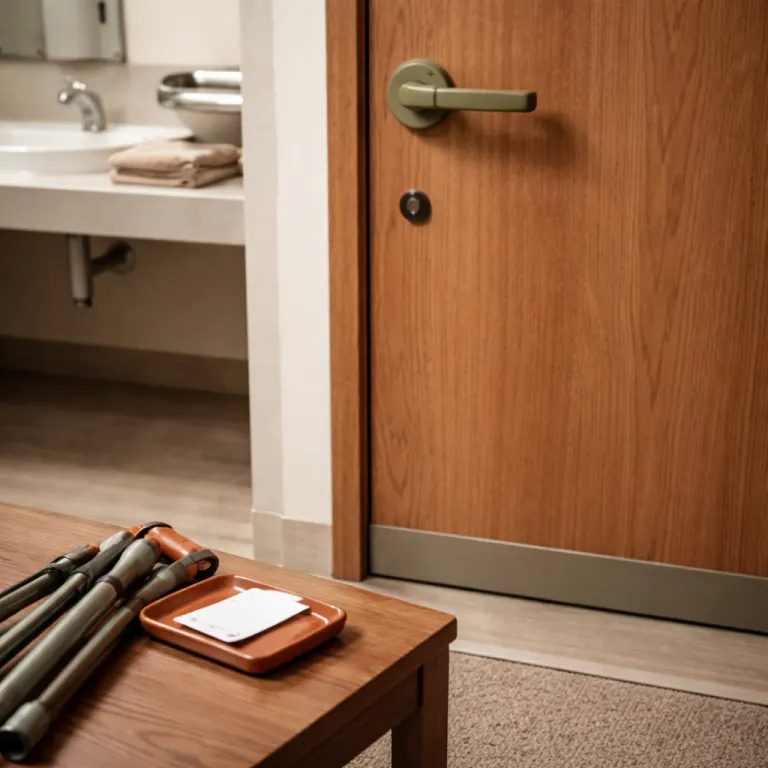
Why solo accessible travel hotels matter more when you travel alone
Solo accessible travel hotels are not a niche indulgence; they are a lifeline for travelers who rely on consistent accessibility. When you travel solo with limited mobility or as a wheelchair user, the hotel either supports your independence or quietly erodes it with every small task. For many solo travelers, especially women and people with visible or invisible disabilities, the right property turns a stressful trip into an excellent adventure.
When you travel accessible and alone, there is no companion to move luggage, double-check accessibility features or negotiate with staff if something fails. That is why solo accessible travel hotels must combine precise, predictable access with a culture of respect, so that assistance services are offered without pressure and help is never forced. The best accessible solo stays feel like a well-rehearsed partnership where the hotel team understands that independence is the main luxury.
Industry data shows that solo travelers now represent a significant share of global travel, and the proportion of guests seeking accessible travel options keeps rising. A 2022 report from the World Travel & Tourism Council, for example, highlighted that hundreds of millions of trips each year involve travelers with disabilities or their companions, and VisitBritain has estimated that disabled visitors and their parties account for more than £15 billion in annual tourism spending in the UK alone. At the same time, hospitality surveys indicate that a majority of hotels claim some accessibility features, yet solo wheelchair users still report gaps between promises and reality. This gap is exactly where premium solo accessible travel hotels can stand apart, by treating accessibility as a core design principle rather than a compliance checkbox.
For a solo trip, risk concentrates around the room, the route to public transportation and the path to key hotel services. A single step at the lobby, a heavy door between the lift and your room or a shower without a seat can turn a dream adventure into a safety hazard. Choosing solo accessible travel hotels with verified wheelchair accessible rooms and transparent information is therefore not optional; it is the foundation of any serious bucket list.
Room design that protects independence in solo accessible stays
Inside solo accessible travel hotels, the guest room is mission control for your entire trip. A genuinely wheelchair accessible room starts with the basics: level thresholds, wide doors, and enough turning space for a solo wheelchair user to move without acrobatics. From there, every detail either supports accessible adventures or forces you to ask for help when you would rather travel solo on your own terms.
Look for accessibility features such as lowered peepholes, reachable light switches, and climate controls that you can operate from the bed or wheelchair. An accessible ground floor room can be helpful for some people, but upper floors with reliable lifts and visual alarms may feel safer for other solo travelers. The key is that solo accessible travel hotels should offer clear choices, so each wheelchair user or guest with limited mobility can match their needs to the right room type.
The bathroom is where many accessible travel promises quietly fail, so inspect this space with care before you confirm your solo trip. You want a roll-in shower with a stable seat, grab bars positioned for your body, and space to park a wheelchair or other assistive devices without blocking the door. Many countries now publish accessibility standards for hotels, such as the Americans with Disabilities Act (ADA) 2010 Standards for Accessible Design in the United States or BS 8300 guidance and Approved Document M in the UK, and these can be useful reference points when you compare room layouts. For a deeper checklist of accessible hotel room features and the questions to ask before you book, study this detailed guide on what makes an accessible hotel room genuinely functional.
Technology now plays a quiet but powerful role in solo accessible travel hotels, especially for guests who prefer minimal staff interaction. App-based room controls, video doorbells and text-based chat with reception can give solo travelers more privacy while still ensuring rapid help in an emergency. Large international brands such as Hilton, Marriott and IHG increasingly integrate these tools into their accessible rooms, and when these systems are combined with clear emergency procedures and staff trained to support accessible solo guests, independence and safety finally align. As one wheelchair user described after a recent city break, “Knowing I could message reception and have someone at my door in minutes meant I could relax and enjoy being on my own.”
Location, transport links and accessible attractions for solo explorers
Even the most refined solo accessible travel hotels fall short if you cannot reach the city around them. Location is not just a view or a fashionable postcode; for solo travelers with limited mobility it is about safe pavements, reliable public transportation and realistic distances to accessible attractions. A hotel that looks excellent on a map may feel very different when you face steep kerbs or broken lifts at the nearest station.
When planning accessible travel, start by mapping your likely routes between the hotel, key attractions and transport hubs. In a city like London, for example, a wheelchair accessible stay near an accessible Underground or rail station can save huge amounts of time and energy on every trip. Transport for London publishes step-free access maps, and solo accessible travel hotels that cross-check their directions against these resources and then publish honest information about nearby accessible attractions, curb cuts and bus routes show that they understand how travelers actually move through a destination.
Many solo travelers now build their bucket list around cities where accessibility and culture intersect gracefully. London, with its growing network of step-free stations and accessible museums, can be a strong base for accessible adventures if your hotel sits on a flat route to public transportation. The same logic applies in other capitals where a short, safe roll or walk from the lobby to transit can transform a solo trip from exhausting to empowering. One frequent solo traveler summed it up simply: “If I can get from my room to a step-free station without a hill or a guess, the whole city opens up.”
Partnerships also matter here, because the best solo accessible travel hotels rarely operate in isolation. Some properties collaborate with a specialist travel agent or local accessibility organizations to curate verified accessible attractions and to arrange assistance services at stations or airports. For a sense of how forward-thinking hotels are reshaping this landscape, examine this analysis of what three leading UK properties reveal about the future of accessible hospitality.
Staff interaction, safety and respectful assistance for solo guests
For solo accessible travel hotels, the human factor is as critical as any ramp or lift. Solo travelers need staff who are present without hovering, trained without being patronizing, and ready to help without assuming that every wheelchair user requires constant assistance. This balance is especially important for women traveling alone, who may weigh safety, privacy and autonomy with every interaction at reception or in the corridor.
Clear safety protocols are non-negotiable when you travel solo and accessible. You want to know how the hotel handles fire alarms, evacuations and late-night emergencies for guests with limited mobility or sensory disabilities. Hospitality experts often advise: "Research hotel safety features, read reviews, and contact the hotel directly." A practical approach is to prepare a short script of questions about evacuation chairs, refuge points and how staff will communicate with you if alarms are primarily visual or audible.
Solo accessible travel hotels that excel in this area brief their team to ask consent before touching a wheelchair, luggage or assistive devices. They also train staff to communicate options calmly, such as offering assistance services to the lift or arranging a taxi with a ramp, while accepting a polite refusal without drama. Over time, these respectful habits build trust, which is the real currency of accessible travel for solo travelers.
Digital tools can reinforce this trust when used thoughtfully rather than as a cold replacement for people. Many solo travelers appreciate app-based chat for discreet requests, such as asking for extra towels, confirming ground floor evacuation plans or arranging a late checkout after a long adventure. When a hotel combines this quiet efficiency with visible, well-trained staff in public spaces, solo accessible travel hotels become places where independence feels protected rather than tested.
Building your personal shortlist of solo accessible travel hotels
Creating a reliable shortlist of solo accessible travel hotels takes more time than booking a standard stay, but the payoff is enormous. Start by defining your non-negotiables: for example, a wheelchair accessible shower, step-free access from street to room, and proximity to public transportation or specific attractions. Then layer in personal preferences such as whether you prefer a calm ground floor room or a higher floor with a view and stronger sense of security.
Use online booking platforms, specialist accessible travel guides and community reviews to identify candidates, then contact each hotel directly with precise questions. Ask about accessibility features in both singular and plural terms, from grab bars and visual alarms to the number of wheelchair accessible rooms and the availability of assistance services. If you work with a travel agent who understands accessible solo needs, share your checklist so they can filter options before you invest more time.
When you pack for a solo trip, think of your hotel as a partner in logistics rather than a passive backdrop. Confirm that there is space to store assistive devices, that staff can help with refrigeration for medication if needed, and that someone can support you on arrival without insisting on unnecessary help later. For more nuanced guidance on how shared spaces such as restrooms shape independence, explore this analysis of why refined accessible restrooms in luxury hotels matter.
Over several adventures, you will gradually assemble a personal map of solo accessible travel hotels that you trust across different cities. Some may be in London near your favourite accessible attractions, others in quieter regions where time slows and staff know your name. This evolving list becomes your private safety net, allowing you to travel solo with confidence, knowing that each property respects both your accessibility needs and your right to adventure on your own terms.
FAQ
How can I check whether a hotel is safe for solo disabled travelers?
Safety starts with research, not arrival at reception. Study recent reviews from solo travelers, look for detailed mentions of accessibility features and ask the hotel to explain their emergency procedures for guests with limited mobility. A simple checklist you can copy into an email includes: How will you evacuate wheelchair users from upper floors? Are visual and audible alarms installed in accessible rooms? Do staff receive regular disability awareness and evacuation training? If answers are vague or slow, choose one of the many solo accessible travel hotels that treat these questions as standard, not special.
What accessibility features matter most in a solo accessible hotel room?
For solo accessible travel hotels, the essentials are step-free access, a wheelchair accessible bathroom and controls you can reach without standing. Add secure grab bars, a shower seat, visual and audible alarms and enough space to manoeuvre a solo wheelchair safely. These features reduce the need for assistance services and let you travel solo with genuine independence.
Are there resources that focus specifically on accessible travel for solo travelers?
Yes, several specialist platforms and travel guides now focus on accessible travel and solo travel combined. They highlight solo accessible travel hotels, rate accessible attractions and share travel tips from wheelchair users and other travelers with disabilities. Many also provide checklists you can adapt for each new trip, saving time while still protecting your safety.
Should I always request a ground floor room when I use a wheelchair?
Not necessarily, because the best choice depends on your mobility, comfort and the building layout. Some solo travelers feel safer on the ground floor for easier evacuation, while others prefer higher floors with secure lifts and quieter corridors. Ask solo accessible travel hotels to explain their evacuation plans for wheelchair users on each floor, then decide what works for your adventure.
Is it worth using a travel agent for solo accessible trips?
A specialist travel agent who understands accessible travel can be extremely helpful, especially for complex itineraries or first-time solo trips. They can pre-screen solo accessible travel hotels, confirm accessibility features and coordinate assistance services at airports or stations. Over time, this partnership lets you focus on the adventure itself rather than spending all your energy verifying every detail alone.