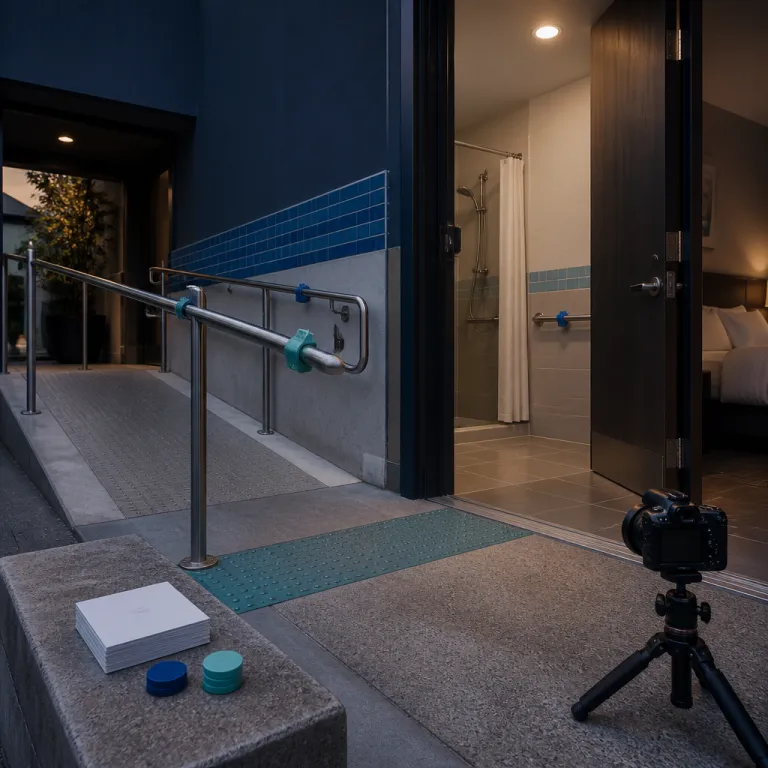
Why hotel accessibility KPI audit measurement matters for luxury travelers
For a luxury hotel, accessibility is no longer a discreet amenity tucked behind a ramp. It is a measurable part of hotel performance where every room, corridor, and service touchpoint is tracked with the same discipline as revenue and RevPAR. When hotel groups treat hotel accessibility KPI audit measurement as rigorously as pricing strategy, guests with disabilities stop gambling with each booking and start trusting the brand.
Across the global hospitality industry, leading management teams now map accessibility metrics alongside financial KPIs and service quality scores. They look at the total number of accessible rooms, the occupancy rate of each occupied room in that inventory, and the average length of stay for guests who request adapted features. These hotel KPIs sit beside classic indicators such as room revenue, average daily rate, and gross operating profit, creating a single view of performance that includes every guest.
Research shows that when hotels invest in structured accessibility improvements, bookings from guests with disabilities can rise significantly over time. One industry study reported a 20 % increase in reservations from disabled travelers after targeted upgrades, which translated into higher revenue per room and stronger loyalty metrics. For a premium property, that uplift in revenue room contribution and profit per room is not a side effect ; it is the financial proof that accessibility is a core operational strategy.
The anatomy of accessibility KPIs: from room inventory to guest satisfaction
Effective hotel accessibility KPI audit measurement starts with a clear inventory of spaces, not just a line on a website saying “accessible”. Hotel groups need precise data on the number of rooms with step free access, roll in showers, visual alarms, and lowered controls, and they must track how often each occupied room in that category is actually booked. When the total number of adapted rooms is high but the occupancy rate is low, it signals either poor communication or misaligned design.
Operational leaders then connect these physical metrics to the guest experience, using structured surveys that isolate accessibility satisfaction from general service feedback. Common KPIs include the percentage of guests with disabilities who rate their stay above a defined quality threshold, the complaint rate related to accessibility per 1 000 room nights, and the average length of stay for guests who book accessible rooms. As one expert summary puts it, “Common KPIs include compliance rate, number of accessible rooms, and guest satisfaction scores from individuals with disabilities.”
For travelers using a luxury and premium booking website for accessible hotels, these metrics quietly shape what appears in search results and filters. Properties that maintain high guest satisfaction on accessibility, strong room revenue from adapted categories, and consistent operating profit from inclusive services are more likely to be highlighted. If you are planning a complex itinerary that mixes city meetings with an accessible safari lodge, a curated platform that already audits these hotel KPIs can save you time and risk ; guides to accessible safari lodges that prove wilderness stays are for every body show how the same measurement logic applies far beyond urban towers.
The audit cycle: who measures accessibility, how often, and with which tools
Hotel accessibility KPI audit measurement is not a one off inspection before opening ; it is a continuous cycle that mirrors revenue management and service audits. Most serious hotel groups now schedule a full accessibility audit at least once a year, and again after any renovation that touches a guest room, public area, or route to amenities. Between these formal reviews, daily operations teams log issues with lifts, pool hoists, tactile signage, and hearing loops, treating them as critical as a broken lock or a failed fire door.
Specialist accessibility auditors bring structured methodologies that go far beyond a checklist of ramps and grab bars. Programs such as Wheel the World’s Accessibility Verified framework assess mobility, visual, hearing, and cognitive dimensions in each room type, then translate findings into comparable metrics that feed directly into hotel KPIs. Membership initiatives like the Inclusive Hospitality Alliance track intent and follow through over time, ensuring that a strong audit one season is matched by consistent performance in subsequent daily operations.
Technology platforms now underpin much of this measurement, turning static reports into living data streams that management can act on quickly. WelcoMe’s software, for example, allows guests to share their access requirements in advance while giving the hotel real time information about service readiness, staff training gaps, and recurring friction points. When these tools integrate with property management systems, they link accessibility metrics to revenue room figures, average daily rate, and room GOPPAR, revealing how improved guest satisfaction among disabled travelers correlates with higher operating profit and lower complaint handling costs ; for neurodiverse travelers, dedicated guides to sensory friendly hotel rooms that get it right show how granular these audits can become.
From compliance to personalization: using KPIs to tailor accessible luxury
Once a hotel has reliable accessibility metrics, the next step is personalization, where numbers translate into tailored service for each guest. Hotel accessibility KPI audit measurement can reveal patterns such as a higher average length of stay among wheelchair users when roll in showers are available in multiple room categories, not just the entry level room. It can also show that guests with hearing impairments report better guest satisfaction when staff proactively offer vibrating alarm clocks and captioning options at check in, rather than waiting for a request.
Luxury groups are starting to treat these insights as seriously as they treat segmentation for corporate rates or suite upgrades. By tracking KPIs such as the percentage of staff who complete accessibility training, the response time to equipment requests, and the rate at which promised features are actually delivered, management teams can refine both service scripts and physical layouts. Over time, this improves hotel performance metrics like RevPAR and profit per room, because guests who feel genuinely understood tend to extend their length of stay, return more often, and recommend the property within their communities.
For travelers booking through a premium accessible platform, this behind the scenes management work shows up as small but decisive comforts. You might notice that the room you receive matches the photos and measurements exactly, that the average daily rate for accessible rooms is aligned with comparable categories, and that any operational hiccup is resolved quickly by a well briefed équipe. When a hotel uses KPIs to align room revenue, gross operating profit, and the lived guest experience of disabled travelers, accessibility stops being a compliance checkbox and becomes part of the brand’s quiet promise of quality.
The ROI of accessibility: connecting KPIs, revenue, and long term loyalty
For senior leaders in the hospitality industry, the most persuasive argument for rigorous hotel accessibility KPI audit measurement is financial clarity. When accessibility KPIs sit alongside revenue, RevPAR, and room GOPPAR on the same dashboard, it becomes obvious that inclusive design and service are not cost centers but revenue drivers. Properties that maintain high accessibility scores typically see higher occupancy rates in accessible rooms, stronger repeat business, and lower churn among corporate clients with inclusive travel policies.
To quantify this, sophisticated hotel groups segment their data by access needs, tracking room revenue, operating profit, and guest satisfaction for travelers who use adapted features. They examine the total number of accessible room nights sold, the average daily rate achieved, and the incremental revenue room contribution from guests who might otherwise have stayed elsewhere or not traveled at all. Over several years, these metrics reveal that investment in accessible rooms, staff training, and maintenance of equipment generates durable returns that rival many traditional capital projects.
For you as a traveler, this financial discipline translates into more reliable stays and a wider choice of genuinely accessible properties on premium booking platforms. When a hotel can show that its accessibility KPIs improve over time, that complaints decrease while the average length of stay for disabled guests increases, and that gross operating profit rises in parallel, you are looking at a brand where accessibility is embedded in management culture. That is the kind of hotel where the ramp is smooth, the shower seat is solid, and the welcome feels as effortless as any five star check in ; it is also the kind of property that curated guides on accessible stays that set new standards consistently highlight.
FAQ
What are the most important accessibility KPIs a hotel should track ?
The most important accessibility KPIs combine physical inventory, usage, and satisfaction. Hotels should track the number of accessible rooms, their occupancy rate, and the percentage of overall room revenue they generate. They should also monitor guest satisfaction scores from travelers with disabilities, complaint rates related to accessibility, and staff training completion on inclusive service.
How often should hotels conduct accessibility audits ?
Serious hotel groups conduct a full accessibility audit at least once a year, and again after any renovation that affects guest rooms or public areas. Between these formal reviews, daily inspections should check lifts, ramps, signage, and adapted equipment as part of routine operations. This mix of annual audits and daily checks ensures that accessibility performance does not degrade over time.
Who is responsible for measuring accessibility in a hotel ?
Responsibility is shared between hotel management, specialist accessibility auditors, and guests themselves. General managers and operations leaders own the KPIs, while external auditors or trained internal teams perform structured assessments using checklists and software. Guest feedback, especially from travelers with disabilities, then validates whether the measured performance matches the lived experience.
How does accessibility impact a hotel’s revenue and profitability ?
Accessibility impacts revenue and profitability by expanding the market and increasing loyalty among guests who value inclusive design. When accessible rooms are well designed and accurately described, they achieve strong occupancy and competitive average daily rates, contributing meaningfully to room GOPPAR and gross operating profit. Hotels that excel in accessibility also attract corporate and group business that prioritizes inclusive travel policies, which stabilizes demand across seasons.
What tools help hotels measure and improve accessibility over time ?
Hotels use a combination of accessibility checklists, audit software, and structured guest surveys to measure accessibility over time. Platforms such as Wheel the World’s Accessibility Verified program and WelcoMe’s service interface provide standardized frameworks and real time data that feed directly into hotel KPIs. These tools help management teams link accessibility performance to broader metrics like RevPAR, guest satisfaction, and operating profit, guiding continuous improvement.