When an accessible hotel room not available rights situation hits at check in
You arrive at a luxury hotel, keycard in hand, and the promised accessible room is suddenly “not available.” In that moment, your accessible hotel room not available rights are not abstract legal theory; they are the line between a safe stay and a dangerous compromise. For many wheelchair users and travelers with disabilities, this is not a rare mishap but a recurring pattern in hotels across the United States.
The Americans with Disabilities Act (ADA) treats this as more than poor service. When a reserved accessible room or accessible hotel room is reassigned or lacks essential accessibility features, the hotel may be violating ADA standards that protect disability rights. Under ADA Title III, 42 U.S.C. § 12182, and its implementing regulations at 28 C.F.R. pt. 36, hotels in the United States must hold wheelchair accessible rooms for individuals with disabilities who actually need them, and they must run reservation systems that accurately reflect which hotel rooms are truly available.
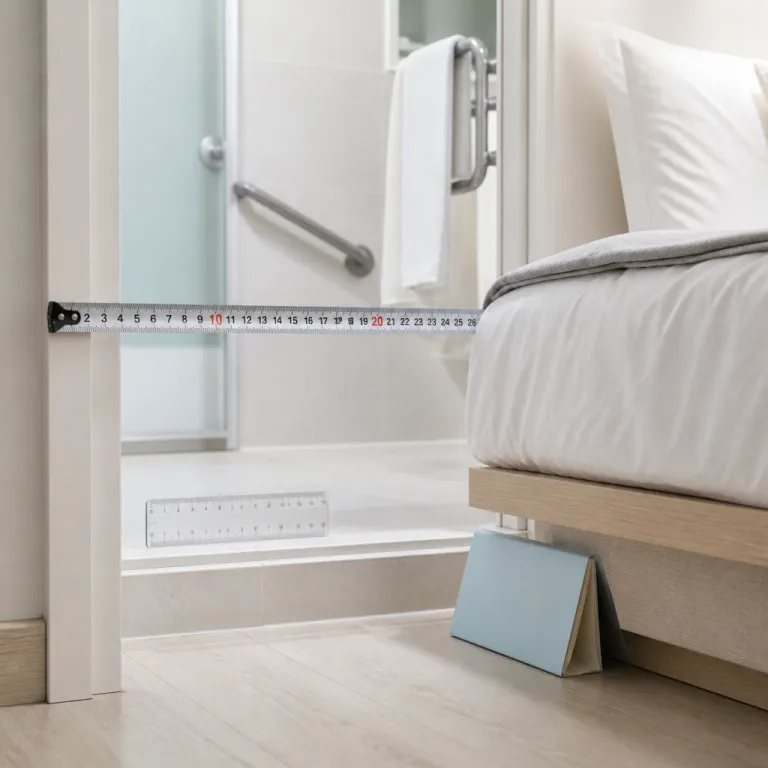
Luxury hotels sometimes assume an upgrade to a higher category hotel room solves everything. It does not if the new room has a bathtub instead of a roll shower, no grab bars by the toilet, or a bed that is too high for safe transfers. In accessibility law and in real life, an accessible room means a hotel room with specific accessibility features that match your disability, your mobility needs, and the way you use a wheelchair or other equipment.
When you face an accessible-room reassignment or accessible hotel room not available rights problem, start by naming the issue clearly. Tell the front desk that you are an individual with a disability, that you reserved a specific accessible room type, and that the hotel room provided does not meet ADA standards for accessibility. Calm precision signals that you understand both your disability rights and the hotel’s obligations under federal law.
Your ADA rights when the accessible room is missing or non compliant
Under the ADA, hotels in the United States must do more than simply label a few rooms as accessible. They must ensure that those rooms, and the reservation systems that sell them, are genuinely wheelchair accessible and accurately described to travelers with disabilities. When an accessible hotel room not available rights issue arises, you are not asking for a favor; you are asking the hotel to meet its legal duty.
ADA standards require that accessible rooms with features such as a roll shower, grab bars, lowered peepholes, and clear bed transfer space are reserved first for people with disabilities who need those features. If a hotel gives your accessible room to a non disabled guest, or if the room lacks the promised accessibility features, that can be an ADA Title III violation affecting individuals with disabilities and people with disabilities travel plans. The Department of Justice (DOJ) enforces these disability rights across the United States through investigations, settlements, and technical assistance guidance, including its ADA Title III regulations at 28 C.F.R. pt. 36 and related hotel reservation rules.
Hotels must also provide an accessible reservation experience. That means their booking websites, call centers, and third party channels must identify which hotel rooms are accessible, what accessibility features each accessible room includes, and whether those rooms are actually available for the dates you need. When a luxury accessible hotel markets itself to wheelchair users and travelers with disabilities, but fails to deliver a compliant hotel room at check in, the gap between promise and reality becomes a clear accessibility and rights problem.
When you challenge an accessible hotel room not available rights breach, you are part of a broader enforcement story. The Supreme Court case Acheson Hotels, LLC v. Laufer, No. 22-429, was dismissed as moot in 2023 after the plaintiff voluntarily dismissed her underlying claims, so the Court did not decide whether accessibility testers can sue over online reservation barriers. Even so, the case highlighted how fragile enforcement can feel for people with disabilities. That is why knowing your ADA hotel reservation rights, and being ready to assert them in real time, matters as much as choosing the right property.
Escalation paths inside the hotel and through the brand
When your accessible room is wrong, the first actor is almost always the hotel front desk staff. They are the initial point of contact, and they will usually try to solve the accessible hotel room not available rights problem with room changes, quick fixes, or vague apologies. Treat them as allies, but be clear that you need a hotel room that meets ADA standards, not a token gesture.
If the front desk cannot or will not resolve the issue, ask for the hotel manager on duty and then the general manager if necessary. Explain that you are an individual with a disability, that the accessible room you reserved is not available or not compliant, and that this may be an ADA Title III issue affecting your disability rights. In many luxury hotels, managers have authority to move other guests, release blocked accessible rooms, or arrange an equivalent accessible hotel nearby with paid transport.
Chain of responsibility becomes more complex when the hotel is branded by a global group but owned and managed by separate companies. In these cases, escalate beyond the property to the hotel corporate customer service team, using the brand’s main customer service hotline or online complaint form. When you reference an accessible hotel room not available rights failure or accessible-room reassignment, include the hotel’s physical address, your reservation number, the exact accessible room type booked, and a list of missing accessibility features such as roll shower, grab bars, or wheelchair accessible routes.
For serious or repeated failures, you can step outside the hospitality chain. The Department of Justice ADA Information Line at 800-514-0301 exists precisely for situations where individuals with disabilities believe their ADA rights have been violated in hotels or other public accommodations. DOJ’s own technical assistance guidance on Title III public accommodations is explicit: “What should I do if my accessible room is not available? Request immediate resolution from hotel staff; escalate if necessary.”
On the spot tactics: what to demand, document, and refuse
When you are tired from travel and the accessible room is wrong, it is tempting to accept a partial fix. In luxury and premium hotels, you should instead treat this as a negotiation where your safety and your accessible hotel room not available rights are the baseline. You are not asking for an upgrade as compensation first; you are asking for a hotel room that you can actually use.
4-step check-in script to assert your ADA hotel reservation rights
Step 1 – State the problem clearly: “I am an individual with a disability. I reserved a specific accessible room type, and the room I was given is not accessible as promised.” Step 2 – Name the legal framework: “Under ADA Title III and the hotel reservation rules in 28 C.F.R. pt. 36, my reserved accessible room should be held for me and should match the accessibility features described at booking.” Step 3 – Ask for a concrete fix: “Please move me to a compliant accessible room that meets my mobility needs, or arrange and pay for an equivalent or better accessible hotel nearby with accessible transportation.” Step 4 – Confirm the record: “Can you note in my file that my accessible room was unavailable as reserved and that I requested an ADA-compliant solution?”
Start with non negotiables tied directly to your disability and mobility needs. If you are a wheelchair user who cannot step into a bathtub, insist on a wheelchair accessible room with a roll shower, stable grab bars, and enough space beside the bed for safe transfers. If the hotel has no such rooms available, ask the manager to arrange and pay for an equivalent or better accessible hotel nearby, including accessible transport for you and any people with disabilities in your party.
Photo and documentation checklist for an accessible-room reassignment
Use a simple template so you can gather evidence quickly: (1) Photos of the bathroom (shower entry, grab bars, toilet clearance, sink height), bed height, door widths, and any blocked wheelchair routes. (2) Screenshots or printouts of your original accessible room booking, showing the room type and accessibility features promised. (3) A short note with dates, times, and names or roles of hotel staff you spoke with, plus what each person offered or refused. (4) A list of extra costs caused by the accessible hotel room not available rights failure, such as accessible taxis, personal assistance, or last-minute hotel changes.
Once your immediate safety and comfort are secured, you can address compensation. Reasonable asks include a rate reduction, complimentary nights, loyalty points, or reimbursement of extra costs caused by the accessible hotel room not available rights failure, such as accessible taxis or personal assistance. If you later file a complaint, you can accurately say: “Can I receive compensation if my accessible room is not as promised? Yes, you can request compensation for the inconvenience.”
Prevention and formal complaints: protecting future trips and other guests
The most elegant way to handle an accessible hotel room not available rights problem is to prevent it before you arrive. For high stakes trips, combine a written confirmation of your accessible room with a pre arrival call to the hotel, asking a staff member to read back the exact accessibility features in your reserved room. Ask about the roll shower dimensions, the presence and placement of grab bars, the bed height, and whether wheelchair accessible routes connect the lobby, restaurant, and your floor.
For travelers with disabilities who rely on specific equipment, send a short email summarizing your needs and the hotel’s promises. Mention that you are traveling as part of disabilities travel in the United States, that you are an individual with a disability under the ADA, and that you are reserving a specific accessible hotel room type. Keep every reply, because written confirmations from hotels can be powerful evidence if your accessible room is later reassigned or found unavailable.
If things still go wrong, use formal complaint channels once you are home and rested. File a detailed complaint with the hotel brand’s corporate customer service, then consider state civil rights agencies and, for serious patterns, the Department of Justice, which answers the ADA Information Line at 800-514-0301 and explains: “How do I file a complaint about ADA violations in hotels? Contact the Department of Justice ADA Information Line at 800-514-0301.” Mention any prior incidents at the same hotel or at other hotels in the same chain, because patterns matter when regulators assess ADA standards compliance.
For future planning, look for brands and properties that treat accessibility as part of their core guest experience, not as an afterthought. Some chains, from urban flagships to highway properties like Hampton Inn locations, have built reputations for consistent accessible rooms, reliable roll in showers, and staff who understand disability rights. Guides such as accessible-stay.com’s overview of accessible hotel chains offering luxury experiences for all travelers can help you identify hotels where wheelchair users and other people with disabilities are welcomed as standard guests, not as exceptions.
Reading the room: real world accessibility versus the icon on the website
Luxury travelers with disabilities quickly learn that the wheelchair icon on a booking page tells only part of the story. A hotel may list several accessible rooms, yet still fail to provide a single hotel room that works for your specific disability and mobility needs. The gap between marketing and reality is where many accessible hotel room not available rights disputes begin.
When you evaluate an accessible hotel, think in layers rather than labels. Start with the basics: is the entrance wheelchair accessible without steep ramps, heavy doors, or awkward detours through service corridors that make people with disabilities feel like afterthoughts? Then move to the room itself, asking whether the bed height allows safe transfers, whether the bathroom has a true roll shower with level entry, and whether grab bars are placed where your body actually needs support.
Accessibility also includes the wider guest experience. A hotel that technically meets ADA standards for hotel rooms but forgets about pool hoists, restaurant seating, or accessible evacuation plans is not delivering equal hospitality to individuals with disabilities. For wheelchair users and other travelers with disabilities, real accessibility means being able to enjoy the bar, the spa, the breakfast buffet, and the city outside the hotel, not just being able to reach the bed.
Legal frameworks such as the ADA, enforcement by the Department of Justice, and occasional attention from the Supreme Court set the floor, not the ceiling, for disability rights in hotels. The most interesting accessible hotels go beyond compliance, training staff to respond intelligently when an accessible room is not available and to fix problems before they become crises. As a solo explorer, you deserve a stay where your accessible room is exactly what was promised, and where your rights are woven into the fabric of the hotel, not argued about at the front desk.
FAQ
What should I do immediately if my reserved accessible room is not available ?
Go straight to the front desk and state that you are an individual with a disability whose reserved accessible room is either unavailable or not compliant with ADA standards. Ask for the manager on duty, request a truly accessible hotel room that matches your needs, and insist that any reassignment of accessible rooms be reversed if possible. If the hotel cannot fix the issue on site, ask them to arrange and pay for an equivalent accessible hotel nearby, including accessible transport.
Can I receive compensation when my accessible hotel room is not as promised ?
Yes, you can request financial or in kind compensation when an accessible hotel room not available rights failure disrupts your stay. Reasonable forms include a rate reduction, complimentary nights, loyalty points, or reimbursement of extra costs such as accessible taxis or personal assistance. Make sure you document the missing accessibility features and keep records of all conversations with hotel staff and managers.
How do I file a formal complaint about ADA violations in hotels ?
Start with the hotel brand’s corporate customer service, providing photos, emails, and a clear timeline of what happened. If you believe your ADA rights were violated, you can also contact the Department of Justice ADA Information Line at 800-514-0301 to ask about next steps and complaint procedures. For some travelers with disabilities, state civil rights agencies and disability advocacy groups can offer additional guidance or support.
How can I reduce the risk of my accessible room being reassigned ?
After booking, email the hotel to confirm the exact accessible room type and list the accessibility features you require, such as a roll shower, grab bars, and a specific bed height. Call the hotel one or two days before arrival to have a staff member read back your reservation details and note your disability needs in the booking. Arriving earlier in the day, when more rooms are still available, can also reduce the chance that your accessible room has been given away.
What accessibility details should I check before choosing a luxury hotel ?
Look beyond the wheelchair icon and ask about entrance routes, elevator access, and whether all key amenities are wheelchair accessible, including restaurants, bars, and pools. For the room, request precise information on bathroom layout, roll shower design, grab bar placement, and bed height, and ask whether the hotel has experience hosting travelers with disabilities similar to yours. When possible, use specialist guides and reviews that focus on real world accessibility rather than marketing language.