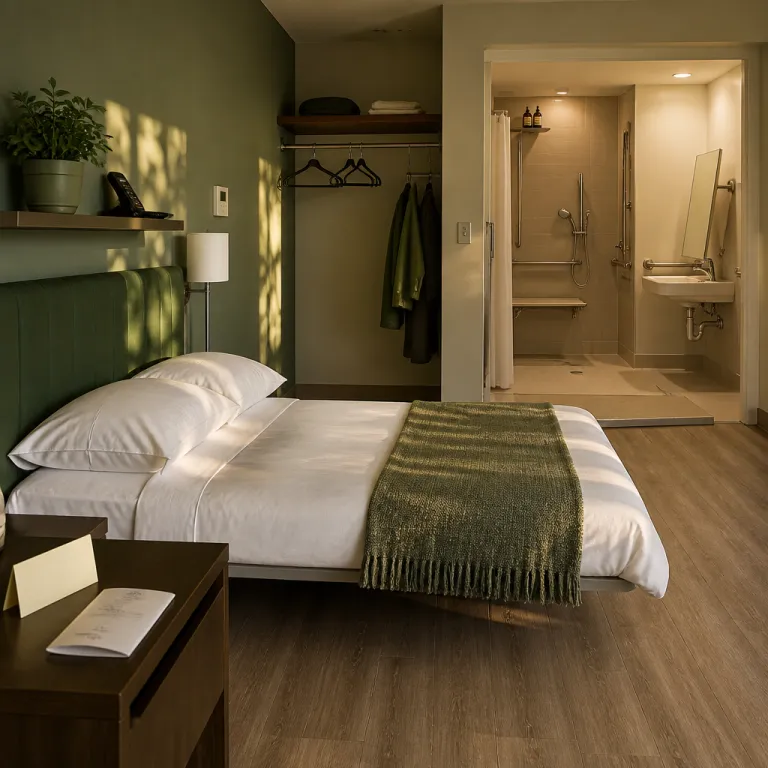
The paradox at the heart of hotel loyalty program disability accessible guarantee
Elite status is sold as effortless upgrades, priority check in, and a guaranteed room. For many guests with disabilities, that same hotel loyalty program disability accessible guarantee can quietly unravel the moment an “upgrade” replaces a roll in shower with a marble bathtub. When you travel often for work and extend your stay for leisure, the gap between glossy loyalty marketing and real accessibility becomes painfully clear.
Luxury hotels are designed to anticipate needs, yet guests with disabilities including mobility, hearing, or low vision often find their most basic request ignored. A guest may book accessible rooms months ahead, only to arrive late after a hard flight and learn the last wheelchair accessible room was reassigned to someone with higher status. The promise of a guaranteed room in a loyalty program means little if the accessible room category is treated as flexible inventory rather than a non negotiable commitment.
The core issue is that most hotels still frame accessibility as a compliance checkbox, not as a premium service standard. A hotel may list accessibility features on its web booking page, but the system rarely locks those accessible rooms against “upgrades” that break the accessible hotel experience. For frequent travelers with disabilities, true loyalty feels less like points and more like knowing the room you booked will be the room you actually sleep in.
How Hilton, Marriott, Hyatt and IHG write accessibility into loyalty benefits
Across the major chains, the language around hotel loyalty program disability accessible guarantee is careful yet incomplete. Hilton Honors, Marriott Bonvoy, World of Hyatt, and IHG One Rewards all reference accessible rooms and guests with disabilities in their public policies, but the fine print usually stops at “subject to availability”. For a wheelchair accessible reservation, “subject to availability” can mean a guest arrives to find the room type sold twice and the accessible entrance suddenly irrelevant.
In practice, these hotels manage accessible rooms as a micro category within their broader rooms inventory. Revenue managers see a high demand night and may quietly move an accessible guest to a standard room, assuming staff can “make it work” with portable equipment or a late night room change. That approach might protect yield, yet it undermines accessibility features and turns a promised accessible guest experience into a stressful negotiation at check in.
Some chains are slowly improving, especially at the luxury level where service recovery budgets are generous and staff training is deeper. A few flagship hotels now tag profiles for guests disabilities and add internal notes that accessible rooms must never be reassigned, even when upgrades are offered. If you are a frequent traveler, it is worth pairing your elite status with negotiated corporate or non commissionable luxury rates, as explained in guides to how non commissionable luxury hotel rates can work in your favour, because those often give the property more flexibility to protect your exact room type.
Where loyalty promises break for accessible rooms and real guests
The most common failure point in any hotel loyalty program disability accessible guarantee is the moment between web booking and actual arrival. A guest selects accessible rooms online, ticks every box in the list of accessibility features, and adds a detailed note about wheelchair accessible showers and grab bars. Somewhere between the central reservation system and the hotel’s internal rooming list, that request becomes a soft preference rather than a hard operational requirement.
Front desk teams are trained to prioritise elite upgrades, not to protect disabilities accessible inventory from reassignment. When the hotel is full and a VIP arrives late, staff may move an accessible guest to a higher floor or a larger room without an accessible bathroom, assuming the guest will appreciate the extra space. For people with disabilities including blind low vision travelers or those using assistive technologies, that “upgrade” can turn a simple stay into a safety risk.
The same pattern appears around service animals, late check out, and early arrival, where loyalty benefits collide with disability rights. Policies about service animals at hotels, explored in depth in guides to the rules that protect you and the pushback you might face, show how often staff training lags behind legal obligations. When a hotel fails to ensure compliance with accessibility law and its own loyalty promises, the guest is left arguing policy at the front desk instead of enjoying a seamless stay.
Designing a hotel loyalty program disability accessible guarantee that actually works
For a loyalty program to serve guests with disabilities, accessibility must be coded into the system, not left to chance. That starts with web accessibility on the booking engine, where screen readers should correctly announce room types, accessibility features, and whether a wheelchair accessible shower is truly available. When people with disabilities can book an accessible hotel room online with the same confidence as any other guest, loyalty finally begins to mean something tangible.
Behind the scenes, hotels need hard locks on accessible rooms within their property management systems. Once an accessible guest books a specific room type, that room should be tagged as non upgradable, with any change requiring explicit guest consent and a documented alternative that preserves every accessibility feature. Elite benefits like suite upgrades or late checkout can still apply, but only when they enhance accessibility rather than compromise it.
Some of the most forward thinking properties now treat accessibility as a premium service layer, not a constraint. They maintain a detailed list of accessibility attributes for each room, from bed height to door width, and train a disability aware concierge team to match guests disabilities with the right space. When that level of detail is combined with a robust loyalty program, the result is an experience where the hotel loyalty program disability accessible guarantee feels as solid as the brand’s promise of luxury.
How to protect your accessible stay when using elite status
Frequent travelers with disabilities quickly learn that loyalty points are only part of the equation. To make a hotel loyalty program disability accessible guarantee work in your favour, you need a repeatable strategy that starts long before check in. Think of it as building a personal protocol that turns your elite status into leverage for better accessibility, not just better views.
Begin with the web booking process, but never end there. After reserving accessible rooms online, email the hotel directly with your confirmation number, a clear list of accessibility needs, and a request that your room not be reassigned under any circumstances. Ask the reservations équipe to note your profile as an accessible guest and to flag any potential conflicts between upgrades and accessibility features before your arrival.
On the day of travel, call the property to reconfirm that your wheelchair accessible room is blocked and that the accessible entrance, elevators, and assistive technologies such as visual alarms are all operational. If you extend your stay for leisure, remind the front desk that any room move must preserve the same level of accessibility, including proper bathroom layout and clear floor space. For active travelers who pair city meetings with adaptive sports, resources on hotel partnerships making active travel inclusive show how the right property can enhance accessibility not only in rooms but across the entire experience.
Personalised luxury for travelers with disabilities, beyond compliance checklists
True luxury for guests with disabilities is not a larger room, it is a frictionless experience. When a hotel treats accessibility as a core service standard, the hotel loyalty program disability accessible guarantee becomes a promise of ease rather than a legal minimum. That shift is felt in the way staff speak, the way technology is configured, and the way every guest is welcomed.
At the property level, this means training teams to understand how different disabilities including mobility, hearing, cognitive, and low vision needs intersect with design. Staff should know how to guide a blind low vision guest safely, how to communicate with someone using a speech device, and how to adjust lighting or sound levels without fuss. Accessible entrance routes must be as elegant as the main lobby, not hidden through service corridors, and every public space should be mapped with accessibility features in mind.
Technology can quietly enhance accessibility when used with care. Hotels that invest in web accessibility, compatible screen readers, and in room assistive technologies such as vibrating alarms or visual door knock indicators send a clear signal that people with disabilities are expected, not accommodated as an afterthought. When those details are woven into a thoughtful loyalty program, the result is a stay where the guest feels recognised, not categorised.
FAQ
How can I make sure my accessible room is not reassigned ?
Reserve an accessible room category online, then email and call the hotel with your confirmation number and a clear request that your specific room type not be reassigned under any circumstances. Ask the reservations équipe to add a hard note in your profile and in the daily arrivals list stating that any change requires your explicit consent. Arrive earlier in the day when possible, as late night overbooking is when accessible rooms are most at risk.
Do hotel loyalty programs guarantee accessible rooms for elite members ?
Most major loyalty programs guarantee a room for top tier members, but they rarely guarantee an accessible room type in writing. The guarantee usually covers “a room” rather than “the accessible room you booked”, which is why guests with disabilities should always reconfirm directly with the property. Treat the loyalty guarantee as a starting point and layer your own confirmation steps on top.
What should I ask about accessibility features before a business trip ?
Request a detailed list of accessibility features for both the room and public areas, including door widths, bed height, shower configuration, and routes from the accessible entrance to meeting spaces. Ask whether assistive technologies such as visual alarms, vibrating pillows, or hearing loops are available and can be installed before arrival. Clarify how the hotel will handle an emergency evacuation for guests with disabilities, especially if you are staying on higher floors.
How can technology improve my accessible hotel experience ?
Accessible web booking platforms that work smoothly with screen readers make it easier to select the right room and verify accessibility details. In room technology such as app based controls, voice assistants, and caption capable televisions can enhance accessibility when configured with clear menus and tactile alternatives. When a hotel uses technology to ensure compliance with accessibility standards and to personalise settings for repeat guests, your stay becomes both easier and more luxurious.
Is it worth staying loyal to one hotel brand as a disabled traveler ?
Staying loyal to one or two brands can pay off because properties start to recognise your profile and anticipate your accessibility needs. Over time, staff learn which room layouts work for you, which features matter most, and how to avoid “upgrades” that undermine accessibility. The key is to combine your elite status with clear communication and to choose hotels that treat accessibility as a core part of their service culture.