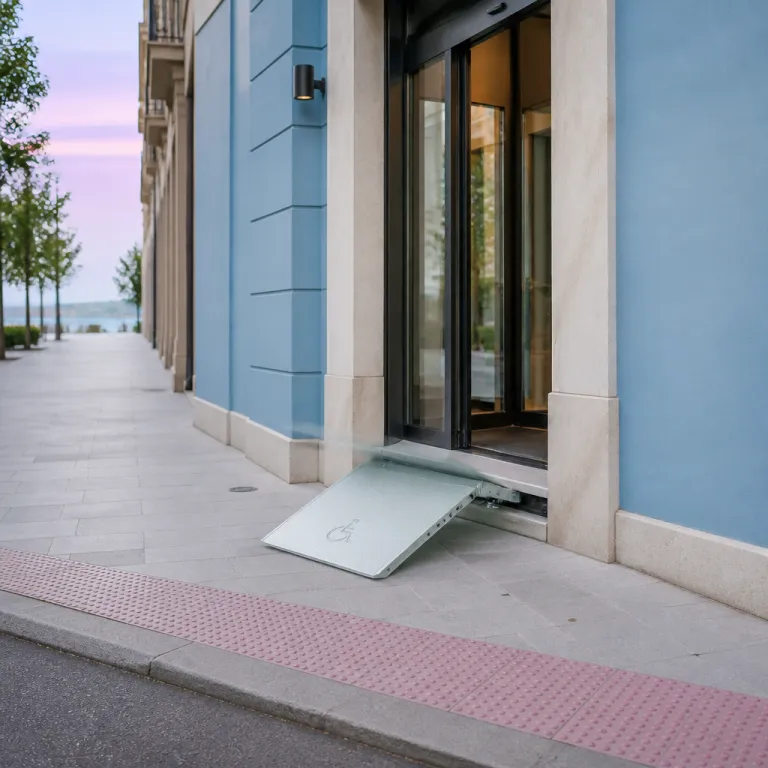
Why accessible hotels in Barcelona start with the Eixample grid
Barcelona rewards travelers who plan accessibility block by block. The Eixample district, with its chessboard layout and chamfered corners, turns the abstract idea of an accessible city into a very practical reality for any wheelchair user. For couples who value a seamless stay, this is where accessible hotels in Barcelona wheelchair searches should begin.
Sidewalks in this part of Barcelona are wide, mostly level, and usually equipped with dropped kerbs that make wheelchair accessible crossings feel natural rather than forced. Many luxury hotels are located on or near Avinguda Diagonal, where you can roll straight from the lobby to the street without wrestling with steps or awkward ramps. When a hotel in this grid advertises accessible rooms, you are more likely to find step free entrances, predictable elevator access, and corridors that actually fit a wheelchair.
For a romantic city break, the Eixample also keeps you close to Barcelona Spain icons without plunging you into the Gothic Quarter’s cobblestones. From an accessible hotel here, Sagrada Família, Passeig de Gràcia, and even Park Güell by adapted taxi become realistic day plans rather than exhausting expeditions. Many of the best accessible hotels in this area offer free WiFi, roll in showers, and clear information about accessible travel options, which is essential when you are planning a tour that balances culture, rest, and reliable public transport.
Think of Eixample as the control center for accessible Barcelona, especially if you are arriving from North America and want a soft landing after a long flight. The city center here feels ordered and legible, which matters when you are navigating with a wheelchair and perhaps some jet lag. From this base, you can decide which parts of Barcelona accessible experiences you want to prioritize each day, from the waterfront to Plaça Catalunya and beyond.
Choosing the right neighborhood: Eixample, waterfront, or near the Gothic Quarter
Not every part of Barcelona offers the same level of accessibility, even when hotels use similar marketing language. The Eixample grid is the most forgiving for wheelchair users, while the waterfront and the historic core each bring different strengths and compromises. Understanding these contrasts will shape whether your stay feels liberating or quietly stressful.
Waterfront hotels in Barceloneta and around the Barcelona Plaza area near the port benefit from the city’s pioneering accessible beach infrastructure. Here, adapted boardwalks, amphibious chairs in season, and accessible public transport links make it possible to move from your accessible hotel room to the Mediterranean with minimal friction. Couples who dream of a slow day by the sea will appreciate how short the walking distance or rolling distance can be between the lobby, the promenade, and accessible beach services.
By contrast, the Gothic Quarter seduces with history but challenges with cobblestones, narrow alleys, and frequent steps at building entrances. Staying directly inside the Gothic Quarter with a wheelchair can mean constant route planning and occasional dead ends, even when a hotel claims to be wheelchair accessible. A smarter strategy is to book accessible hotels just outside the quarter, near Plaça Catalunya or along Avinguda Diagonal, where pavements are smoother yet the old city remains a short tour away.
For couples used to urban escapes in places like Amsterdam or Brussels, Barcelona’s mix of old and new will feel familiar but slightly more intense. The key is to treat neighborhood choice as seriously as room choice, especially when searching for accessible hotels Barcelona wheelchair options. If you enjoy comparing accessible city breaks, guides to elegant accessible stays in other dense cities, such as the curated selection of accessible urban escapes in Taipei, can help you benchmark what you expect from Barcelona accessible properties.
Inside the room: what luxury accessibility really means in Barcelona
Room descriptions on booking engines rarely tell the full story for wheelchair users. In Barcelona, the difference between a nominally accessible hotel and a genuinely accessible hotel can be the width of a bathroom door or the height of a bed. Couples seeking a premium stay should approach accessible rooms with the same scrutiny they would apply to a fine dining menu.
Start with the entrance and circulation space, because a hotel that calls itself wheelchair accessible should allow you to roll from the street to your room without a single unplanned step. Ask for precise measurements of door widths, turning circles beside the bed, and clear space under the sink, especially if you use a larger power wheelchair. In Barcelona accessible rooms that have been thoughtfully designed, you will notice details like reachable wardrobe rails, bedside controls at sitting height, and showers with both grab bars and a stable seat.
Technology matters as much as layout, particularly for couples who work remotely during their travel. Free WiFi is standard in most Barcelona hotels, but you should confirm that the signal is strong inside accessible rooms, not just in the lobby or bar. Lighting controls, peepholes at wheelchair height, and visual or vibrating alarms for guests with hearing loss are still not universal, so ask the hotel directly rather than assuming that a city center luxury label guarantees inclusive design.
Many travelers compare Barcelona wheelchair experiences with stays in cities like Berlin, Madrid, or Málaga, where accessibility standards vary by property rather than by star rating. If you are used to accessible hotels in dense destinations such as New York, resources that focus on Manhattan properties where the subway gap stops mattering provide a useful reference point. Apply the same questions in Barcelona Spain, and you will quickly distinguish between hotels that simply tick compliance boxes and those that deliver a truly equal stay.
From Plaça Catalunya to Sagrada Família: navigating the city with a wheelchair
Once you have secured the right accessible hotel, the next question is how easily you can move through the city. Barcelona’s public transport network has made significant strides in accessibility, but the experience still varies line by line and station by station. Planning your routes from hubs like Plaça Catalunya or the city center around Sagrada Família will save time and energy.
The metro is partially accessible, with many but not all stations offering step free access and level boarding. Before you travel, check the official metro accessibility map and note which stations near your hotel are fully accessible, especially along lines that serve Park Güell, the waterfront, and the Barcelona Plaza area. Eurotaxi services, which provide adapted taxis with ramps or lifts, are widely available but should be booked ahead for peak times or for longer day tours.
For couples staying near Plaça Catalunya or along Avinguda Diagonal, bus routes can be a more relaxed option than the metro. Low floor buses with ramps are common, and drivers are generally accustomed to securing wheelchairs safely before departure. From these central corridors, you can reach the Gothic Quarter, Barceloneta, and many Eixample attractions without needing to transfer multiple times, which keeps accessible travel more predictable.
Barcelona accessible sightseeing also benefits from the city’s relatively compact scale compared with larger capitals like Berlin or Madrid. Many key sights sit within practical rolling or short taxi distance of each other, especially if your accessible hotel is located in the Eixample or near the waterfront. When planning each day, cluster attractions such as Sagrada Família, Passeig de Gràcia, and nearby plazas, so that your wheelchair energy goes into experiences rather than long, fragmented transfers.
Waterfront and beachside stays: where accessibility meets the Mediterranean
Barcelona’s seafront is one of the most progressive urban beaches in Europe for wheelchair users. The promenade runs for several kilometers with smooth surfaces, gentle gradients, and frequent ramps that connect hotels, cafés, and accessible beach entry points. Couples who want their accessible hotels Barcelona wheelchair search to end with a sea view will find compelling options here.
Several beaches, including Barceloneta and Nova Icària, offer adapted facilities in season, such as amphibious chairs, accessible showers, and staff trained to assist with water entry. These services transform the idea of accessible travel from theoretical to tangible, especially for guests arriving from North America, where beach accessibility can still be inconsistent. When your hotel is located within easy walking distance or rolling distance of these points, a spontaneous day by the water becomes realistic rather than logistically daunting.
Waterfront hotels often highlight amenities like pools and terraces, but the real test is whether the accessible route from your room to these spaces is as elegant as the design. Look for properties that provide step free paths, pool hoists that actually work, and accessible toilets near bars and restaurants, not just in distant lobbies. A premium stay on the coast should mean you can move from breakfast to the pool to the promenade without detours through service corridors or reliance on staff to shift furniture.
Compared with older quarters of the city center, the waterfront area tends to have newer builds and renovations, which can favor better accessibility standards. However, do not assume that every hotel facing the sea is automatically wheelchair accessible, even if marketing suggests otherwise. Ask for photos or videos of the exact accessible rooms and common areas, and treat the waterfront as one more neighborhood to evaluate carefully within the broader accessible Barcelona landscape.
How Barcelona compares with other European accessible city escapes
Seasoned accessible travelers often benchmark Barcelona against other European favorites. Cities like Amsterdam, Brussels, Berlin, and Madrid each offer their own mix of historic cores, modern districts, and evolving accessibility policies. Understanding how Barcelona fits into this constellation helps couples decide whether to prioritize it for a romantic urban escape.
Amsterdam and Brussels share some of Barcelona’s challenges, with cobbled streets and older buildings that complicate wheelchair access in central areas. However, Barcelona’s Eixample grid and its waterfront infrastructure give it an edge for guests who value predictable pavements and accessible beach days in the same stay. Compared with Berlin, which spreads across a larger area, Barcelona Spain feels more compact, which reduces transfer times between hotels, plazas, and major sights.
Madrid and Málaga provide useful Spanish benchmarks, especially if you are planning a multi city tour. Madrid’s grand boulevards and newer hotels can be very accessible, but the absence of a comparable urban beach means Barcelona accessible stays offer a different kind of leisure. Málaga, with its own waterfront and growing stock of accessible hotels, feels more resort like, while Barcelona balances resort energy with a dense cultural city center anchored by Plaça Catalunya and the Gothic Quarter.
For couples who collect accessible city breaks across North America and Europe, Barcelona wheelchair experiences often stand out for the combination of architecture, food, and sea air. To maintain that standard across trips, it helps to rely on curated platforms that specialize in accessible hotel reviews rather than generic booking engines. One example is the detailed property coverage on accessible luxury hotel stays reimagined for travelers, which applies the same scrutiny you should bring to every Barcelona booking.
Practical booking checklist for accessible hotels in Barcelona
Turning research into a confirmed reservation is where details matter most. When you are booking accessible hotels in Barcelona, especially for a romantic trip, a structured checklist will protect you from vague promises and last minute surprises. Treat each item as non negotiable rather than a polite suggestion.
First, confirm that the hotel has a specific number of accessible rooms and ask whether they are guaranteed at booking, not assigned on arrival. Request floor plans or photos that clearly show the bathroom layout, bed height, and circulation space around furniture, particularly if you use a larger wheelchair. Clarify whether the entrance is step free from the street, including any ramps, and whether all key facilities such as restaurants, bars, and terraces are reachable without stairs.
Next, map the hotel’s location against your planned itinerary, focusing on proximity to accessible public transport and major sights. A property near Plaça Catalunya or along Avinguda Diagonal will usually offer easier access to buses and metro lines that serve Sagrada Família, Park Güell, and the waterfront. Check walking distance or rolling distance to the nearest accessible metro or bus stop, and ask the hotel about their experience arranging Eurotaxi services for guests.
Finally, consider the softer elements that shape how a stay feels, not just how it functions. Ask whether staff receive regular training on accessibility, whether they can recommend accessible travel routes through the city center, and how they handle last minute changes if a lift fails or a ramp is blocked. A hotel that answers these questions with confidence is far more likely to deliver the kind of Barcelona accessible experience that feels equal, relaxed, and genuinely luxurious for both partners.
Key figures on accessibility and travel in Barcelona
- According to Turisme de Barcelona, more than 80 metro and urban rail stations in the metropolitan area offer step free access, creating one of the most extensive accessible urban transport networks in southern Europe.
- Barcelona’s official tourism board reports that all city buses are low floor and equipped with ramps, which significantly improves spontaneous accessible travel compared with many similarly sized European cities.
- Municipal data indicate that over 30 city beaches and bathing areas in Catalonia provide some form of accessible infrastructure, with Barcelona’s urban beaches among the earliest to introduce adapted bathing assistance programs.
- Studies from the European Network for Accessible Tourism highlight that accessible tourism in Europe represents hundreds of billions of euros in potential annual revenue, underscoring why cities like Barcelona invest heavily in accessible hotels and public spaces.
FAQ about accessible hotels and wheelchair travel in Barcelona
Is Barcelona a good city for wheelchair users compared with other European destinations ?
Barcelona is one of the stronger European options for wheelchair users, thanks to its accessible buses, partially accessible metro, and the naturally navigable Eixample grid. The waterfront promenade and adapted beaches add a layer of leisure that many cities lack. Challenges remain in the Gothic Quarter and some older buildings, but careful hotel selection can mitigate most issues.
Which Barcelona neighborhoods are best for an accessible hotel stay ?
The Eixample district is usually the best starting point, offering wide pavements, predictable crossings, and a dense concentration of hotels. Areas around Plaça Catalunya and along Avinguda Diagonal combine good public transport with easy access to major sights. The waterfront near Barceloneta is excellent for beach focused stays, provided you verify step free routes within each property.
How accessible are major attractions like Sagrada Família and Park Güell ?
Sagrada Família offers step free access, lifts to some viewing areas, and discounted or free entry for many disabled visitors and companions, though advance booking is essential. Park Güell has both steep sections and more accessible routes, with a dedicated accessible entrance and shuttle options from certain points. In both cases, planning your approach and exit routes in advance will make the visit smoother.
Can I rely on public transport in Barcelona with a wheelchair ?
City buses are generally very reliable for wheelchair users, with low floors, ramps, and designated spaces. The metro is partially accessible, so you need to check which stations near your hotel and target attractions have lifts and level boarding. Many couples combine buses, selected metro lines, and Eurotaxi services to balance flexibility and comfort.
What should I ask a hotel before booking an accessible room in Barcelona ?
Request exact door widths, bathroom photos, and confirmation of roll in showers, as well as details on bed height and circulation space. Ask whether all key facilities, including restaurants, bars, and terraces, are reachable via step free routes or lifts. Finally, confirm the hotel’s experience hosting wheelchair users and their ability to arrange accessible taxis or advise on local accessible travel routes.