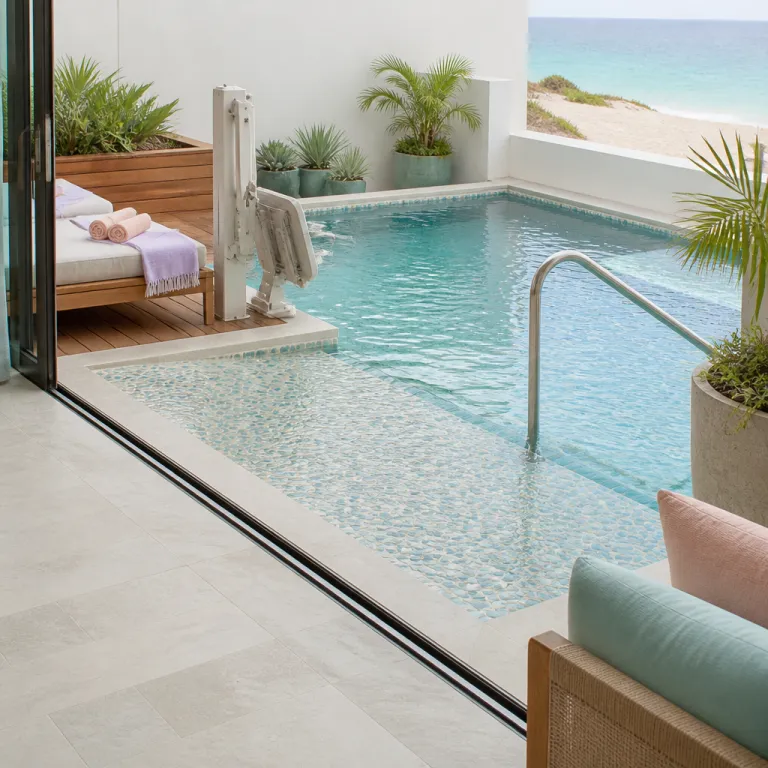
Why in room private pool hotels matter for accessible luxury beach retreats
For many travelers with access needs, in room private pool hotels transform a simple stay into a genuinely liberating experience. When a pool is integrated directly into the room as an in-room private pool or private pool suite, guests avoid crowded corridors, slippery public decks, and complicated transfers, which makes the entire hotel feel more manageable and serene. This combination of privacy, safety, and proximity is especially powerful at a beach resort where distances between suites, the main swimming pool, and the shoreline can be long.
Across global luxury hotels, only a minority of rooms feature private pools, yet demand keeps rising as travelers seek more control over their environment and schedule. Industry commentary and data from sources such as STR’s luxury segment reports and Skift Research indicate that the percentage of luxury hotels offering in room private pool hotels remains relatively modest, while the increase in demand for private pool rooms since 2010 has been significant, which pushes high end brands to redesign suites and villas with accessibility in mind. For guests who rely on mobility aids, having a private pool or plunge pool attached to the room can mean fewer transfers, less fatigue, and more time actually enjoying the vacation.
Designers now integrate pools into rooms using ramps, wide terraces, and level thresholds, so that a guest can move from bed to pool with minimal barriers. Many hotels’ private pool concepts include grab rails, non slip tiles, and clear visual contrast around the pool edge, which are small details that dramatically improve safety. When you book a beach suite or villa with a private plunge pool, you are not only paying for luxury but also for a layout that can be adapted to your personal access requirements.
Choosing an accessible beach resort with in room private pools
Selecting the right resort starts with understanding how the pool, room, and beach connect for your daily routine. An accessible luxury hotel should provide step free routes from the lobby to pool rooms, clear lifts or ramps to the restaurant, and easy access from the suite terrace to any private pools. Before you book, ask the hotel to send photos or short videos of the pool suite, including the bathroom, terrace, and the path to the main swimming pool.
For coastal vacations, the relationship between the beach and your room is crucial, especially when energy levels or mobility are limited. Some resorts now combine in room private pool hotels with beach wheelchairs, pool hoists, and staff trained in safe transfers, which can be a decisive factor for travelers with higher support needs. A curated collection of accessible summer escapes with pool hoists and beach wheelchairs can help you compare properties that already understand inclusive service, rather than starting from zero with each hotel.
When evaluating pool villas or pool suites, check the width of doors, the height of the bed, and whether the terrace is level with the private pool edge. As a reference point, many wheelchair users look for door clear widths of at least 80–90 cm (about 31–35 in) and bed heights around 45–55 cm (18–22 in) from floor to top of mattress. Ask if the pool’s private area has handrails, shallow zones, or a gently sloped ramp instead of only ladders, because these features make both plunge pools and larger infinity pool designs more usable. If you plan to travel with friends or family, consider villas with multiple rooms private to your group, so that carers or companions can stay close while you still enjoy personal space.
Design details that make in room private pools genuinely accessible
Not every private pool attached to a room is automatically accessible, so attention to detail matters. A well designed pool suite will offer level access from the bedroom to the terrace, then to the water, with no unexpected steps or narrow thresholds. In many luxury hotels, the most successful accessible suites combine a private plunge pool, a roll in shower, and a spacious layout that allows a wheelchair to turn comfortably.
Look for rooms where the plunge pool is no more than a few metres from the bed, because shorter distances reduce fatigue and make spontaneous swims easier. Some resorts in the Mediterranean and beyond now pair in room private pool hotels with accessible beach paths, tactile signage, and visual alarms, which creates a coherent experience from the swimming pool to the sea. Independent reviews of wheelchair travel in Mediterranean destinations such as Crete, Mallorca, and the Côte d’Azur show how much difference these small but thoughtful design choices can make.
Inside the bathroom, a lower tub or a walk in wet room next to the terrace can simplify transfers between hot tub, indoor pool, and outdoor plunge pool. Many accessibility guidelines, including ADA Standards in the United States and comparable European norms, recommend a gentle ramp gradient of around 1:12 (1 cm of rise for every 12 cm of length, or 1 in for every 12 in) and turning circles of roughly 150 cm (about 5 ft) for wheelchairs, which can also inform poolside layouts. When a hotel invests in both pool accessibility and bathroom ergonomics, the entire suite feels like a seamless wellness space rather than a series of obstacles. Always check whether the resort can provide portable pool hoists, non slip mats, or shower chairs on request, because these additions can turn a beautiful but challenging pool into a genuinely usable one.
Comparing accessible in room private pool options worldwide
Accessible in room private pool hotels now appear in many coastal regions, from the Indian Ocean to the Caribbean. In Sri Lanka, for example, several luxury resorts offer pool villas with gentle ramps, wide terraces, and staff trained to assist guests with mobility impairments. These villas often combine a private pool with direct views of the beach, so you can enjoy the ocean atmosphere without navigating uneven sand every day.
In the Riviera Maya, high end hotels and all inclusive resorts increasingly feature pool suites and swim up rooms, though not all are accessible, so careful research is essential. Some properties offer ground floor pool rooms with level access to a semi private swimming pool, while others provide elevated suites where the plunge pools are reached only by steps, which can be a serious barrier. When you book in this region, ask specifically whether the pool’s private terrace is step free and whether any infinity pool features have protective edges or railings.
Large international brands such as The Ritz-Carlton and The Ritz-Carlton Reserve have begun to integrate more accessible design into their pool villas and suites, especially in new builds. At some properties, you will find indoor pool facilities with hoists, accessible spa tubs, and connecting rooms private to families traveling with a wheelchair user. A practical example is The Ritz-Carlton, Dubai, which offers accessible guest rooms, step free routes to pools, and staff support that can be coordinated in advance for guests with mobility needs. One wheelchair user described their stay there as “the first time I could move from bed to terrace to pool without worrying about a single step.” Whether you choose a grand resort or a smaller coastal hotel, always check recent guest reviews that mention accessibility, because they often reveal practical details that official descriptions omit.
How to book and verify accessibility for your private pool room
Securing the right accessible pool suite starts long before you arrive at the hotel. Begin by shortlisting in room private pool hotels that clearly describe accessible rooms, step free routes, and adapted bathrooms on their official websites. Then contact each resort directly to check the exact layout of the room, the depth of the private pool, and the presence of any steps or ladders.
When you speak with reservations teams, ask for floor plans, recent photos, and written confirmation of key features such as grab bars, roll in showers, and pool hoists. Clarify whether the plunge pool or swimming pool attached to your suite has a shallow ledge, a ramp, or only vertical walls, because this affects how safely you can enter the water. Typical private plunge pools might range from about 1.1–1.4 m (3.5–4.5 ft) deep, but depths vary widely, so precise figures matter. You should also check for any additional costs related to accessible equipment, late check out, or specific room categories such as pool villas or pool suites.
Specialist accessible booking platforms can help filter hotels’ private pool options by level of adaptation, saving you time and uncertainty. Curated collections of the most romantic accessible luxury stays often highlight suites with private pools, hot tub terraces, and beach access that work for wheelchair users and guests with sensory needs. Once you have chosen your preferred villa or suite, confirm your reservation in writing and keep all emails, so that any agreed accessibility arrangements are clearly documented.
Balancing privacy, safety, and sensory comfort in accessible pool suites
For many travelers with disabilities, the appeal of in room private pool hotels lies in the ability to control noise, light, and crowding. A private pool attached to your room allows you to swim at quieter times, avoid busy public decks, and manage sensory input more carefully. This can be especially valuable for autistic travelers, people with chronic pain, or anyone who finds large resort pools overwhelming.
Safety remains central when choosing between plunge pools, hot tubs, and larger infinity pool designs. Always ask about non slip surfaces, handrails, and whether the pool rooms are supervised by lifeguards or monitored by discreet cameras, particularly if children or vulnerable adults will use the water. Some luxury hotels now offer tailored safety briefings on arrival, explaining how to use pool hoists, where emergency call buttons are located, and how to reach staff quickly from your suite or villa.
Privacy also has a practical dimension, especially for guests who need assistance with transfers or personal care around the pool. Rooms private to your party, with high walls or thoughtful landscaping, allow carers to support you discreetly without feeling exposed to other guests. As one expert guidance note from an accessible travel consultancy puts it, “Verify pool privacy before booking. Check for additional costs. Review guest experiences.”
Future trends in accessible in room private pool design
Accessible luxury is evolving, and in room private pool hotels are at the forefront of this change. Architects now experiment with eco friendly pools that use fewer chemicals, energy efficient heating, and smart technology to monitor water quality, which benefits guests with sensitive skin or respiratory conditions. These innovations appear in both grand resorts and smaller coastal hotels that want to differentiate themselves through thoughtful design.
New builds increasingly combine indoor pool facilities with outdoor plunge pools, giving guests flexible options in different weather conditions. In some destinations, pool villas feature adjustable water temperature, integrated seating ledges, and tactile controls, so that guests with limited dexterity can manage their own environment. Luxury brands from Sri Lanka to the Riviera Maya are also testing modular ramps and portable hoists that can be moved between pool suites, which expands access without compromising aesthetics.
For travelers, this means more choice and better alignment between accessibility needs and personal style preferences. You might select a grand suite with an infinity pool overlooking the beach, a compact pool private courtyard room, or a family villa with multiple rooms private to your group and a shared plunge pool. As demand for private pools continues to grow, expect more hotels to treat accessibility not as an optional extra but as a core element of modern luxury design.
Key figures on in room private pools and accessibility
- Industry observers and hospitality analysts note that the proportion of luxury hotels offering in room private pools remains relatively low compared with the total number of high end properties, which shows that these features are still an exclusive category rather than a standard amenity.
- Travel analysts also report a marked rise in demand for private pool rooms over the past decade, reflecting a strong shift toward privacy and personalized space in high end travel.
- Hospitality case studies from brands tracking premium inventory indicate that properties adding accessible private pools often see higher occupancy rates in premium suites, because these rooms appeal to both disabled and non disabled guests seeking extra comfort.
- Global booking data and guest feedback compiled by major online travel agencies suggest that accessible pool villas and pool suites near the beach can command higher average daily rates, yet they also generate stronger satisfaction scores when accessibility is accurately described.
Frequently asked questions about accessible in room private pool hotels
Are in room private pools usually heated in accessible suites ?
Heating policies vary by hotel and by destination, so you should always check directly with the property. Some luxury resorts heat plunge pools and indoor pool facilities year round, while others only warm the water during cooler months. If temperature is important for pain management or circulation, request written confirmation before you book.
Do all luxury hotels offer accessible private pool rooms ?
Only a minority of luxury hotels provide in room private pools, and an even smaller subset offers fully accessible versions of these rooms. Many grand resorts focus on visual impact rather than step free design, so you need to ask detailed questions about ramps, hoists, and bathroom layouts. Specialist accessible booking platforms can help you identify hotels where private pools and accessibility have been planned together from the start.
How safe are in room private pools for children or vulnerable adults ?
Safety depends on design features such as depth, railings, non slip surfaces, and the presence of alarms or lifeguard support. Families should request information about pool barriers, lockable terrace doors, and any available safety equipment before confirming a pool suite or villa. Supervision is always recommended, and some resorts can arrange extra support from trained staff if needed.
What should I ask a hotel before booking an accessible pool villa ?
Request precise measurements of door widths, bed height, and the distance from the room to the pool edge, as well as photos showing any steps or slopes. Ask whether the private pool has a ramp, shallow ledge, or hoist, and confirm if there are grab bars in both the bathroom and on the terrace. It is also wise to check for any additional costs related to accessibility equipment or specific room categories.
Can I rely on online photos when choosing an accessible pool suite ?
Photos are a useful starting point, but they rarely show gradients, threshold heights, or the exact depth of plunge pools and hot tubs. Always combine visual information with written confirmation from the hotel and recent guest reviews that mention accessibility. This layered approach reduces the risk of arriving to find that your pool private terrace or bathroom does not meet your needs.