From compliance to comfort: how accessible luxury hotels worldwide are changing the rules
Accessible luxury hotels worldwide are reshaping what a five star stay can mean. Instead of ticking boxes, these hotels focus on how guests actually move, sleep and relax, ensuring every experience feels intuitive rather than clinical. The result is a new generation of luxury hotels where wheelchair users, visually impaired travelers and disabled guests enjoy the same atmosphere, not a parallel version of it.
The Inclusive Luxury Hotels platform, created by Inclu, sits at the heart of this shift and connects travelers directly with verified accessible hotels that have been through a rigorous IncluCare process. Its launch with 18 hotels in 10 countries signaled that accessible luxury hotels worldwide are no longer a niche experiment but a serious category that aims to reach dozens more properties in the near future. For couples planning a romantic stay, this means you can now filter for accessible rooms, roll showers and grab bars with the same confidence you expect when choosing a resort spa or a Michelin level restaurant.
What truly distinguishes accessible luxury from basic compliance is the way design, service and technology work together at every level of the hotel. In the best hotels, accessible guest rooms are located close to elevators without sacrificing views, and rooms spacious enough for turning circles still feel intimate and stylish. Public facilities such as the pool, spa and hotel spa reception are wheelchair accessible via gentle ramps or discreet lifts, so wheelchair users can move from the lobby to the pool terrace without detours through service corridors.
Architecture plays a quiet but decisive role in this evolution of accessible luxury hotels worldwide. Wide corridors, level thresholds and walk showers with flush floors are planned from the first sketch, rather than retrofitted later with awkward ramps and temporary grab bars. When a resort is located on a hillside or in a historic city area, thoughtful engineering such as step free pathways, platform lifts and accessible shuttles ensure that disabled guests can still reach every signature viewpoint.
Service culture is the other defining pillar of these new luxury hotels. Well trained hotel staff understand how to offer help without hovering, and they know how to operate pool hoists, portable ramps and hearing loops as naturally as they pour Champagne. For couples, this means you can focus on the romance of the stay while the staff quietly handle the logistics that make the hotel genuinely accessible.
Design without compromise: architecture, interiors and the new language of accessible luxury
In the most forward thinking accessible luxury hotels worldwide, accessibility is embedded in the architecture rather than added as an afterthought. Designers collaborate with IncluCare specialists and wheelchair users from the earliest planning stages, so the finished hotel feels coherent, elegant and easy to navigate. This is where accessible rooms and guest rooms become showcases of good design, not exceptions hidden at the back of the floor plan.
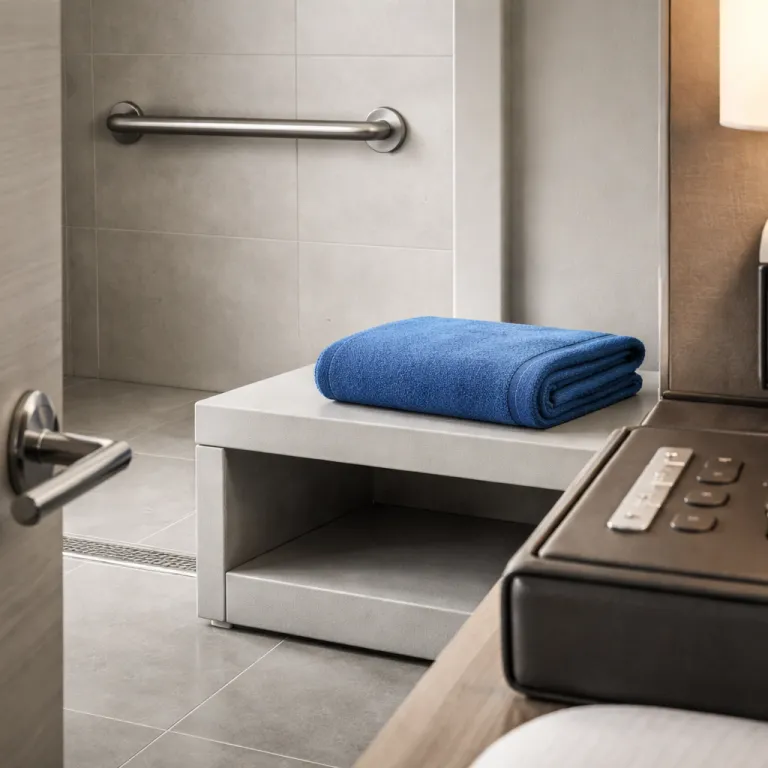
Take the new generation of European city hotels that combine high design with serious accessibility, including a Berlin property that offers around 60 wheelchair accessible rooms in a central location. Here, rooms spacious enough for side transfers to the bed still feature sculptural lighting, tactile fabrics and floor to ceiling windows overlooking the city. Bathrooms integrate roll showers with linear drains, fold down seats and grab bars in matching finishes, so the facilities feel like part of a curated interior rather than medical equipment.
Public areas follow the same philosophy in these luxury hotels. Lobbies are laid out with clear sightlines and generous turning spaces, while the bar, restaurant and hotel spa reception are all located on level access routes. When a property includes a resort style pool or a compact city spa, designers specify pool hoists, tactile paving and contrasting edges so that guests enjoy the same sense of ease whether they are swimming, dining or moving between rooms.
Location still matters, but the definition of a prime location is evolving for accessible luxury hotels worldwide. A prime location now means step free access from the street or drop off point, short distances to public transport and an area where pavements, crossings and nearby attractions are also wheelchair accessible. When you read about a romantic villa stay on the Adriatic, for example, you should expect the same level of detail about ramps, lifts and accessible paths as you do about sea views and historic walls, as shown in guides to the elegance of villas in Dubrovnik with luxury, history and sea views.
Inside the rooms, thoughtful details elevate the stay for disabled guests and non disabled guests alike. Light switches and thermostats are placed at reachable heights, wardrobes open with minimal force and beds are set at transfer friendly heights without looking clinical. When rooms spacious enough for wheelchair turning circles are combined with soft lighting, high thread count linens and quiet air conditioning, couples can enjoy a luxury stay that feels both indulgent and reassuringly practical.
From Maldives to the United States: where accessible luxury is already leading
Accessible luxury hotels worldwide are no longer limited to a few progressive city addresses. From Indian Ocean islands to safari lodges and urban towers in the United States, a growing number of properties now treat accessibility as a core part of their luxury promise. For couples, this opens up a far wider map of potential stays, whether you prefer a remote resort or a vibrant city hotel.
Amilla Maldives stands out as one of the first island resorts to receive a five star IncluCare rating, proving that a remote resort spa can be both indulgent and wheelchair accessible. Villas are located along level pathways, with accessible rooms that include roll showers, grab bars and rooms spacious enough for wheelchair users to move freely between the bedroom, bathroom and terrace. The pool areas feature gentle ramps and unobtrusive hoists, so guests enjoy the same ocean facing infinity pools without awkward workarounds.
In South Africa, Ximuwu Lodge shows how a safari resort can deliver accessible luxury without diluting the sense of wilderness. Guest rooms are designed as fully accessible suites with walk showers, wide doorways and carefully placed grab bars that support transfers while preserving the lodge aesthetic. Vehicles are adapted for wheelchair users, and the resort spa and pool are located on level decks so that disabled guests can move from game drives to relaxation without barriers.
Across the United States, major cities now host accessible luxury hotels worldwide that combine prime location with serious accessibility credentials. American Express Travel has begun curating wheelchair accessible luxury listings, highlighting hotels where accessible rooms are guaranteed, hotel staff are trained in disability etiquette and facilities such as the pool, spa and dining options are genuinely step free. For couples planning a multi city stay, this means you can expect a consistent standard of accessibility from New York to Los Angeles, rather than starting from zero with each hotel.
Latin America is also entering the conversation, with five star hotels in Brazil positioning themselves as both glamorous and accessible. In Rio de Janeiro and São Paulo, you can now book resort style properties where guest rooms include roll showers and accessible balconies, and where the hotel spa, pool deck and restaurants are all connected by ramps and lifts, as highlighted in specialist guides to five star hotels in Brazil that focus on luxury, accessibility and unforgettable stays. These examples show that accessible luxury hotels worldwide are not confined to one region but are emerging across continents.
Service, training and the quiet art of inclusive hospitality
Architecture sets the stage, but it is the staff who turn accessible luxury hotels worldwide into places where couples actually relax. The difference between a stressful and a seamless stay often comes down to how hotel staff respond in the first five minutes after arrival. When the équipe is trained, confident and respectful, disabled guests feel like valued travelers rather than logistical challenges.
Leading properties now invest in structured training programmes that go far beyond a basic accessibility briefing. Teams learn how to assist wheelchair users safely, how to guide visually impaired guests through busy areas and how to communicate with deaf guests using clear speech, written notes or technology. This training extends to every department, from front office and concierge to spa therapists, restaurant servers and pool attendants, so that the entire hotel functions as a coherent, accessible environment.
In accessible luxury hotels worldwide, the best service feels anticipatory but never intrusive. Staff might proactively offer a shower chair or confirm that roll showers and walk showers are correctly set up in accessible rooms, yet they always ask before acting. When a couple arrives with mobility equipment, luggage porters know how to handle wheelchairs with care, and reception teams ensure that guest rooms allocated match the specific needs discussed at booking.
Dining options are another area where inclusive service matters. Restaurants in these luxury hotels ensure that tables are spaced to allow wheelchair access, menus are available in large print or digital formats and staff can describe dishes clearly for guests with sensory sensitivities. Room service teams are trained to position trays, chairs and grab bars so that guests enjoy private dining without unnecessary strain or risk.
Behind the scenes, managers track feedback from disabled guests as seriously as they track revenue or occupancy. They use this data to refine facilities such as the pool, spa and resort spa, adjusting ramp gradients, improving lighting or reconfiguring rooms spacious enough for easier transfers. Over time, this creates a virtuous circle where accessible luxury hotels worldwide become more refined, more intuitive and more aligned with the expectations of discerning couples.
How to choose and book accessible luxury hotels worldwide with confidence
For couples planning a romantic escape, the sheer variety of accessible luxury hotels worldwide can feel both exciting and overwhelming. The key is to approach the booking process with the same precision you would apply to choosing a wedding venue or a once in a lifetime restaurant. A little structure upfront ensures that your stay feels effortless once you arrive at the hotel.
Start by identifying the non negotiables for your accessibility needs and preferences. Do you require wheelchair accessible guest rooms with roll showers, or are walk showers with a small lip manageable if grab bars and shower chairs are provided ? Are you comfortable with a resort located on a hillside if internal transport is well organised, or do you prefer a city hotel in a flat area with step free access to public transport and nearby attractions ?
Next, use specialist platforms such as Inclusive Luxury Hotels and accessible travel guides to filter for verified properties. Always check whether a hotel has IncluCare certification, because this signals that the facilities, staff training and guest experience have been independently assessed rather than self declared. Remember the guidance from the Inclusive Luxury Hotels team : "Verify hotel's IncluCare status before booking. Contact hotels directly for specific needs. Plan ahead to ensure availability."
Once you have a shortlist of accessible luxury hotels worldwide, contact each property directly with a concise but detailed email. Ask for measurements of door widths, bed heights and turning circles in accessible rooms, and request photos of bathrooms showing roll showers, grab bars and toilet clearances. Clarify the route from the lobby to the pool, spa, resort spa and restaurants, and confirm whether the hotel staff can assist with equipment such as hoists or shower chairs.
Finally, think about the wider trip, not just the hotel. If you are planning an accessible horse riding escape in Québec, for example, you will want a resort or hotel located near stables and countryside trails, with accessible transport between the area attractions and your base, as outlined in specialist planning guides for refined horse trips in Québec that focus on accessible luxury stays. The more you align your chosen location, hotel facilities and city infrastructure, the more your stay will feel like the seamless, romantic experience you deserve.
What is next for accessible luxury hotels worldwide ? trends couples should watch
The most exciting trend in accessible luxury hotels worldwide is that accessibility is moving from the margins to the centre of brand strategy. Luxury groups now recognise that disabled guests are not a tiny niche but a loyal, multigenerational audience with significant spending power. As a result, investment in accessible design, staff training and technology is accelerating across both resort and city portfolios.
Architecture and interior design are entering a more sophisticated phase, where universal design principles are applied from the outset. Expect to see more hotels where every floor includes accessible rooms, rather than confining them to a single level near the lifts. Rooms spacious enough for wheelchair users will become standard in higher categories, and bathrooms with roll showers, walk showers and integrated grab bars will be offered as elegant options for all guests, not just disabled guests.
Technology will also play a larger role in accessible luxury hotels worldwide. Mobile apps will allow guests to control room features such as curtains, lighting and temperature from a smartphone or tablet, reducing the need to reach switches or thermostats. Navigation tools using beacons or detailed maps will help wheelchair users and visually impaired guests move confidently between the lobby, pool, spa, resort spa and dining options without constant staff guidance.
On the service side, expect more partnerships between luxury hotels and specialist organisations such as IncluCare and Inclusive Luxury Hotels. These collaborations will refine training programmes, audit facilities and share best practices across continents, from French Polynesia to the United States and beyond. As more properties in destinations such as French Polynesia, the Maldives and Asia Pacific seek certification, couples will gain access to a broader range of accessible luxury stays in dream locations.
Finally, the narrative around accessible luxury hotels worldwide will continue to mature. Travel journalism, guest reviews and booking platforms will move beyond generic labels such as "wheelchair accessible" to provide granular detail about room layouts, pool access, spa facilities and the real behaviour of hotel staff. For couples who care about both design and dignity, this new transparency will make it far easier to choose the best hotels for a stay that feels genuinely shared, not adapted.
Key figures shaping accessible luxury hotels worldwide
- Inclusive Luxury Hotels launched with 18 verified properties across 10 countries, signalling that accessible luxury hotels worldwide have moved beyond isolated pioneers into a recognisable category (source : Inclu announcement).
- The platform aims to expand to around 50 hotels in the near future, indicating strong demand from both travelers and luxury brands for rigorously assessed accessible rooms and facilities (source : Inclu announcement).
- One leading Berlin property now offers approximately 60 wheelchair accessible rooms in a central city location, showing how high design hotels can scale accessibility without sacrificing aesthetics (source : industry reporting on accessible design in Berlin).
- Specialist agencies such as American Express Travel have begun curating wheelchair accessible luxury listings, reflecting a broader recognition that disabled guests represent a significant and loyal segment of the luxury travel market (source : American Express Travel communications).
- IncluCare’s comprehensive evaluation, education and transformation process provides a structured pathway for resorts, city hotels and resort spa properties to upgrade facilities, staff training and guest experience in line with best practice accessibility standards (source : IncluCare programme overview).
FAQ about accessible luxury hotels worldwide
What makes a hotel genuinely accessible for luxury travelers ?
A genuinely accessible luxury hotel combines step free routes, properly designed accessible rooms and well trained staff with the same design quality found in its suites and public spaces. Look for features such as roll showers or low threshold walk showers, grab bars in matching finishes, rooms spacious enough for wheelchair turning circles and level access to the pool, spa and restaurants. Independent verification, such as IncluCare certification, is a strong indicator that these elements have been assessed in detail.
How can I be sure an accessible room will meet my needs ?
Never rely solely on a generic "wheelchair accessible" label when booking accessible luxury hotels worldwide. Contact the hotel directly and request precise measurements, photos of the bathroom and confirmation of features such as shower chairs, grab bars and bed heights. If possible, ask the reservations team to note your requirements in the booking and reconfirm with the hotel staff a few days before arrival.
Are accessible luxury hotels more expensive than other options ?
Room rates at accessible luxury hotels worldwide usually reflect the overall positioning of the property rather than a surcharge for accessibility. In many cases, accessible rooms are priced in line with equivalent categories that share similar views, size and amenities. The real value lies in the combination of design, facilities and service that allows disabled guests and their partners to enjoy the same stay without hidden compromises.
Which destinations are leading in accessible luxury right now ?
Major cities in the United States and Europe, including Berlin, London and New York, currently offer some of the strongest concentrations of accessible luxury hotels worldwide. Island destinations such as the Maldives and emerging regions such as Brazil and French Polynesia are also seeing more resorts invest in accessible rooms, pool access and resort spa facilities. Platforms like Inclusive Luxury Hotels and curated lists from American Express Travel can help you identify the best hotels in each area.
How far in advance should I book an accessible luxury stay ?
Accessible rooms are often limited in number, even in large luxury hotels, so early booking is essential. Aim to reserve several months ahead for peak seasons, and always follow up with a direct email or call to the hotel to confirm that the allocated guest rooms match your needs. This approach aligns with the Inclusive Luxury Hotels guidance to verify IncluCare status, contact hotels directly and plan ahead to secure the right room and facilities.