From keycards to voice control: how accessible hotel room technology is evolving
Luxury hotel rooms once signaled comfort with magnetic keycards, plush bedding, and hushed corridors. Today, accessible hotel room technology adds a deeper layer of inclusion by allowing a guest to control the environment without crossing the floor. In the best luxury properties, accessibility is woven into the architecture and the digital systems so that people with disabilities can move, rest, and communicate with the same ease as any other travelers.
Across premium hotels worldwide, voice-activated systems now let a guest adjust lighting, curtains, and temperature from the bed or wheelchair. These accessible features matter when a guest has limited upper body mobility, when reaching a switch is painful, or when a caregiver needs to operate the room while keeping both hands free. Smart speakers, motion sensors, and visual alarm systems are no longer novelty gadgets; they are essential components that determine whether a hotel room is genuinely accessible or merely technically compliant with regulations such as the ADA in the United States or EN 301 549 in Europe.
Hotel management teams increasingly work with technology providers and accessibility consultants to integrate these tools into different room types. Companies such as ASSA ABLOY Global Solutions, SALTO Systems, and major brands’ in-house digital teams now collaborate with disability advocates to refine layouts and interfaces. As one accessibility consultant who advises five-star properties in Europe notes, “The goal is not just to tick an ADA box, but to make sure a wheelchair user can actually reach every control and sleep safely.” The objective is clear: enhance the guest experience for travelers with disabilities while meeting legal accessibility standards and raising overall guest satisfaction. When you compare hotel rooms on premium booking websites, look beyond the wheelchair accessible icon and ask how the digital accessibility systems actually work in each accessible room, from door hardware to in-room controls.
Voice control, AI concierge and the new front desk for guests with disabilities
Voice control is the quiet revolution inside many accessible rooms in the luxury segment. For wheelchair users who cannot easily reach switches or thermostats, being able to say "lights low" or "curtains open" transforms the guest experience from dependent to barrier free. These systems also support people with disabilities who experience fatigue or chronic pain, because every avoided transfer across the room preserves energy for actual travel and leisure.
Current accessible hotel room technology typically links smart speakers to lighting scenes, temperature presets, and entertainment systems. In well designed hotel rooms, the same voice interface can call the front desk, request extra grab bars or a shower chair, or ask for assistance with roll-in showers that need adjustment. Marriott’s Alexa for Hospitality pilots and Hilton’s Connected Room platform, for example, already allow guests in selected properties to use voice commands for lights, TV, and information. Some hotels now pair this with AI concierge services that can handle routine booking questions, explain accessibility features, and suggest accessible travel activities nearby for travelers with disabilities who want reliable information fast.
AI concierge tools are strongest when they complement, not replace, a trained front desk équipe. Let the system manage restaurant times, late checkout, or digital room keys, while human staff focus on nuanced needs such as repositioning furniture for wheelchair accessible circulation or arranging a hoist. A front office manager at a luxury resort in the Caribbean describes the balance this way: “Our AI answers 70% of questions instantly, but the remaining 30%—often from guests with disabilities—get more time and attention from staff because we are no longer stuck printing invoices.” If you are weighing an accessible luxury stay in canyon country, for example, compare how properties in Utah describe their digital accessibility and room types in guides such as choosing Zion or Bryce for an accessible luxury stay in Utah’s canyon country. The way a hotel explains its accessible hotel technology online often mirrors how seriously it treats guests with disabilities on site.
Smart beds, hoists and sensory friendly controls as standard luxury features
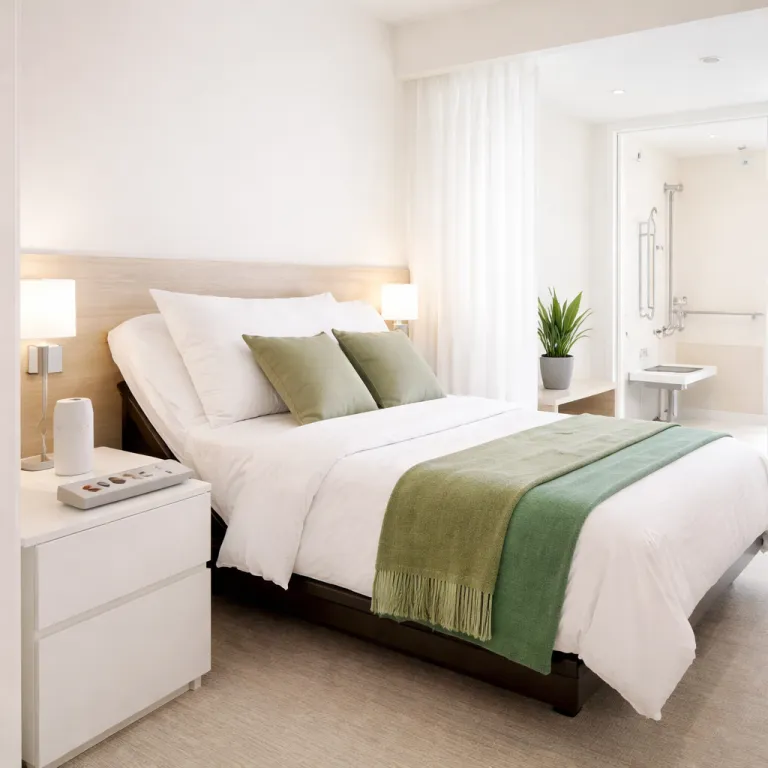
In the most forward thinking accessible hotels, the bed is no longer a fixed object. Adjustable and profiling beds let guests raise the head or legs, change firmness, and fine tune support so that people with disabilities can sleep without improvising with pillows. Brands such as Hästens, Serta, and other premium manufacturers now offer motorized bases that integrate with hotel room management systems. For some travelers with disabilities, ceiling track hoists installed in accessible rooms are the difference between staying in a hotel and staying home.
These systems are part of a broader shift where accessible hotel room technology treats mobility equipment as standard, not special request. A well planned accessible room will combine ceiling hoists, strategically placed grab bars, and roll-in showers with level access so wheelchair users can move independently. When these accessibility features are integrated from the design stage, the room types feel like any other luxury room, just with more thoughtful access and better safety for guests with disabilities and their companions. Case studies from organizations such as the UK’s Centre for Accessible Environments show that universal design rarely detracts from aesthetics when handled by experienced architects.
Sensory needs are finally entering the conversation about accessible travel in premium hotels. Smart lighting that dims gradually, blackout blinds controlled from the bed, and quiet HVAC systems help guests with sensory sensitivities regulate their environment without constant trips across the room. Research from groups like the Global Wellness Institute notes that noise and light control are now key wellness criteria for older travelers and neurodivergent guests. One frequent traveler with autism summarized the impact after a recent stay in a newly refurbished suite: “Being able to lower the lights and close the blinds from the bed meant I could calm my nervous system in minutes instead of pacing the room.” If you are planning refined accessible travel later in life, look for properties that talk openly about sensory friendly features in their hotel room descriptions and in curated guides such as what is there in Cabo for older adults seeking refined accessible stays.
The Texas ultra inclusive hotel and what it signals for global travelers
One of the clearest signals of where accessible hotel room technology is heading comes from Texas. An ultra inclusive hotel there is set to open with voice controlled rooms, AI powered concierge services, and acoustically damped interiors designed from the ground up for accessibility. The project echoes high profile examples such as The H Hotel in Midland, which has been recognized for its fully wheelchair accessible suites, and the broader push in cities like Austin and Dallas to embed inclusive design in new builds. The property treats accessible rooms not as a separate category but as the baseline for every hotel room on site.
In practice, that means every accessible hotel room will feature integrated voice control for lights, curtains, and temperature, along with visual and tactile alerts for guests who are Deaf or hard of hearing. Acoustically damped corridors and rooms reduce sensory overload for people with disabilities who are sensitive to noise, while still feeling like a calm luxury environment for all guests. The same AI concierge that answers booking questions will also guide travelers with disabilities through accessibility features, from locating grab bars to understanding how the roll-in showers and hoists operate safely.
This Texas project reflects a broader global trend in luxury hotels toward inclusive design backed by digital accessibility. Industry analyses from organizations such as the World Travel & Tourism Council and Open Doors Organization already show that a high percentage of hotels now offer some form of accessible rooms, and that bookings by guests with disabilities have risen significantly as information improves. The Open Doors Organization’s 2020 Market Study, for instance, estimated that American adults with disabilities spent more than $58 billion on travel in a single year. For travelers, the message is clear: when accessible hotel technology is treated as an essential feature rather than an add on, the guest experience improves for every person who walks through the lobby.
How to read booking websites and ask the right accessibility questions
For all the innovation, the gap between marketing language and real accessibility remains wide. Many booking websites still rely on a single wheelchair icon or a vague "accessible room" label that tells guests almost nothing about actual accessibility features. To protect your trip, you need to interrogate both the digital accessibility of the website and the physical accessibility of the hotel rooms it sells.
Start by checking whether the booking journey itself is barrier free for people with disabilities who use screen readers or keyboard navigation. A genuinely accessible hotel will usually work with technology firms and accessibility consultants to ensure that guests can select room types, request accessible rooms, and specify needs such as roll-in showers or grab bars without phoning the front desk. If the website makes it hard to filter for wheelchair accessible rooms or to confirm essential features, treat that as a red flag and contact hotel management directly to clarify the situation.
When you speak with the hotel, move beyond "Do you have accessible rooms?" and ask detailed questions about the accessible hotel room technology. Clarify whether the hotel room has step free access from the lobby, whether wheelchair users can reach all controls, and whether visual alarms are installed for Deaf guests. Midway through your planning, it is worth consulting curated destination guides such as where to stay in Charleston for a luxury accessible trip with verified hotel reviews, which often highlight specific hotels where the guest experience for travelers with disabilities has been checked in person.
The business case for accessible hotel room technology in luxury hospitality
Accessible hotel room technology is not a niche upgrade; it is a core business strategy for luxury hotels that want loyal guests and strong occupancy. As more people with disabilities travel, often with family or friends, a single accessible room booking can translate into multiple rooms and repeat stays. Studies by the Open Doors Organization estimate that American adults with disabilities spend tens of billions of dollars on travel annually, and that they travel more often when they trust a brand’s accessibility. When hotels invest in accessibility features that genuinely work, they see higher guest satisfaction scores and more direct booking from travelers who value trust.
Industry data already shows that a large share of hotels now offer accessible rooms and that bookings by guests with disabilities have grown significantly over recent years. This growth is linked to the adoption of smart room technologies, the personalization of accessible features, and closer collaboration with disability advocacy groups that pressure hotels to move beyond minimum access. The expected impact is simple: increased inclusivity, better guest experience, and a reputation that attracts both disabled and non disabled travelers who appreciate thoughtful design and transparent communication.
Accessible hotel room technology also tends to benefit every guest, not only people with disabilities. Voice control helps a parent juggling a baby and luggage, roll-in showers are safer for older travelers, and clear digital accessibility on websites reduces friction for anyone booking on a small screen. As one industry guide on accessible hospitality puts it, "Voice-activated controls, motion-activated devices, and visual alarms are commonly used" in modern accessible hotel rooms, and these tools are rapidly becoming part of the standard luxury toolkit rather than a specialist add on.
FAQ
What technologies are most useful in an accessible hotel room?
The most impactful accessible hotel room technology combines voice activated controls, motion activated lighting, and visual alarm systems. These tools help wheelchair users and other guests with disabilities manage the room without relying on staff for every adjustment. When paired with physical features such as grab bars, roll-in showers, and step free access, they create a genuinely barrier free hotel room that aligns with modern accessibility standards.
How can I check if a hotel room meets my accessibility needs?
Start by reviewing the hotel website for detailed descriptions of accessible rooms and clear photos of bathrooms, entrances, and circulation space. Then contact the hotel directly to discuss your specific requirements and confirm which accessibility features are installed in the exact room type you plan to book. Ask for written confirmation by email so you have a record of what the front desk has promised and can refer back to it if anything is missing on arrival.
Are accessible rooms usually more expensive than standard rooms?
In many luxury hotels, accessible rooms are priced similarly to equivalent room types without accessibility adaptations. Rates may vary by view, size, or season, but accessibility itself should not carry a surcharge. It is still wise to confirm pricing when booking, especially if the accessible room has additional space or equipment such as hoists, adjustable beds, or specialized bathroom fixtures.
Does accessible hotel room technology help guests without disabilities?
Yes, most accessible hotel technologies improve the guest experience for everyone. Voice control, smart lighting, and clear digital accessibility on booking websites make stays smoother for tired business travelers, families, and older guests. Features such as roll-in showers and level access also reduce slip risks and make rooms easier to navigate with luggage, strollers, or mobility aids borrowed temporarily after an injury.
What should I request in advance for an accessible luxury stay?
When booking, specify that you need an accessible room with step free access, roll-in shower, and grab bars positioned to match your mobility needs. Ask whether the hotel room offers voice control, visual alarms, or other accessible hotel room technology that supports your disabilities. Providing this information early gives hotel management time to allocate the right room, arrange any extra equipment, and document your preferences in the reservation system.