Operation 2030 and the new rules of luxury accessibility
Accessible travel is shifting from niche request to baseline expectation across the global luxury travel market. TravelAbility’s Operation 2030 frames the accessible travel industry 2030 as a hard deadline, when aging demographics and rising disability prevalence will redefine market size and market share in every country. For travelers booking premium stays, this means accessibility is becoming a core service type rather than an optional add on.
Operation 2030 brings together TravelAbility, destination marketing organizations, government agencies and disability advocacy groups to align policy development, infrastructure upgrades and staff training. The initiative leans on accessibility audits, universal design principles and assistive technologies, using AI and IoT to personalise accessible travel experiences by disability type, age group and travel purpose. As TravelAbility Insider summarises it succinctly: "Travel designed to accommodate individuals with disabilities" and "Ensures inclusivity and taps into a growing market segment" and "Implement universal design and provide staff training." TravelAbility outlines the framework and goals of Operation 2030 in its publicly available conference materials and industry briefings, and founder Jake Steinman has described it as "a roadmap to make inclusive travel commercially irresistible by 2030."
The accessible travel industry 2030 conversation is grounded in hard numbers, not sentiment. Future Data Stats values the global accessible travel market size at 80.7 billion USD in the mid 2020s, with projections of 126.2 billion USD global by the early 2030s, signalling rapid growth in the travel market, according to its 2023–2031 market outlook. For luxury hotels, that USD growth curve makes accessible segments in North America, Europe and Asia Pacific commercially decisive rather than peripheral.
Demographic analysis shows why Operation 2030 treats accessibility as a survival issue for hotels. By the end of this decade, all baby boomers will be over 65, and in North America alone an estimated 50.1 million people will be living with some form of disability or long term impairments, based on recent U.S. Census Bureau and Statistics Canada releases. Similar patterns appear across Europe, Asia and Latin America, expanding the global accessible guest base across every age group and disability type.
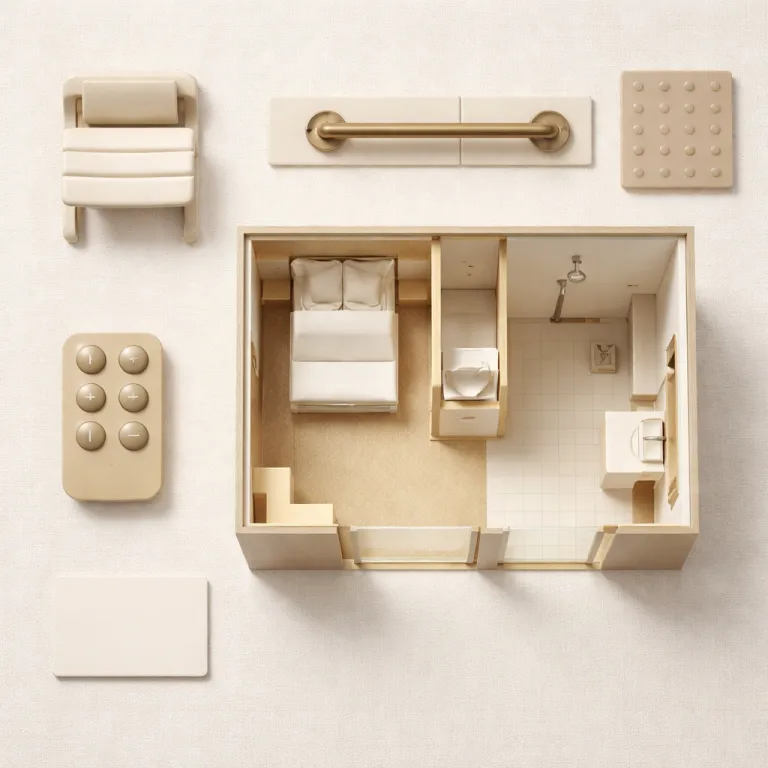
Austrade’s work on Australia’s visitor economy illustrates how national strategies are adapting to this global accessible shift. Around 18% of Australians live with a disability, and policy makers now treat accessible travel as a lever for economic growth rather than a compliance cost. For high end travelers, this means more properties where accessibility is integrated into design, from step free suites to tactile signage and hearing support in meeting rooms. At Crown Towers Sydney, for example, selected accessible rooms offer door widths of approximately 90 cm, roll in showers with fold down seats and grab rails, and lowered wardrobe rails to support independent use.
For business leisure guests extending trips, the key question is no longer whether a hotel has a wheelchair symbol on its website. The real test is whether the roll in shower has a stable seat, the pool hoist actually works and staff across every service type understand how to assist without condescension. Operation 2030 is pushing luxury brands in North American financial centres, major European capitals and Asia Pacific gateways to treat such details as non negotiable standards. Properties like the Four Seasons Hotel George V in Paris, which publishes detailed accessibility information and offers step free access from street to suite, illustrate how luxury and inclusion can be aligned in practice.
Quick room-access checklist for luxury stays
- Step free route from arrival point to reception, elevators and guest room
- Door widths of at least 85–90 cm and clear 150 cm turning circles in bedrooms
- Roll in shower with fixed or fold down seat, grab rails and non slip flooring
- Reachable controls: lowered wardrobe rails, switches, peepholes and thermostats
- Visual and vibrating alerts for alarms, plus hearing support in key meeting spaces
From demographic cliff to market strategy : where the gaps remain
The demographic cliff facing the accessible travel industry 2030 is already visible in booking data. As older travelers with mobility, sensory or cognitive impairments continue to travel for work and leisure, they are reshaping expectations of what an accessible luxury stay should feel like. This is especially clear in North America and Europe, where high spending age groups are demanding inclusive design rather than improvised fixes.
Yet there is still a wide gap between this demand and current hotel readiness across the global accessible landscape. Many five star properties in historic European capitals, Asia Pacific business hubs and the Middle East still treat accessibility as a small cluster of adapted rooms rather than a property wide philosophy. In practice, that means travelers encounter marble lobbies with hidden ramps, spas without hoists and booking channels that cannot capture nuanced disability type requirements.
TravelAbility’s TravelAbility Approved Convention Centers accreditation program is one attempt to close this readiness gap. The program evaluates large venues on accessibility, from step free circulation and signage to assistive listening systems and staff training, then signals which centers are genuinely accessible for events and conferences. For executive travelers, this matters because a convention center that meets rigorous standards often correlates with nearby hotels that take accessibility seriously across every service type. Early case studies from U.S. and European convention cities show that accredited venues are more likely to be surrounded by hotels with accessible meeting rooms, lowered reception desks and clearly documented room size information.
Regional patterns in the travel market are emerging as luxury brands respond unevenly. In Asia Pacific, new builds in cities like Singapore and Tokyo are integrating universal design from the outset, positioning themselves as regional accessible flagships for the accessible travel industry 2030. In contrast, parts of Latin America and East Africa still rely heavily on retrofits, which can limit room size, circulation space and the number of truly accessible suites.
The Middle East and North Africa are investing heavily in large scale tourism infrastructure, and accessibility is starting to feature in master plans. Gulf destinations are commissioning analysis of market size and market share for global accessible segments, particularly for medical travel and wellness travel purpose itineraries. However, travelers still need to interrogate each booking channel carefully, as not every luxury property in the region has converted plans into operational reality.
Island destinations show both the promise and the pitfalls of this transition. In the Indian Ocean, several five star resorts in the Maldives now market themselves as leaders in inclusive luxury, with step free villas, beach wheelchairs and trained staff, as profiled in this guide to accessible five star resorts in the Maldives. At one flagship resort, for instance, selected overwater villas offer step free access from jetty to room, 150 cm turning circles beside the bed and bathrooms with grab rails positioned at 80–85 cm height. Yet across the wider Pacific and Latin American coastlines, many properties still lack reliable transfer options, making the journey itself the biggest barrier.
How to spot forward thinking accessible luxury hotels today
For travelers booking now, the most practical question is how to identify hotels already aligned with the accessible travel industry 2030 vision. The first filter is to look beyond generic accessibility icons and request detailed floor plans, room size information and photos of bathrooms, corridors and pool areas. A property that responds quickly with precise measurements in metres and clear explanations of service type options is usually ahead of the curve.
Next, examine how the hotel’s booking channel handles accessibility. Leading luxury and premium booking websites for accessible hotels now allow guests to specify disability type, mobility aids, sensory needs and travel purpose directly in the reservation flow. When a platform can segment offers by age group, region and accessibility features across North America, major European cities, Asia Pacific hubs and African safari destinations, it signals serious investment in inclusive design.
Three point booking flow checklist
- Can you filter by specific accessibility features, disability type and room size in square metres?
- Does the confirmation clearly restate accessibility commitments, from roll in shower to transfer support?
- Is there a direct channel to the property’s accessibility contact for follow up questions before arrival?
Geography also shapes what forward thinking looks like. In East Africa and accessible wildlife regions, lodges that provide level vehicle access, hoists for pools and safari vehicles, and trained guides for guests with visual or hearing impairments are setting new benchmarks. In Latin American and North American beach destinations, properties that combine roll in showers, beach access mats and staff fluent in sign language are quietly winning market share among global accessible travelers.
Wellness and wedding travel are two segments where inclusive luxury is evolving quickly. In Mexico, for example, high end retreats that offer step free spa circuits, accessible yoga decks and adapted hydrotherapy pools are redefining what a serene wellness retreat for accessible luxury travelers can be. For celebrations, venues that integrate accessible ceremony spaces, reception layouts and guest room blocks are increasingly featured in curated lists of accessible luxury wedding and private rental stays. At several Riviera Maya resorts, for instance, couples can reserve step free beachfront ceremony areas with firm pathways, ramps to raised decks and accessible restrooms within 50 metres of the main event space.
Three practical steps help executive travelers assess any property’s seriousness about accessibility. Research destinations’ accessibility features through national tourism boards and specialist platforms, then communicate specific needs in advance to test how well the hotel’s équipe understands impairments and inclusive service. When necessary, utilise specialised travel agencies that focus on accessible travel, especially for complex itineraries across multiple regions such as Asia Pacific, the Middle East and Latin America.
Ultimately, the accessible travel industry 2030 is not an abstract forecast but a set of choices being made in USD budgets and design meetings today. Hotels that invest now in universal design, staff training and technology to support global accessible guests will be the ones still thriving when demographic shifts fully reshape the travel market. For discerning travelers, choosing those properties sends a clear market signal that accessibility and luxury belong in the same sentence.